How Local Conditions Play In
Melbourne sits in a mild temperate band, so you're not dealing with the freeze-thaw cycle that cracks hardware in colder states. That's the good news. The less convenient news is that most of the housing stock here went up between 1966 and 2003, with the median build year landing around 1977 - and across the 16 named areas that make up this part of town, the bulk of it is 1960s and 70s construction. That means the noise you're hearing usually isn't weather damage. It's metal that's been opening and closing twice a day for close to fifty years.
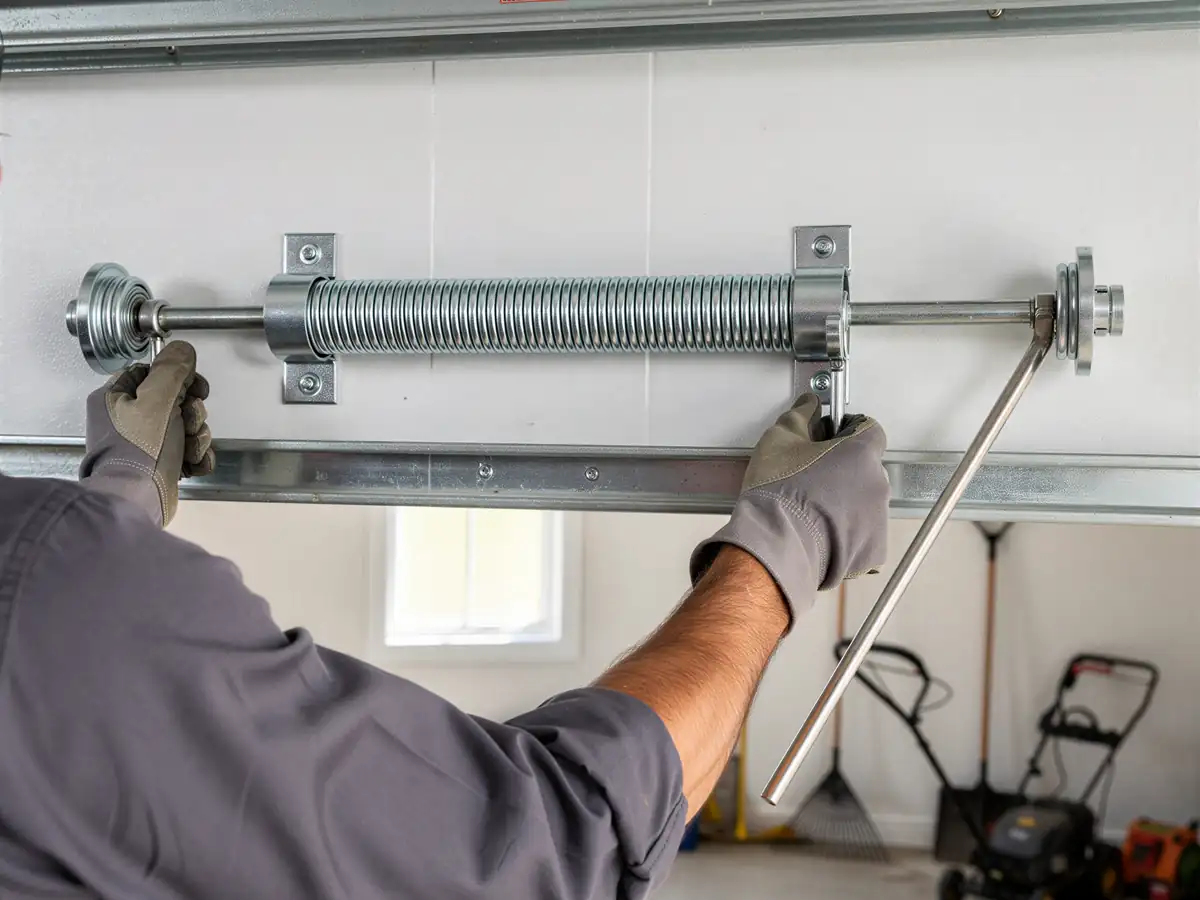
No deep freeze, no violent expansion and contraction - the springs and bearings in a Melbourne garage mostly fail from cycle count and age, not from a hard winter. A torsion spring rated for around 10,000 cycles doesn't care that the climate's been kind to it. It cares how many times it's been wound and released. In a house built in 1977, that number is high. So when a door here starts talking to you, read it as wear, not weather - and treat the noise as the early warning it actually is.
What Most People Get Wrong
The most common mistake we see: someone hears a new noise, sprays the whole mechanism with WD-40, and calls it handled. On a door from this era - original hardware on a house built sometime in that 1966-2003 window - a quick squirt of oil can mask a sound for a week or two while the actual problem, usually a spring losing tension or a bearing wearing flat, keeps getting worse underneath it.
The second mistake is assuming all noise is equal. A scrape is not a pop, and a pop is not a hum. Owners in houses from the 1960s and 70s stock that dominates this area tend to lump every sound into "the door's getting old," which is true in a general sense but useless for figuring out what's actually failing. Age explains why the part is wearing out. It doesn't tell you which part.
Worth saying plainly: not every noise means a repair. Some is just original hardware doing its job a little louder than it used to, and tightening a bolt or two solves it. We're not going to tell you every click needs a truck roll - that's not honest, and it's not how we'd want to be sold to either.
When to Get Help
A loud bang or pop, especially if the door won't move afterward
Almost always means a torsion spring has let go. Don't try to open it manually past that point - get it looked at before you force anything.
A grinding or rattling sound that gets worse as the door travels usually points to rollers or bearings that have worn past round
On houses from the 1966-2003 range common around here, original rollers are well past their expected service life by now, and that grinding is often the last stage before one seizes.
A rhythmic thump once per rotation is almost always a flat spot on a roller or a bent track section
Annoying, not urgent, but worth a call before it chews up the track itself.
If the noise is new, gets worse week over week
Or shows up alongside the door running unevenly, that's the pattern that justifies a call rather than another can of lubricant.
What Is Going On
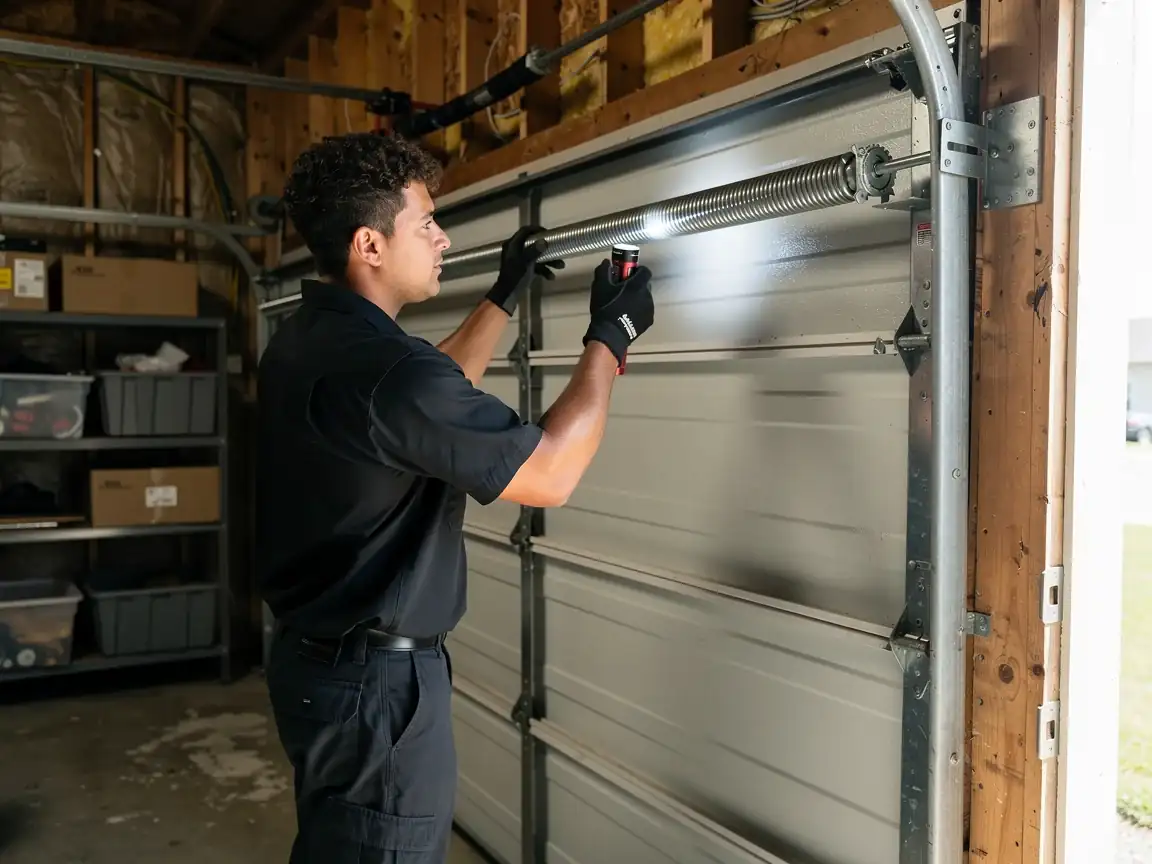
Most of the noise complaints we hear from this part of Melbourne break into three categories, and they map pretty directly to how old the hardware is. A high-pitched squeal is almost always a dry hinge or roller bearing - cheap fix, five minutes, no parts needed if caught early. A deep, metallic groan when the door starts moving usually means the torsion spring is losing tension unevenly, which happens gradually in hardware that's been cycling since a house was built decades ago. A sharp bang followed by the door stopping dead is a spring that's fully given out.
The common thread across the 45,988 owner-occupied houses in this service area is age of install, not brand or quality. A door installed when a 1970s-built home was new has had a long run, and the noise is the hardware telling you it's near the end of that run, not necessarily that something was done wrong. We can't tell you over the phone which of these it is - that takes someone standing in front of the door listening to it cycle. But knowing the rough category before you call means a faster, more useful conversation when you do.