What the Fix Involves
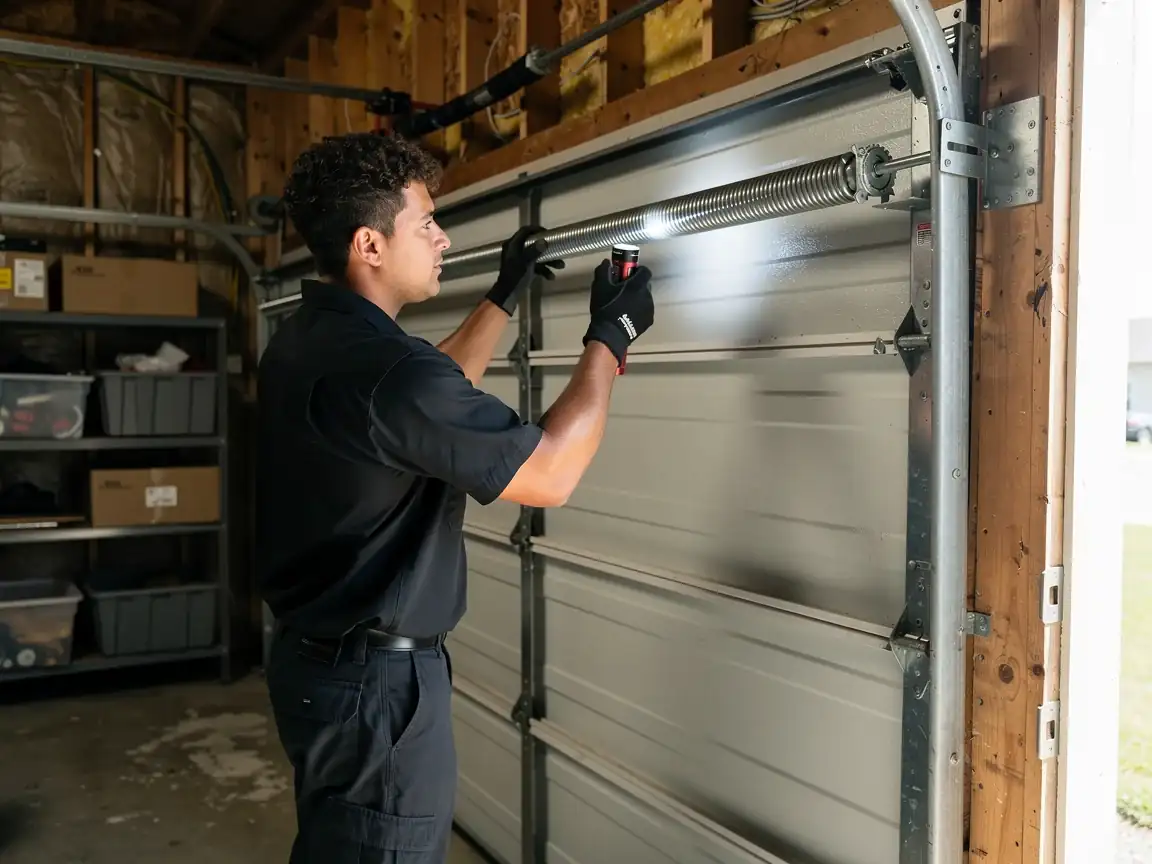
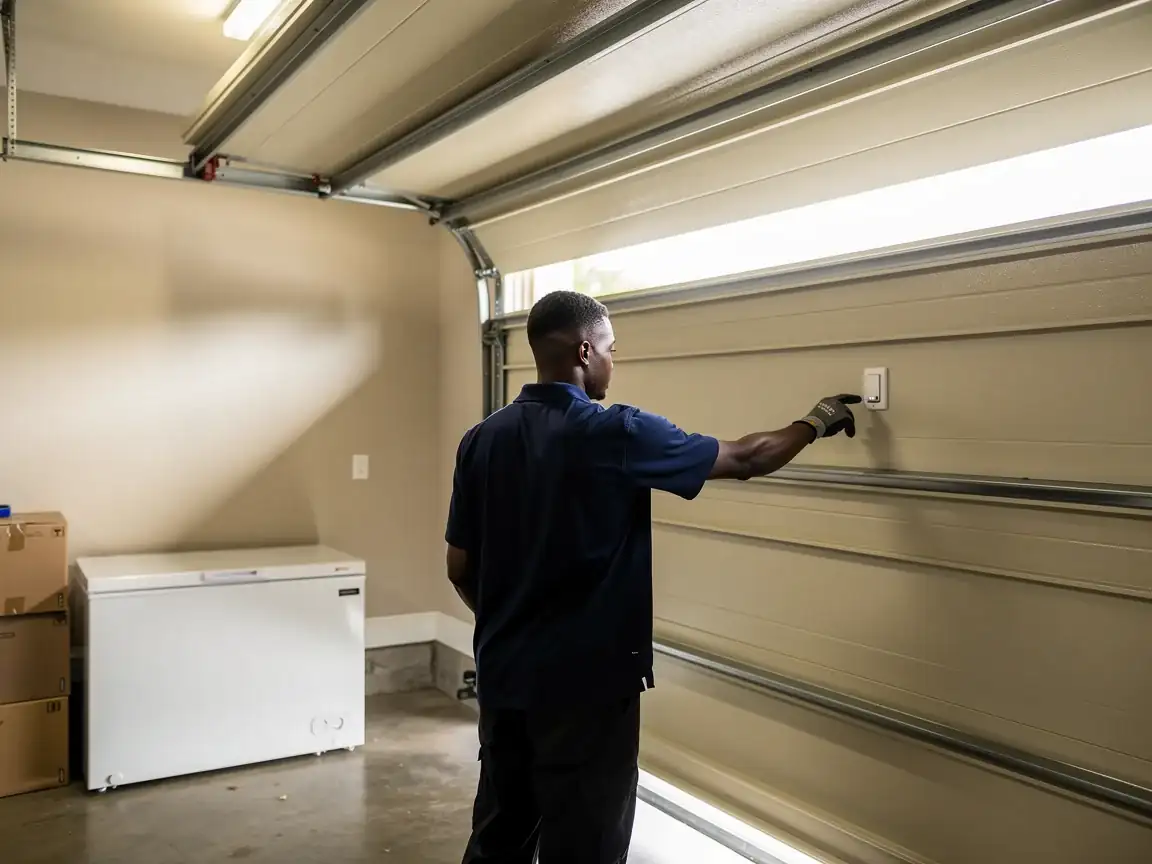
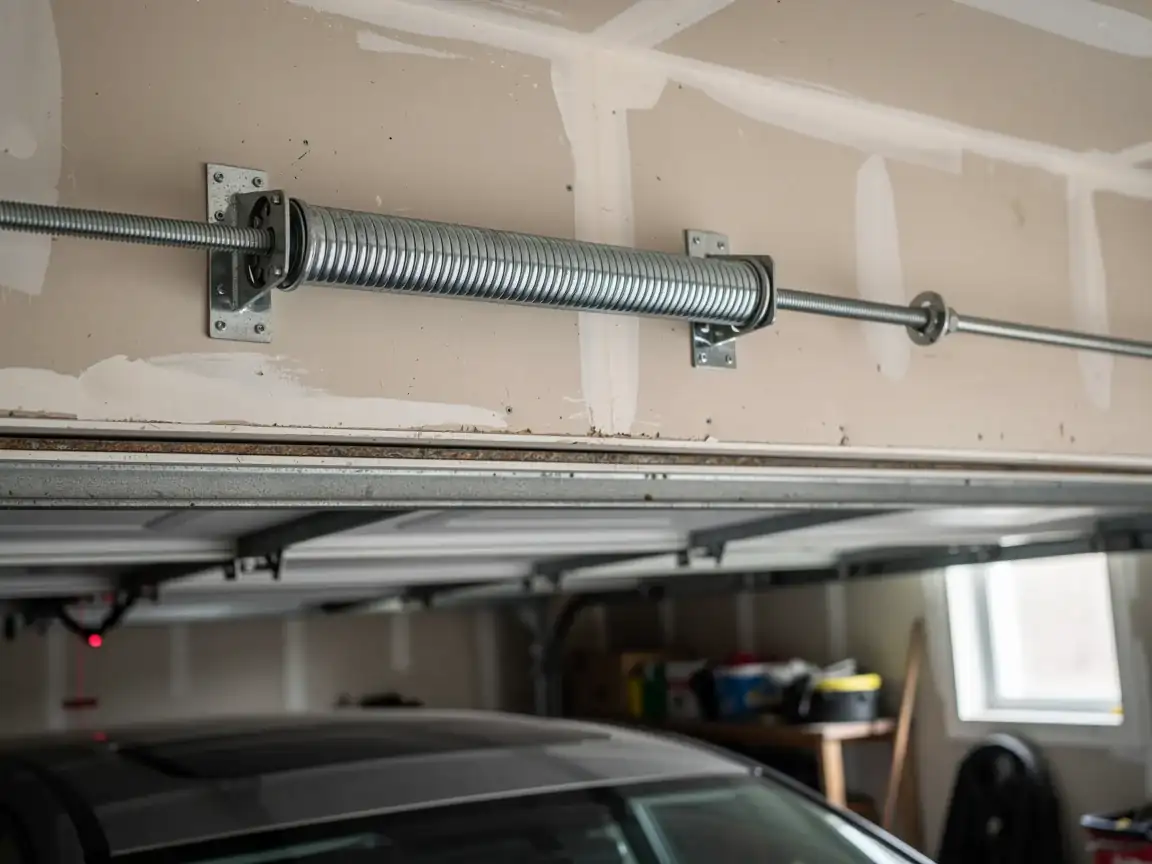
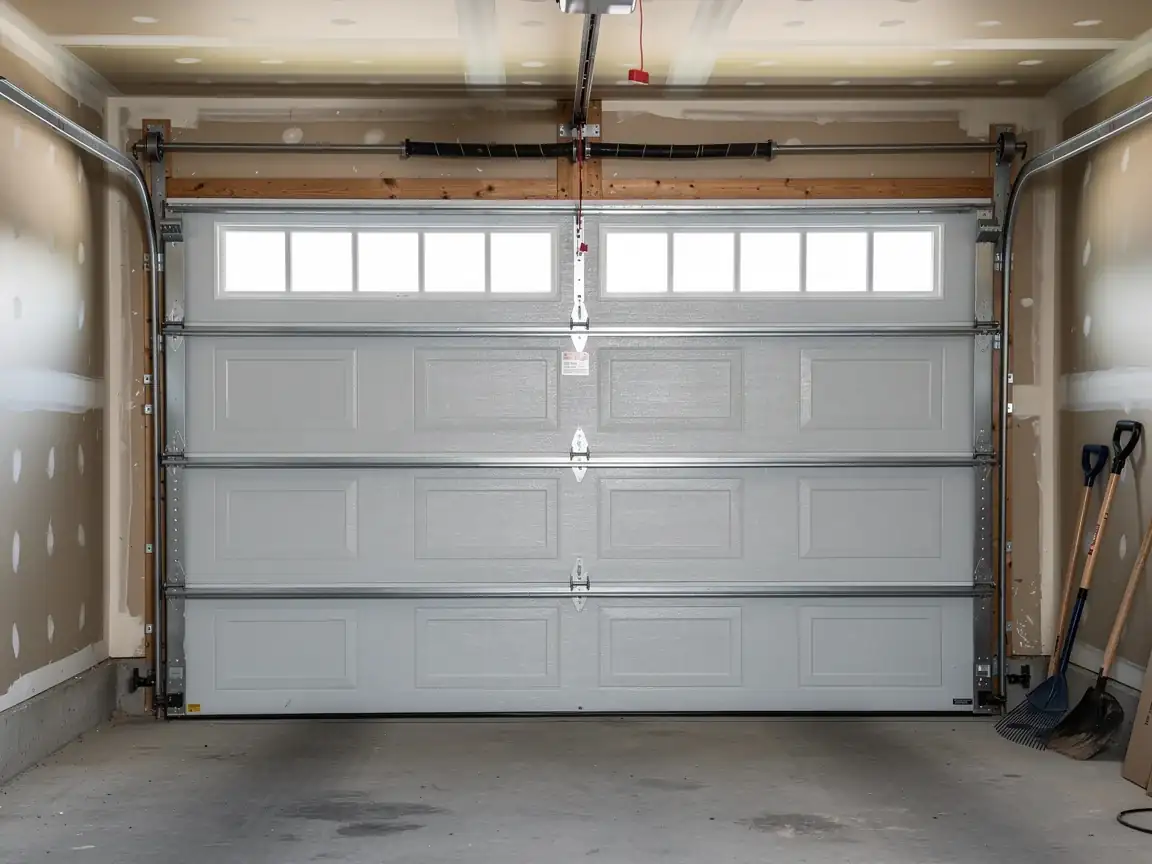
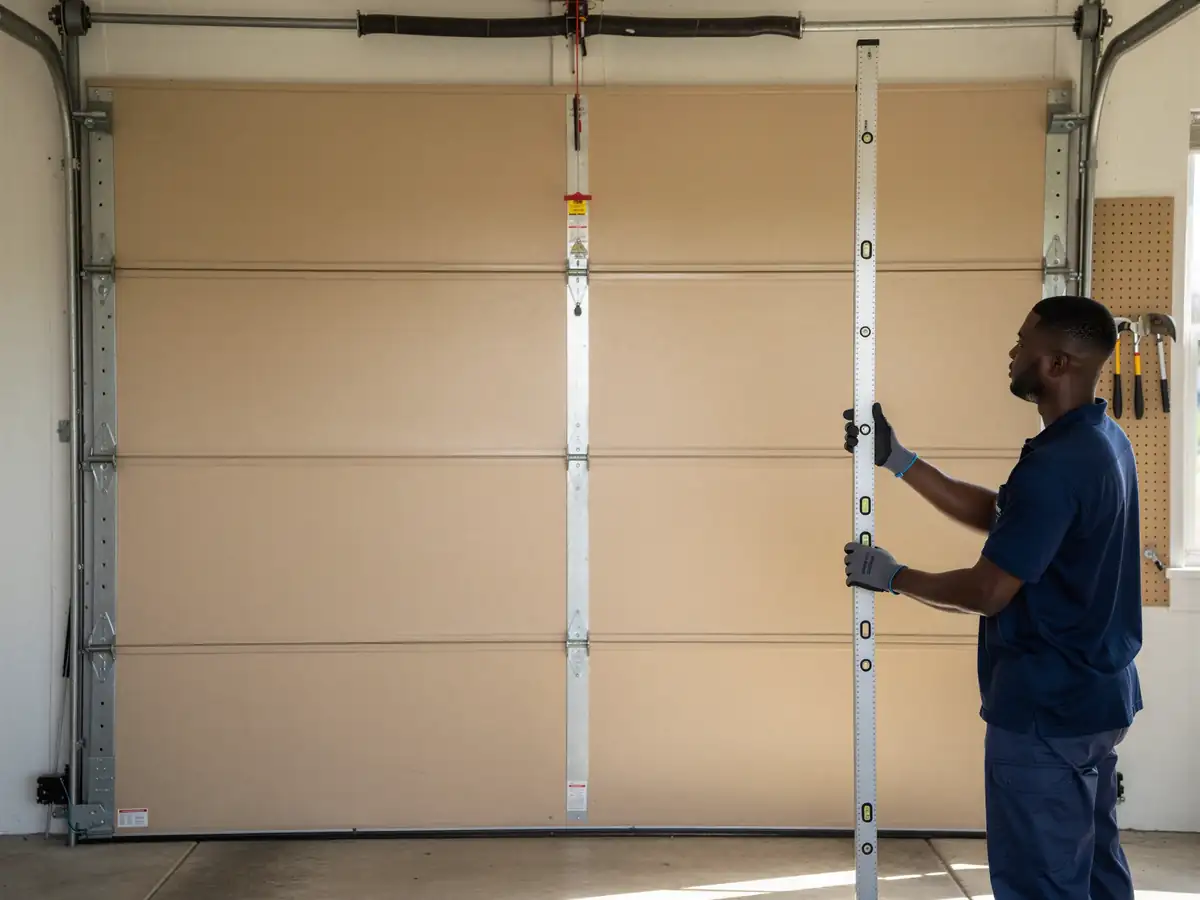
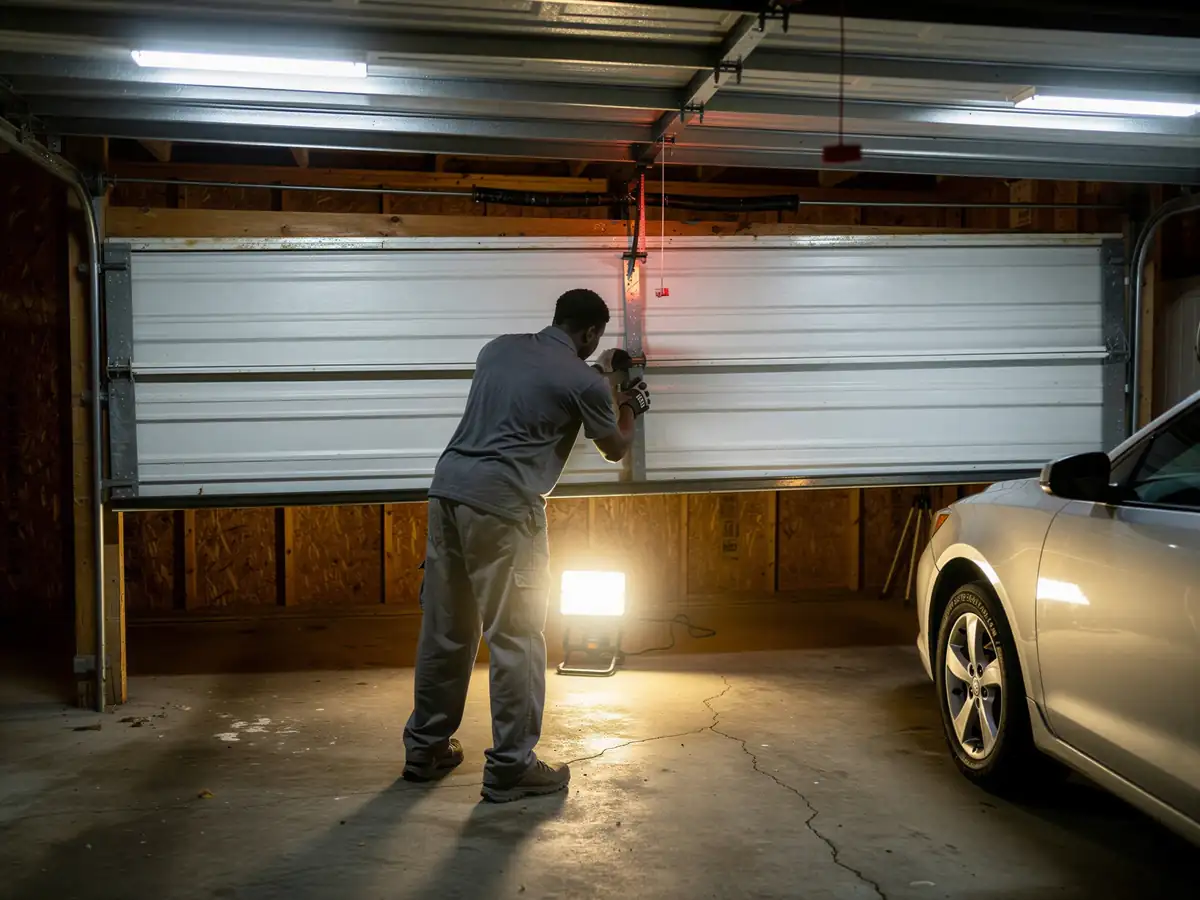
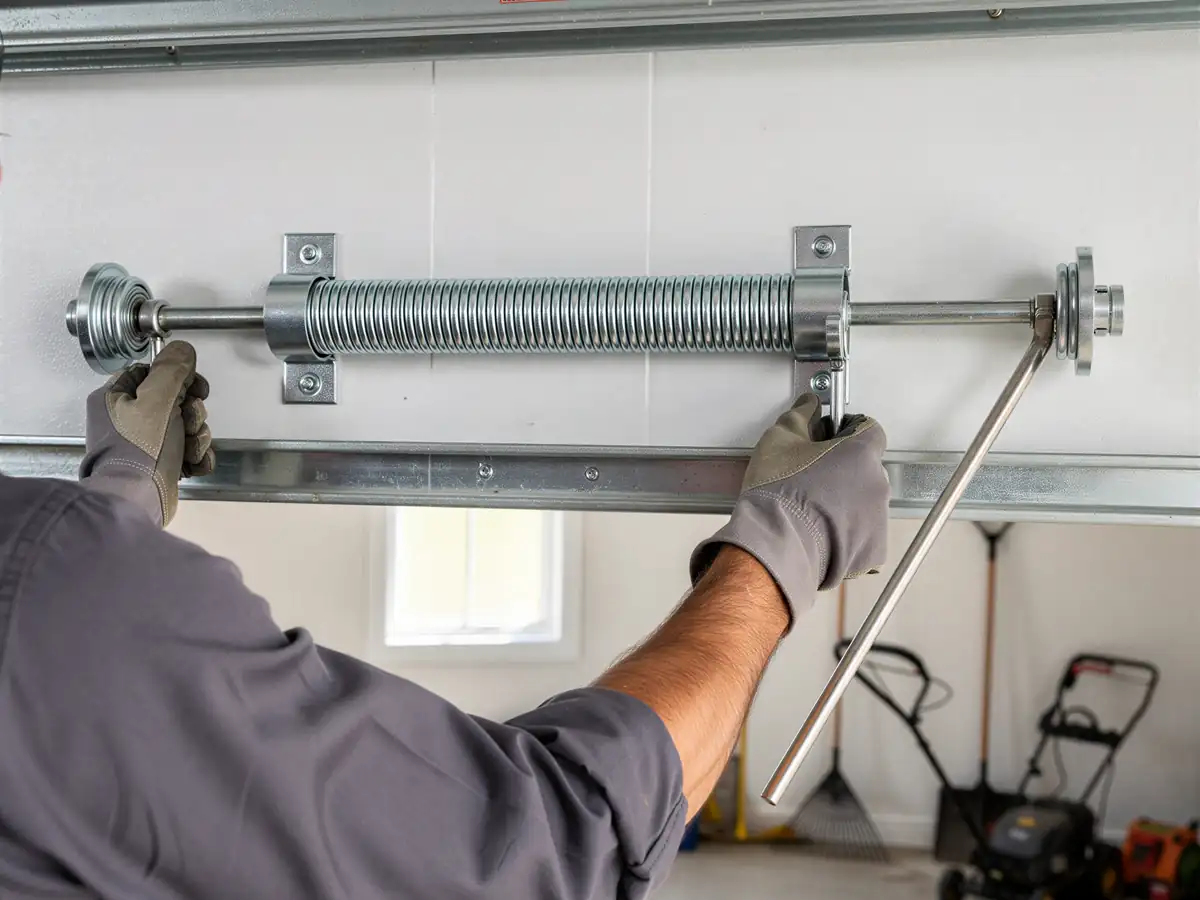
A broken garage door spring job comes down to one of two systems: torsion springs mounted on a shaft above the door, or extension springs stretched along the horizontal tracks. We pull the old spring, match the wire size, inside diameter, and length to the door it's lifting, and wind in the new one under tension with the right bars and clamps. On a double door with torsion springs, we almost always replace both springs even if only one broke, because the surviving spring is usually close behind on cycle count and mismatched tension just wrecks the new one faster. We also check the cables, drums, and bearing plates while the shaft is open, since a spring failure is often the first visible sign that the rest of the hardware is at the end of its life too. The door gets balance-tested afterward: disconnect the opener, lift by hand, and it should hold at waist height on its own. If it doesn't, the spring is wound wrong or sized wrong, and that's on us to fix before we call the job done.
We carry common sizes on the truck, but some older or oddball setups need a part ordered in, which can push a job to the next day.
See our full service list for what else we handle beyond springs.
What Causes It Around Here
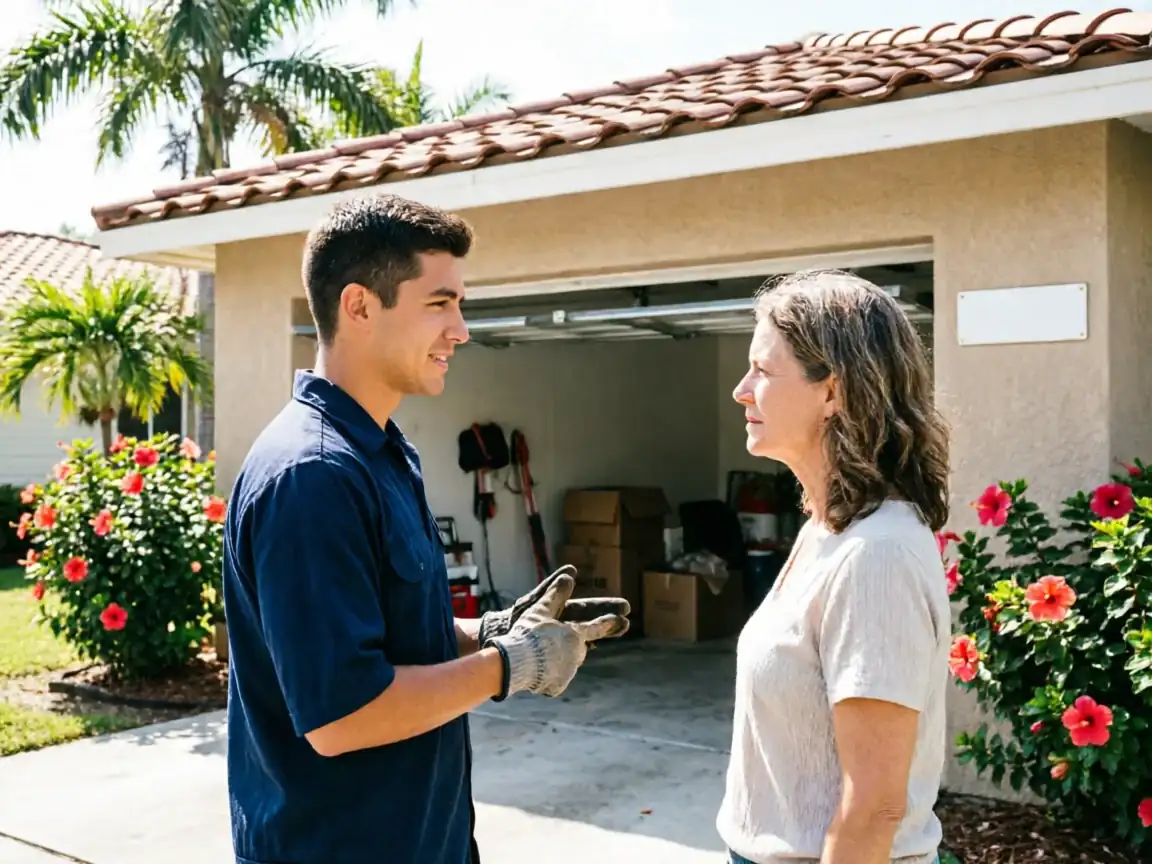
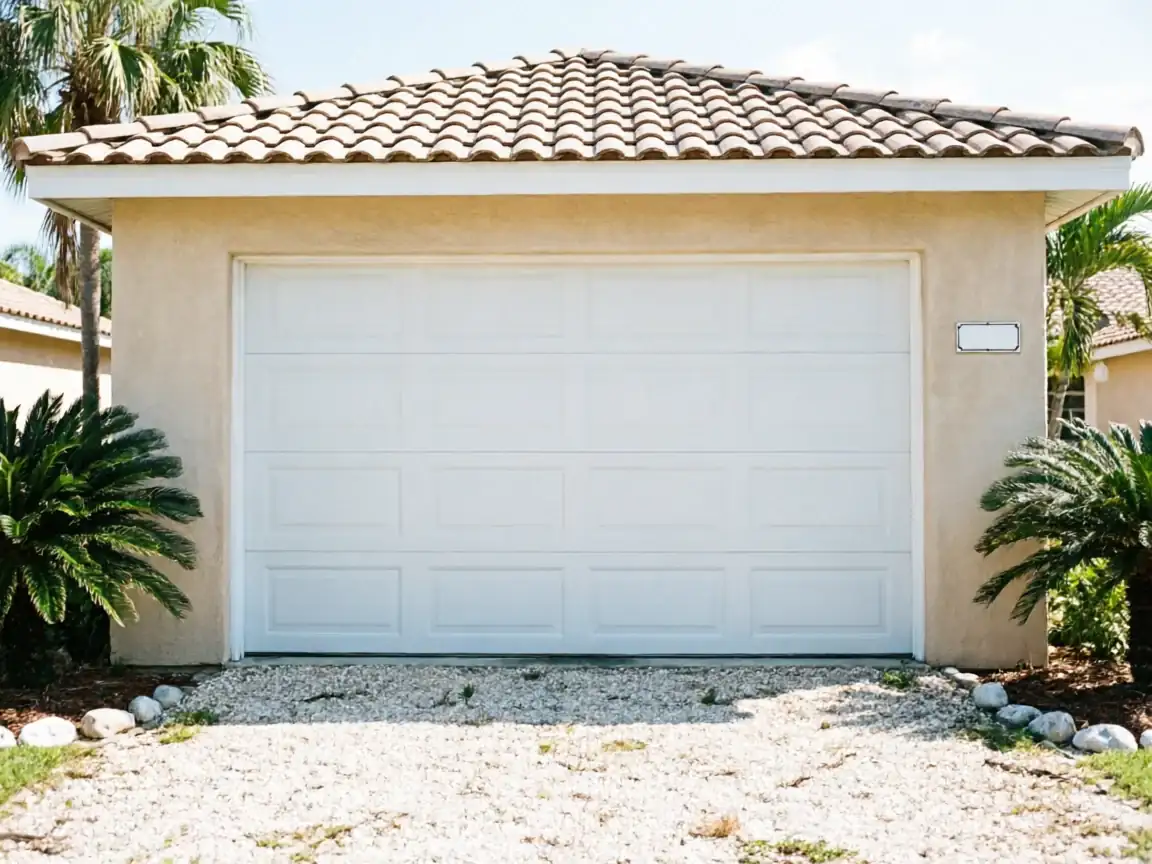
Housing across this service area mostly went up between 1966 and 2003, with the typical build year landing around 1977, and sixteen named neighborhoods still carry garage doors and hardware from that original 1960s-70s wave. A torsion spring is rated for a set number of open-close cycles, somewhere around 10,000 for a standard spring, and it doesn't matter whether those cycles happened slowly or fast - once a spring built in the 1970s or 80s hits its limit, it lets go, often without warning. Doors from that era were also lighter than what's common now, so when a homeowner swaps in a heavier insulated steel door but keeps the original spring, that spring is working harder than it was ever sized for and fails early.
The mild temperate climate here actually works in homeowners' favor compared to places with hard freeze-thaw cycles - we don't see the coil cracking that cold winters cause in other states. What we see instead is straightforward fatigue: a spring built decades ago finally running out of cycles, on a door it may no longer be correctly matched to.
How It Shows Up
The most obvious sign is a door that won't budge and an opener that just hums or clicks without lifting anything
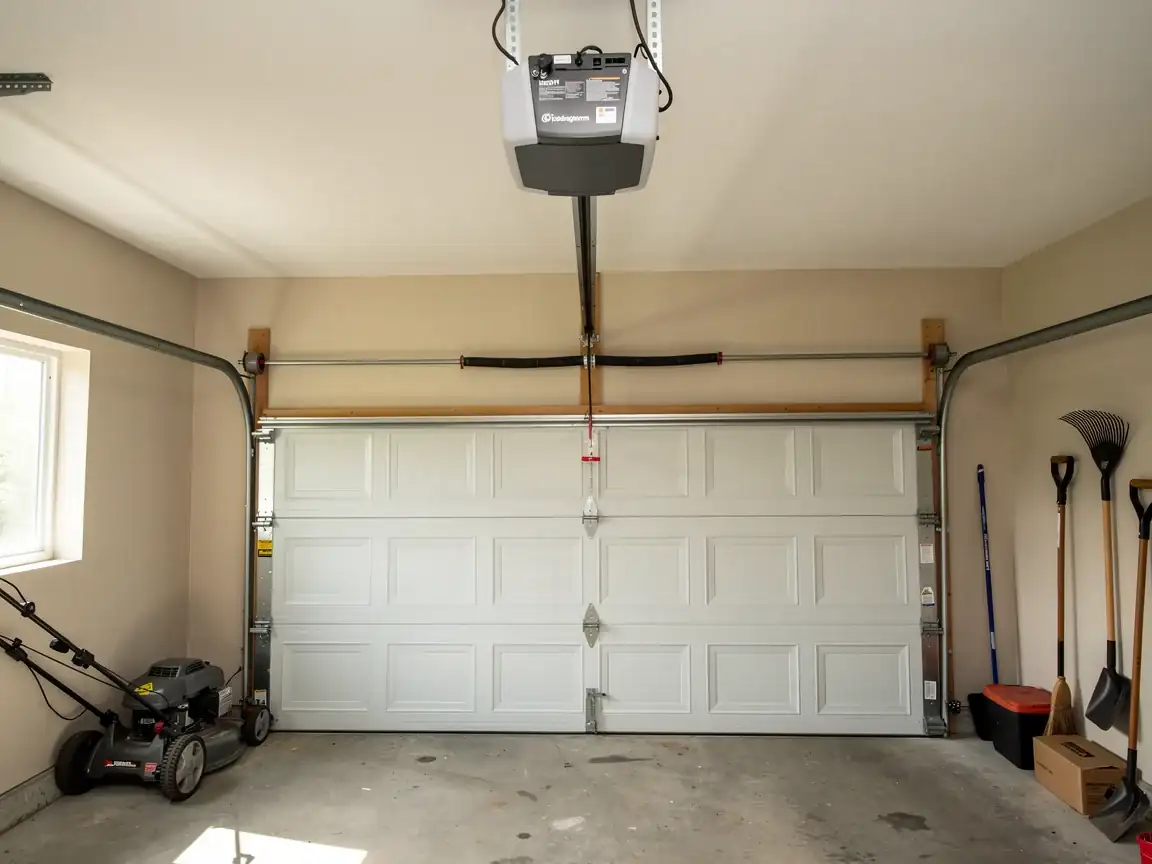
Open the garage and look up at the shaft above the door - a torsion spring that's let go will have a visible gap in the coil, sometimes with the two halves twisted apart. On extension spring setups along the tracks, you'll often see a stretched-out or snapped spring hanging loose, sometimes still attached by the safety cable, sometimes not.
Before a full break, there are warning signs worth catching early
The door feels heavier than it used to when you lift it by hand with the opener disconnected, it closes unevenly or looks crooked in the opening, or you hear a loud bang from the garage - that's usually the spring letting go, not something falling. A door that slams down fast instead of lowering smoothly is also a spring on its way out, since the spring's job is to counterbalance the door's weight on the way down as much as the way up.
If your opener runs but the door barely lifts an inch before stopping
Don't keep hitting the button. That's the motor straining against a dead spring, and running it repeatedly risks burning out the opener on top of the spring problem you already have.
What Can Go Wrong
A broken spring is rarely just a broken spring. If the door was running on a worn-out spring for a while before it snapped, the cables, rollers, or drums can take damage too, especially if the door dropped suddenly when the spring let go. We check for frayed cables and bent track every time, because installing a new spring on a door with a damaged cable just sets up the next failure.
Across the households and owner-occupied houses we see calls from in this area, torsion spring failure is the most common reason a door stops opening - more common than opener motor failure or track misalignment. That's useful context, but it also means we sometimes find a second problem once the spring's off, and the honest number can change from what we quoted on the phone.
One limitation worth naming: we don't recommend patching a spring or re-tensioning an old one to squeeze out a few more months. Springs are rated for a cycle count, not a calendar date, and once one half of a pair is near failure, the other is close behind. Replacing a single spring on a double door to save money up front almost always means a second service call within a year, and at that point you've paid for two visits instead of one.