How Local Conditions Play In
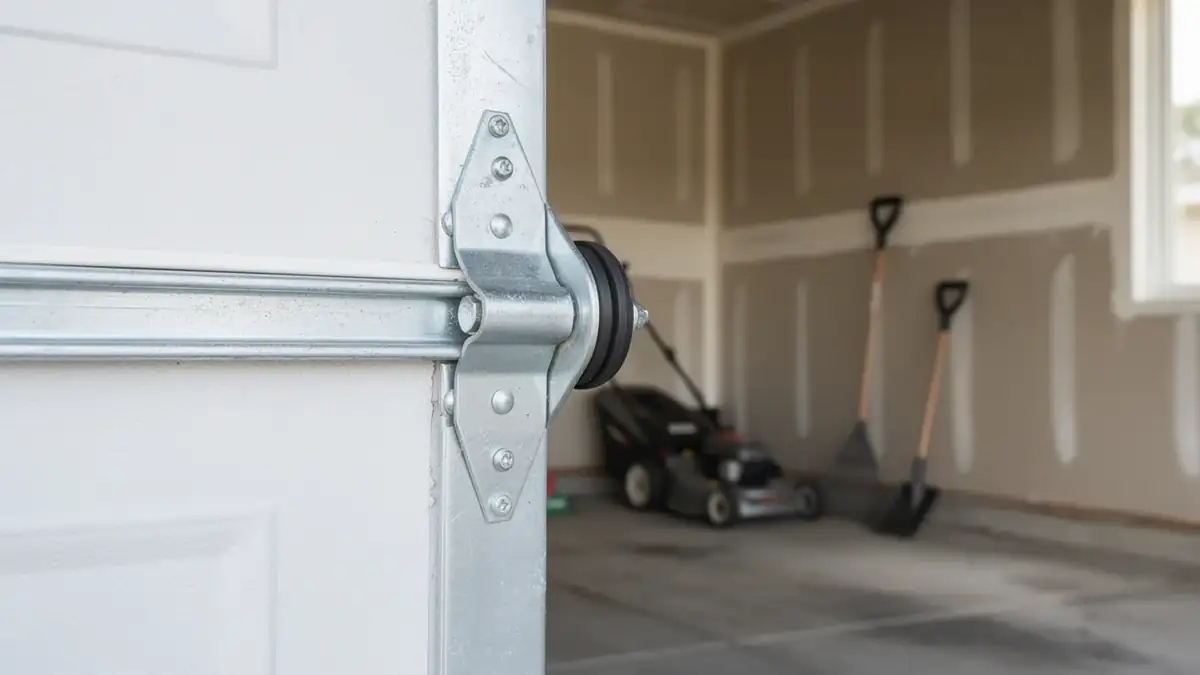
Melbourne sits in a mild temperate band, so you're not dealing with the freeze-thaw cycles that crack concrete slabs and shift track brackets up north. That's the good news. The less obvious issue is humidity and salt-laden air moving in off the coast from spots like Indian Harbour Beach and Satellite Beach, both inside six miles of most Melbourne neighborhoods. That air doesn't freeze anything, but it does work on the galvanized coating on track rollers and hinges over the decades, and a lot of these tracks have had three or four decades to corrode quietly. A track that's lost its coating develops rough spots and rust pits. Rollers catch on those pits instead of rolling through them, and a catching roller pulls the door sideways just enough to walk it off the rail. None of this is dramatic weather damage - it's slow, and it's the reason a door that's worked fine for years suddenly starts binding.
What Most People Get Wrong
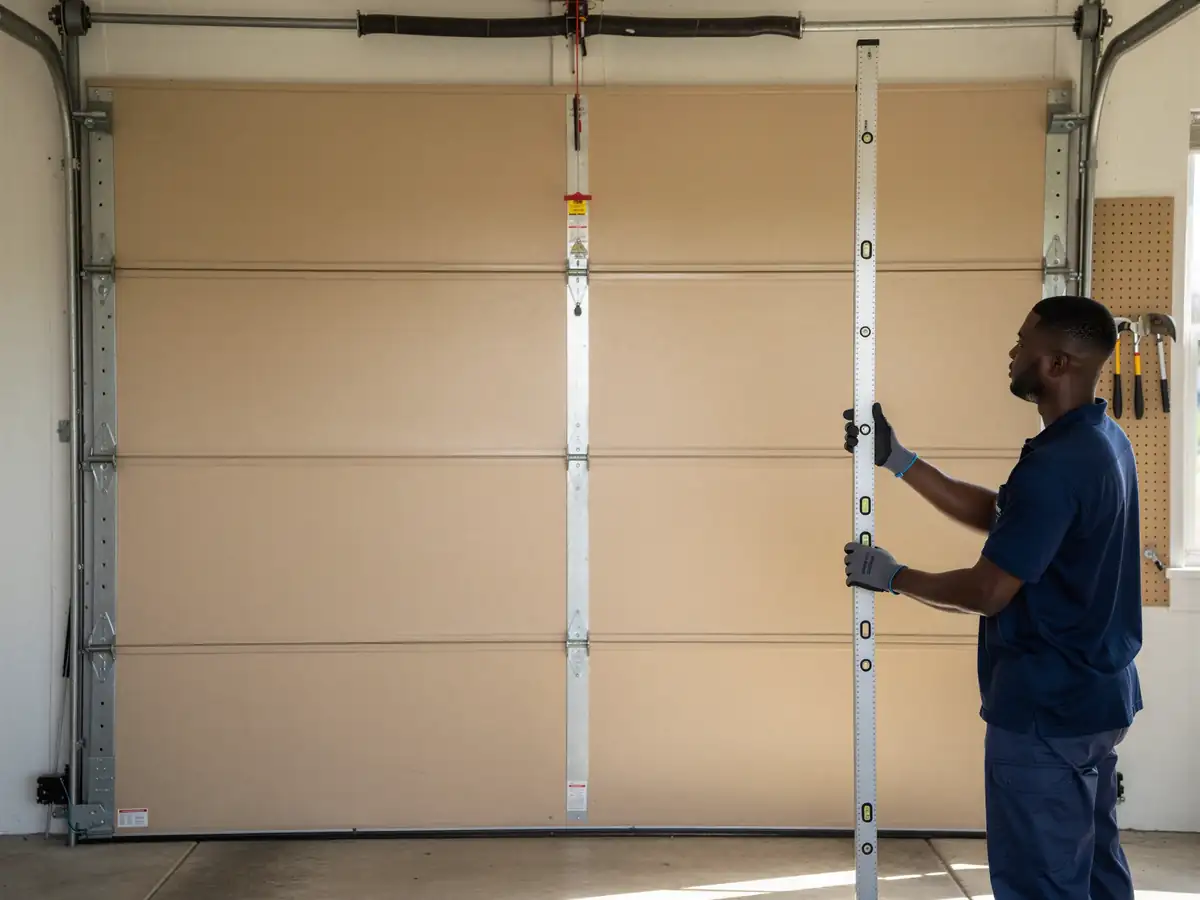
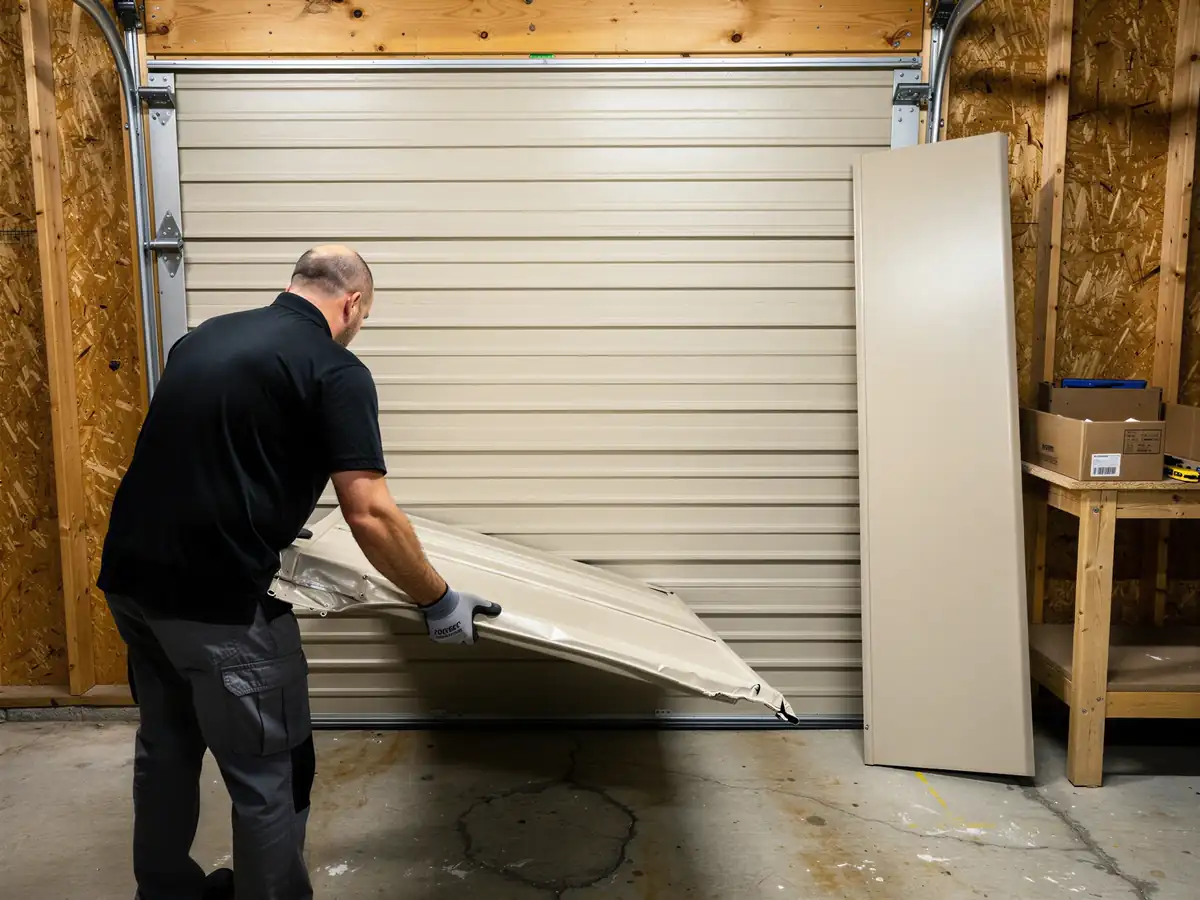
The housing stock here was mostly built between 1966 and 2003, with a lot of it concentrated in that 1960s-70s wave across the sixteen named areas that make up this part of Brevard County. People assume a door that's going off track needs new rollers or a new opener. Usually it's the track itself - bent, or bracket screws backed out of a jamb that's been through forty-plus years of door slams. On a house with original hardware from that era, the track brackets were often set with shorter screws than you'd use today, and wood jambs around here loosen with age and humidity the same way any Florida frame house does. Tightening or replacing those brackets fixes more off-track doors than any roller swap does. The other mistake is forcing the door back onto the track by hand - that usually bends the rail further and turns a bracket fix into a track replacement.
What Is Going On
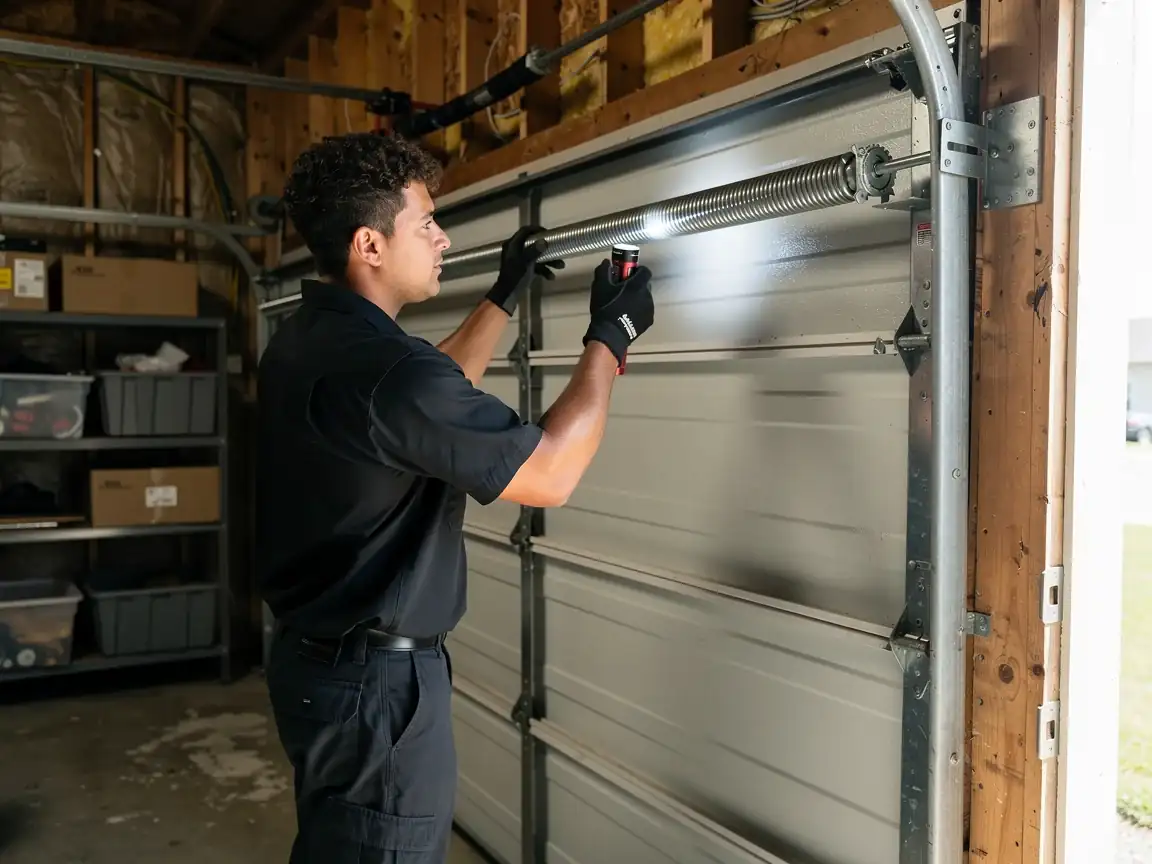
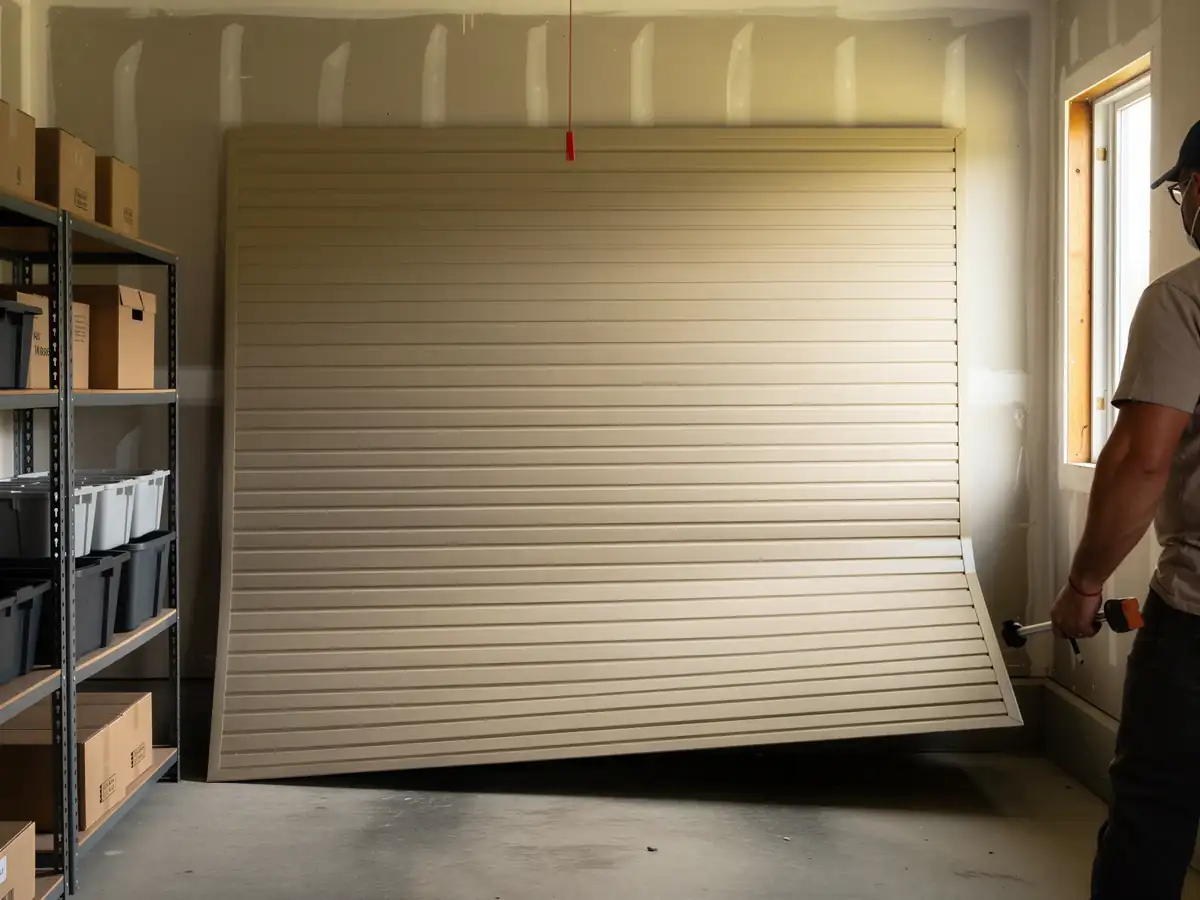
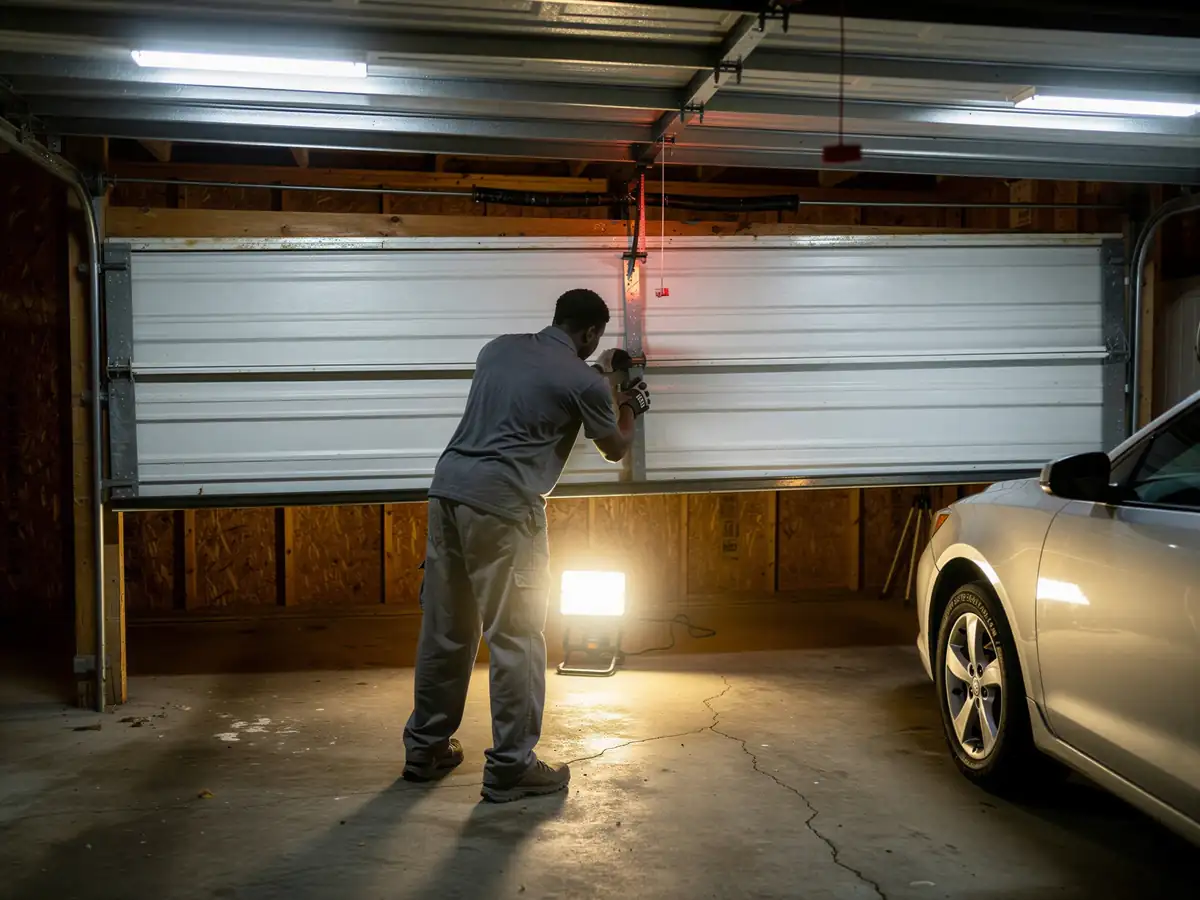
On a lot of the doors we see in houses from the 1966-2003 era, the track is original or close to it, and it was never designed to be adjusted after the fact - it was set once, square to a jamb that's since moved a little. Add a roller that's worn oval instead of round, which happens gradually on original hardware, and the door has just enough play to catch a lip in the track on the way up. Once it catches, the opener keeps pulling and the door walks sideways instead of straight up. It's mechanical, not mysterious, and in most cases it's been building for years before the day the door finally jumps.