Serving Melbourne, FL & nearby
(321) 534-7032
Melbourne, FL

What We Actually Check When We Come Out

Melbourne homes built mostly between 1966 and 2003 carry original hardware that needs a different kind of check than a new build. Here's what a real call looks at.

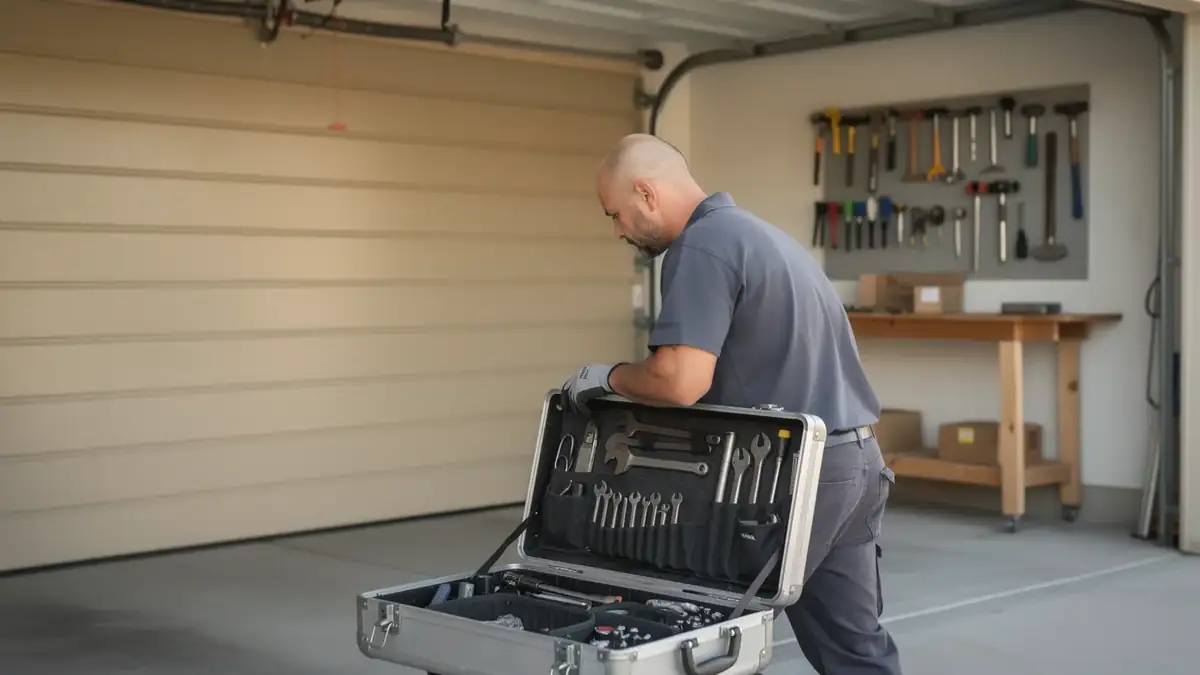
A technician leans on an open toolbox in front of a garage door.

How Local Conditions Play In

Melbourne sits in a mild temperate band, so we don't get the hard freeze-thaw cycles that crack springs and warp panels up north. That's the good news. The flip side is that most of the housing stock here went up between 1966 and 2003, with a median build year around 1977 - meaning a huge share of doors and openers in this service area are original or close to it, running on hardware nobody has made in decades. A call on a house from that era isn't the same call as one on a 2015 build. We're often looking at single-point torsion setups, lighter-gauge track, and openers that were replaced once, maybe twice, but on cheap hardware that didn't match the door's weight. The mild climate means rust and dry-rot aren't driving most failures - fatigue and mismatched parts are. Sixteen named areas across this part of Brevard County share that same late-60s-to-90s housing wave, so this isn't a one-street problem. A service call here starts with figuring out which decade's hardware you're actually dealing with, because that changes every answer after it.

What Most People Get Wrong

The most common mistake we see is an owner assuming a stiff or noisy door means the whole unit is done. With median build year around 1977, a lot of these doors are pushing fifty years old, so replacement feels like the obvious call. Most of the time it isn't. A torsion spring sized wrong for the door, a roller that's worn oval instead of round, or a track bent a quarter inch out of true will make a 1970s door feel like it's failing - when the panel itself is fine. The other mistake is treating every opener problem as an opener problem. Wiring from a prior owner's DIY swap, a sensor knocked out of alignment, or a drum that's been re-drilled once already can all mimic a dying motor. We check the door's actual hardware age against what's installed before we touch the opener, because in a house built in the Melbourne area's typical window, the two were rarely replaced together.

When to Get Help

Call before the door comes off the track entirely, not after. A cable that's starting to fray, a spring that's lost its shape, or a door that drops instead of lowering smoothly are all signs the hardware is near the end of its working life - not emergencies yet, but close. Given that median household income across this service area runs around $86,305 and the housing stock spans roughly four decades of different hardware standards, the right fix on one street isn't always the right fix two blocks over. If a double door starts sagging on one side, or an opener runs but the door barely moves, that's worth a same-week call rather than a wait-and-see.

What Is Going On

With 82,524 households in the service area and 45,988 of those owner-occupied, we see the same pattern a lot: original or first-replacement hardware installed somewhere between 1966 and 2003, carrying weight it was never quite spec'd for. A service call covers a full check of the spring tension against the door's actual weight, the track alignment, roller wear, cable condition, and whether the opener's force settings still match hardware that's shifted over the years. We don't replace what doesn't need it - a torsion spring with another few years in it gets left alone, not swapped just because the door is old. What we won't do on a first visit is guess at parts we haven't seen in person; some of what's installed in houses from this era isn't something we carry on the truck, so a second trip for a specific part is sometimes the honest answer instead of a workaround that won't hold.

How it works

From “it’s stuck” to “it’s fixed”

A man stands in a driveway looking at his phone, with a partially open garage door behind him.

Tell us what’s wrong

Describe the symptom - won’t open, loud bang, opener runs but the door won’t move.

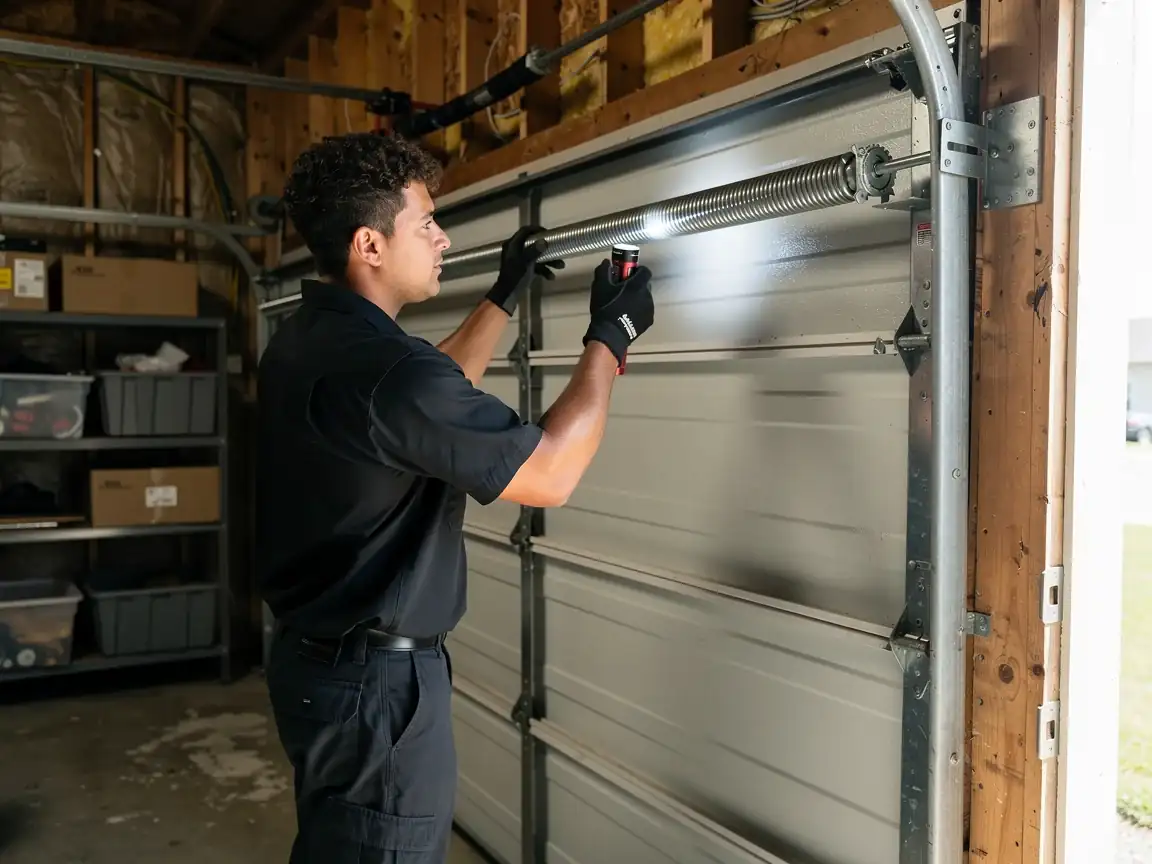
A technician inspects a garage door torsion spring with a flashlight.

On-site diagnosis

A technician tests the door under power and by hand and finds what actually failed.

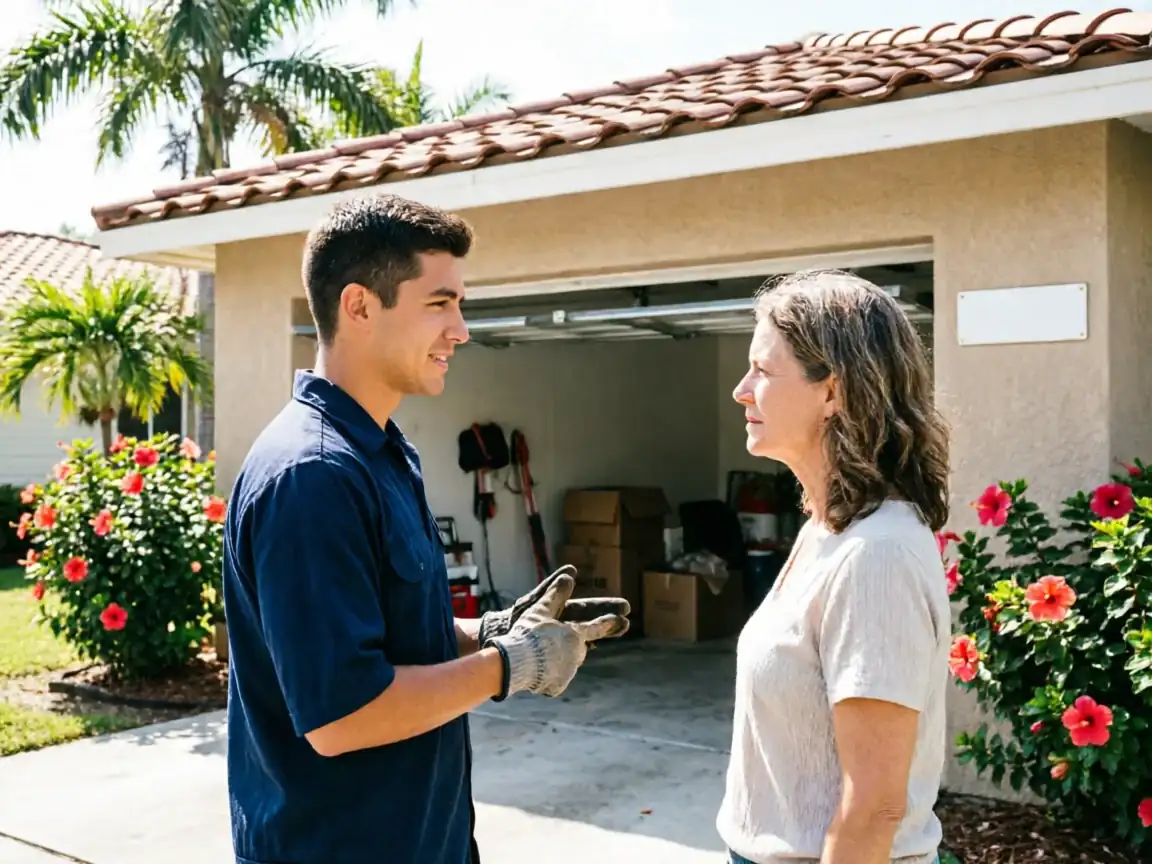
A technician in work gloves talks to a woman in front of a garage.

Clear, up-front plan

You get the fix that’s needed and what drives the cost - before any work starts.

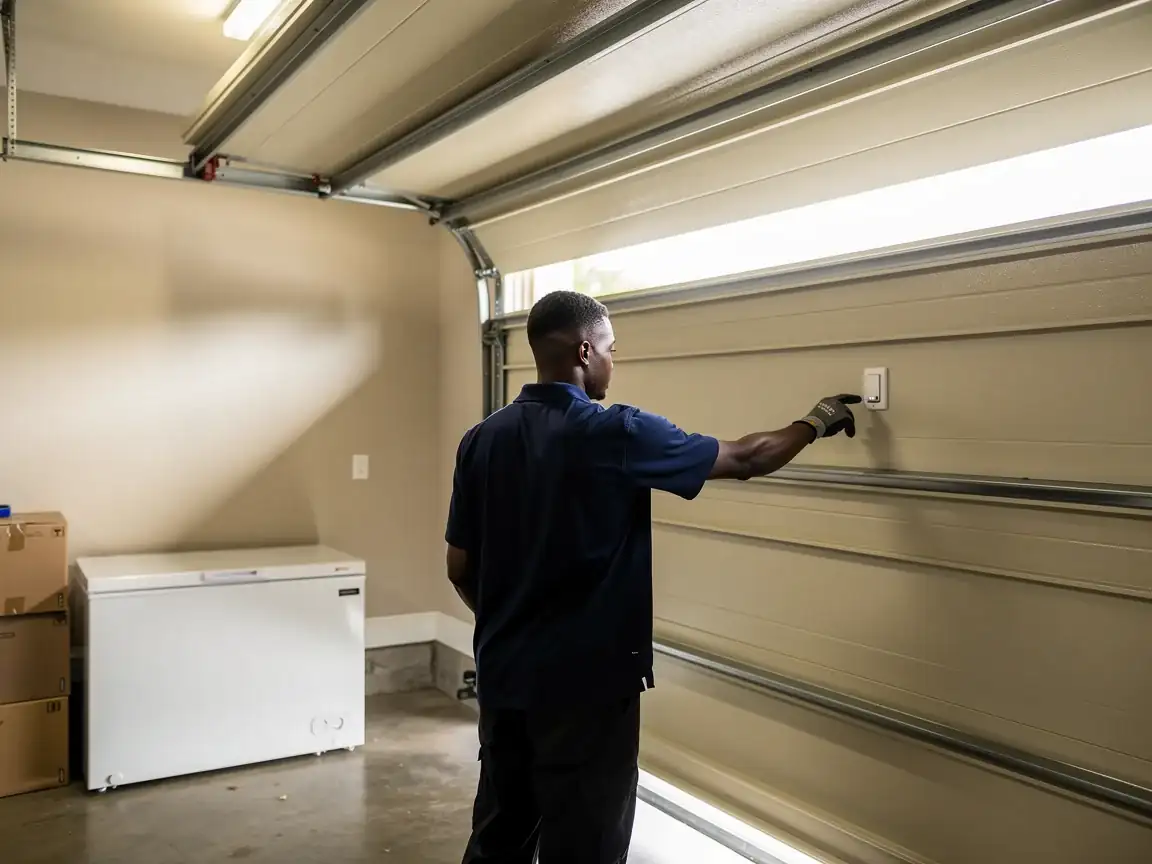
A technician presses a button on the wall next to an open garage door.

Repaired & tested

The repair is done, the door is set true and tested, and the work area left clean.

Next step

Not sure which repair your door needs in Melbourne, FL? Describe what it’s doing - every job starts with a diagnosis.

How we work

What to expect

A straight, honest approach on every Melbourne job.

Diagnosis first

Every visit starts by finding what actually failed - not a pre-written parts list.

The right part for the door

Springs and openers matched to the door’s weight and age, so the fix holds up.

Straight answers

When a repair makes more sense than a replacement - or the reverse - you hear it plainly.

Clean, careful work

Tension released safely, hardware set true, the door tested under power before we leave.

What we do

Garage Door Services

Repair and installation work for Melbourne homes and businesses.

Questions

Frequently asked

Straight answers about garage door repair in Melbourne. Still unsure? Ask us directly.

Is my garage door too old to repair?

Not necessarily. Age alone doesn't mean replacement - a lot of doors built during the area's main construction wave between 1966 and 2003 still have solid panels. What usually fails first is the spring or track hardware, not the door itself. We check what's actually worn before recommending a full swap.

Does Melbourne's climate affect garage door maintenance?

The mild temperate climate here means we don't deal with the freeze-thaw stress that cracks hardware in colder regions. That said, hardware from houses built in the 1970s and 80s still wears out from age and use, so the main issue is fatigue, not weather extremes.

Why does my opener work but the door won't move right?

On older hardware, common in homes built between 1966 and 2003, the opener is often fine while the spring tension or track alignment has drifted out of spec. We check the door's mechanical side first since that's where most of these issues actually start.

Ready to get your garage door sorted?

Tell us what it’s doing and where you are in Melbourne - we’ll take it from there.

Request a QuoteCall