How Local Conditions Play In
Melbourne sits in a mild temperate climate band, so you're not dealing with the hard freeze-thaw swings that crack hardware in colder states. That matters here because it rules out the usual story - a spring doesn't go because the temperature dropped overnight. What actually drives failure in this area is age. Most houses across the 16 named areas that make up the local stock were built between 1966 and 2003, with the median landing around 1977. A torsion spring installed when a house like that was framed has been through decades of daily cycles: up, down, up, down, thousands of times a year. Mild weather doesn't shorten a spring's life, but it also doesn't do anything to extend it. The spring wears out on cycle count and metal fatigue regardless of whether the air outside is 55 or 85 degrees. So when a spring lets go on a Melbourne door, the cause almost always traces back to how old the door and its hardware are, not a weather event. That's a useful thing to know before you start troubleshooting, because it means the fix usually isn't about the day's conditions - it's about how many years that spring has been doing its job.
What Most People Get Wrong
The common assumption is that garage door trouble is a weather problem - something people hear about from relatives up north where a cold snap snaps a brittle spring. That story doesn't apply here, and leaning on it leads people to the wrong fix. They'll wait for a stretch of better weather, or blame the door opener's sensor, when the real issue is a spring or cable that's simply reached the end of its service life. With most homes in the area dating to 1966 through 2003, a lot of original hardware is 20 to nearly 60 years old. Steel fatigues whether it's humid and 80 degrees or dry and 60. Another thing people get wrong: assuming an opener replacement fixes a door that's heavy to lift by hand. If the door is hard to move with the opener disconnected, the spring is undersized or worn, and a new opener motor will just strain against the same problem until it burns out too. With 82,524 households and 45,988 owner-occupied houses in this service area, there's a lot of hardware out there from the same era quietly approaching the same point of failure.
What Is Going On
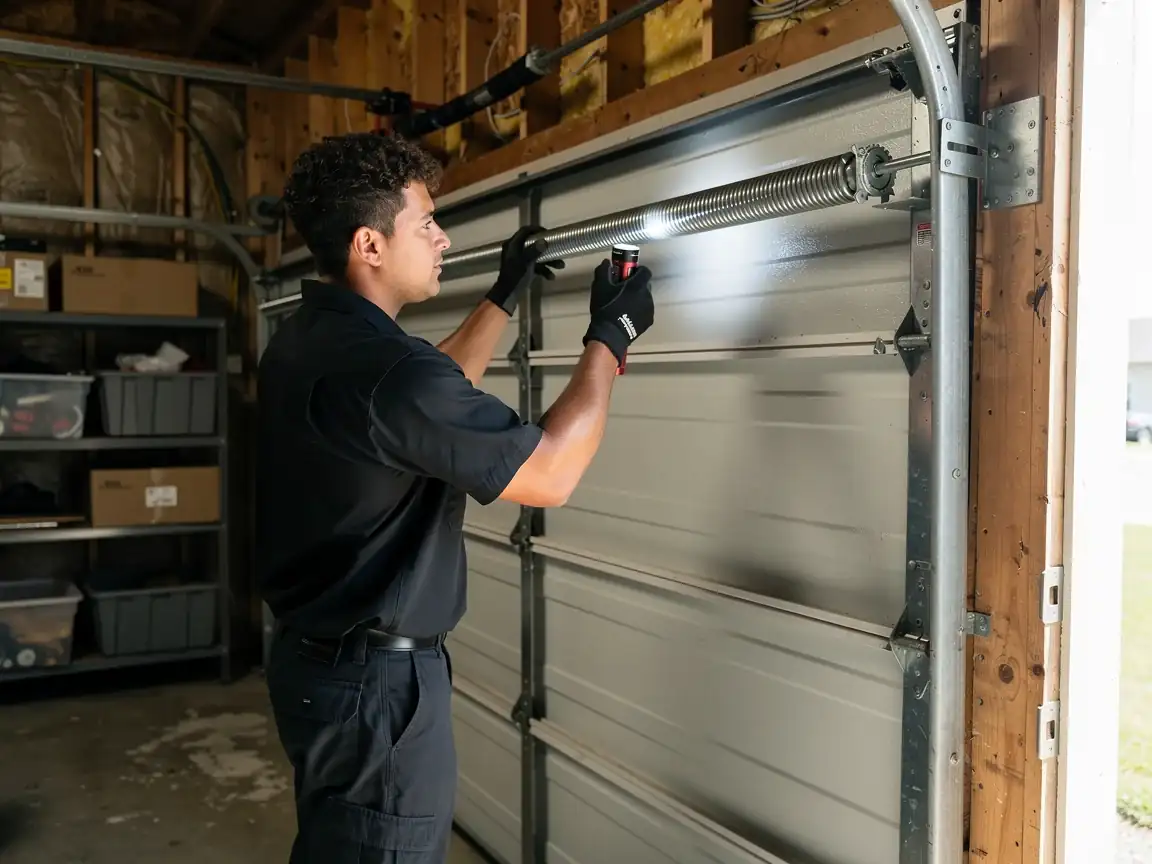
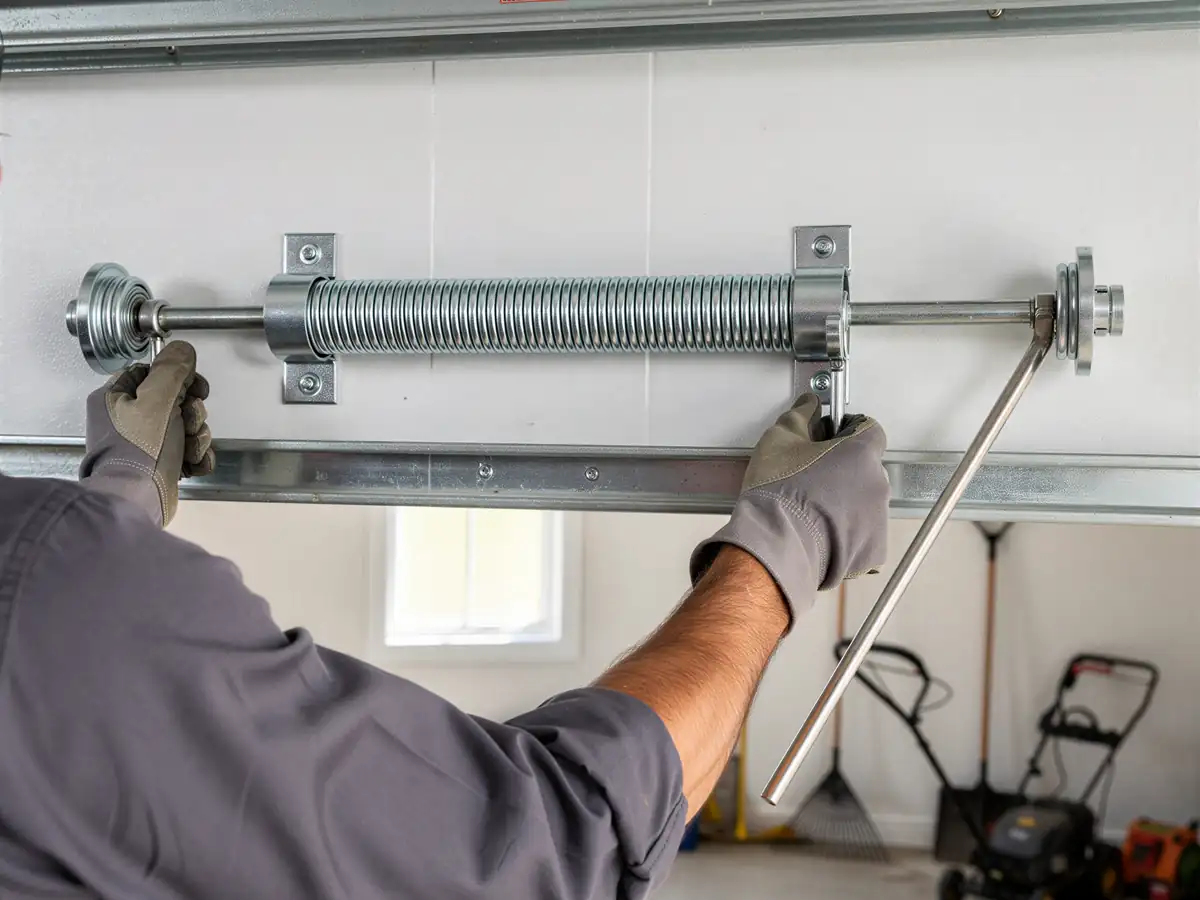
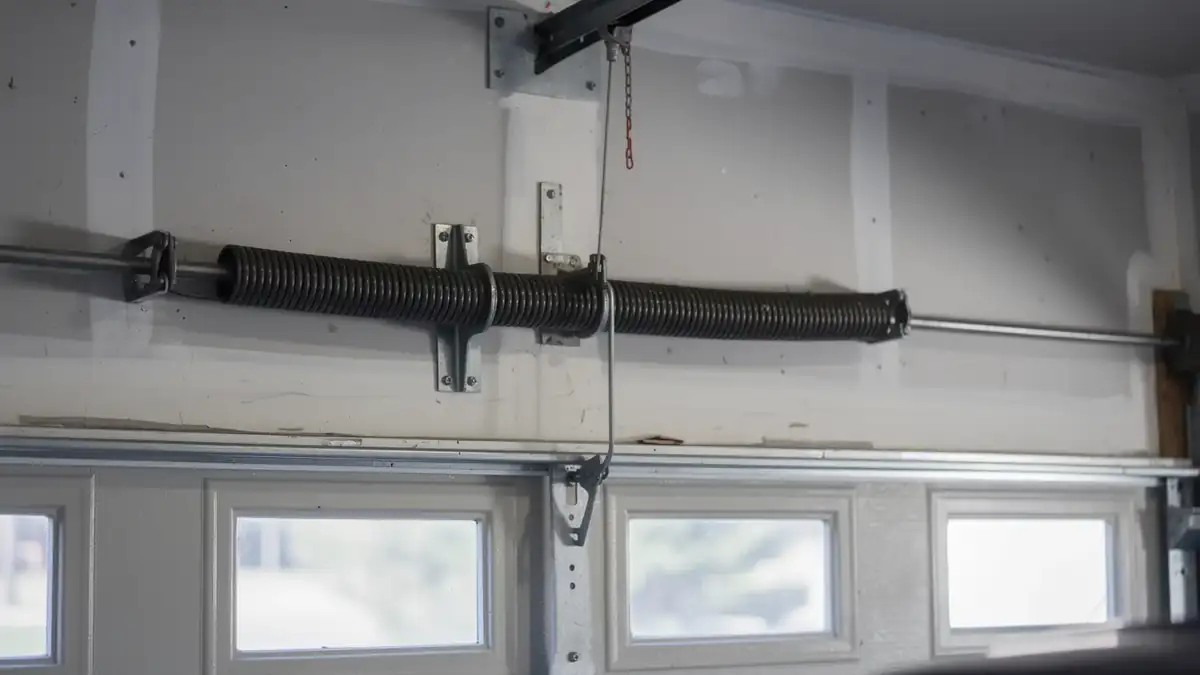
A torsion spring is rated for a set number of open-close cycles, usually somewhere in the ten-thousand range depending on the spring. A household that uses the garage door a few times a day runs through that count over years, not decades, which means a door on a house built in 1977 - the median year here - has likely gone through several springs already, or is overdue for one now. The cable, rollers, and hinges wear on the same clock. None of this is about Melbourne's weather; the mild temperate band here doesn't add rust or brittleness the way harsher climates do elsewhere. It's a simpler story than that: metal under repeated tension eventually gives out, and with median household income in the area at $86,305, most owners replace rather than patch once a spring goes, since the labor to access the spring is most of the cost either way. If your door was installed when the house was built, and the house falls in that 1966-2003 range common here, the spring doing the lifting right now is very likely not original - or it's overdue to not be.