What You Pay
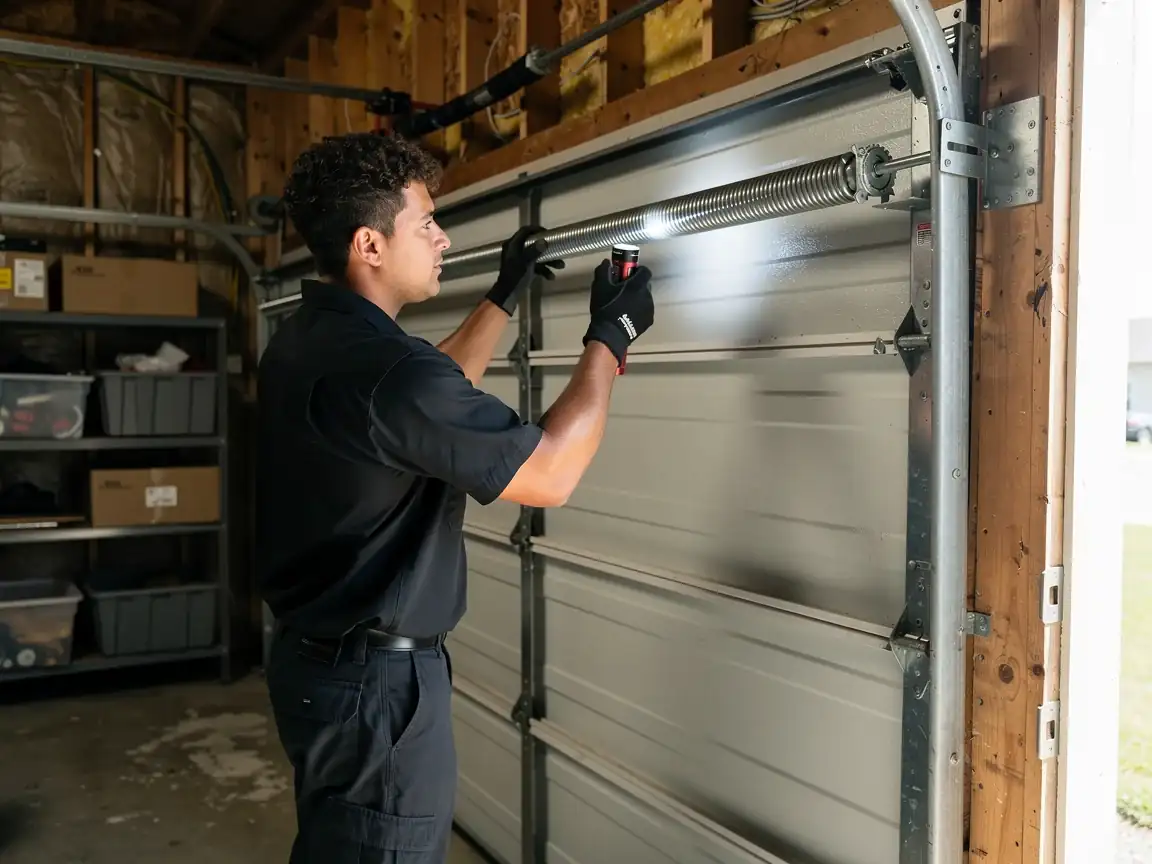
We don't post a flat number here because what breaks on a 1975-built house isn't what breaks on a 2001 one, and Cocoa Beach sits closer to the older end of that range. A lot of the garage doors on this stretch of barrier island still run original torsion springs and openers that predate the parts most trucks carry as standard stock. That means the job often starts with confirming what's actually on the door before we can tell you what it costs to put right.
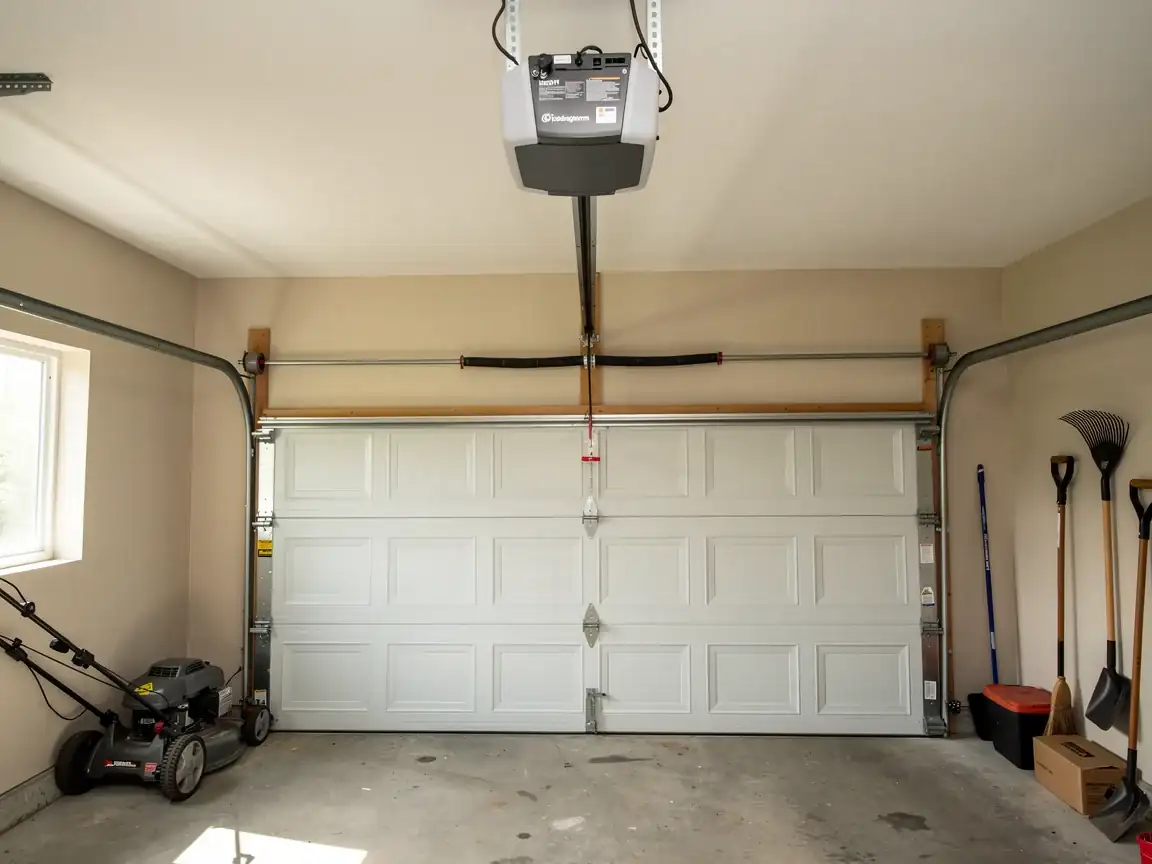
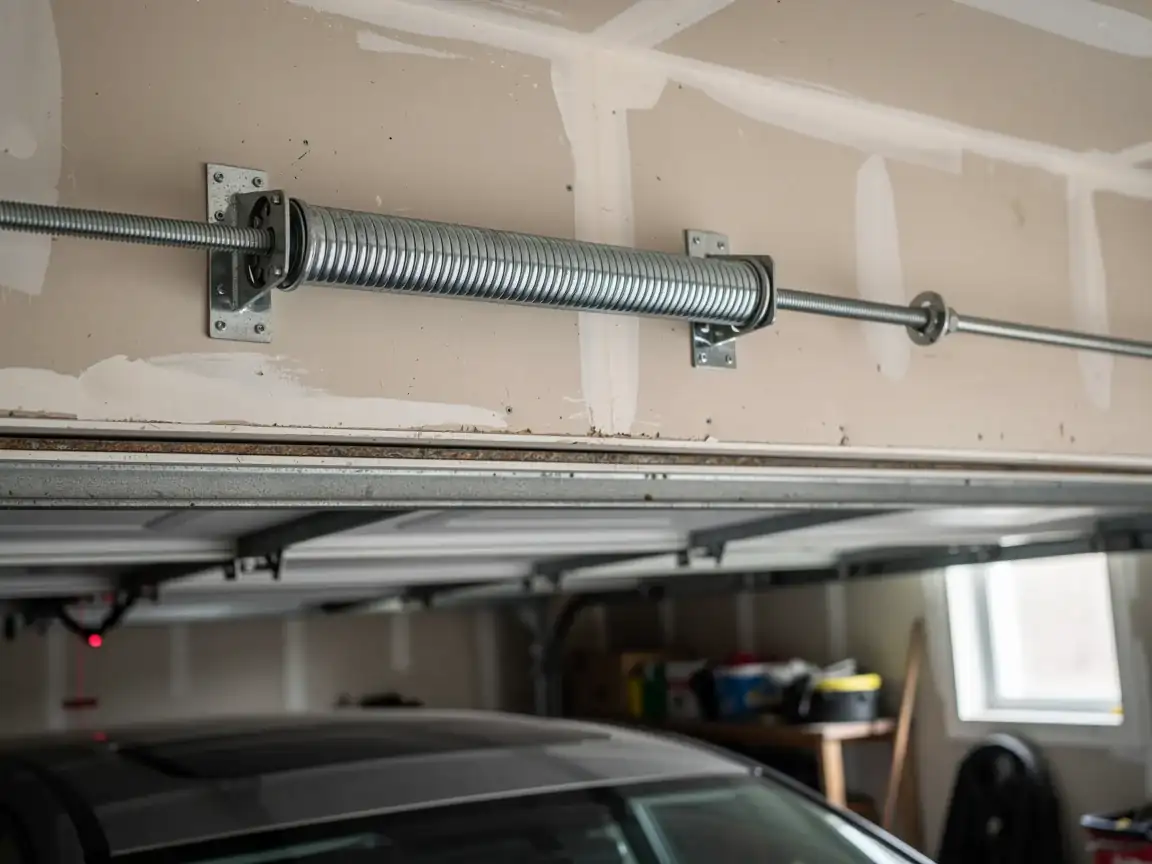
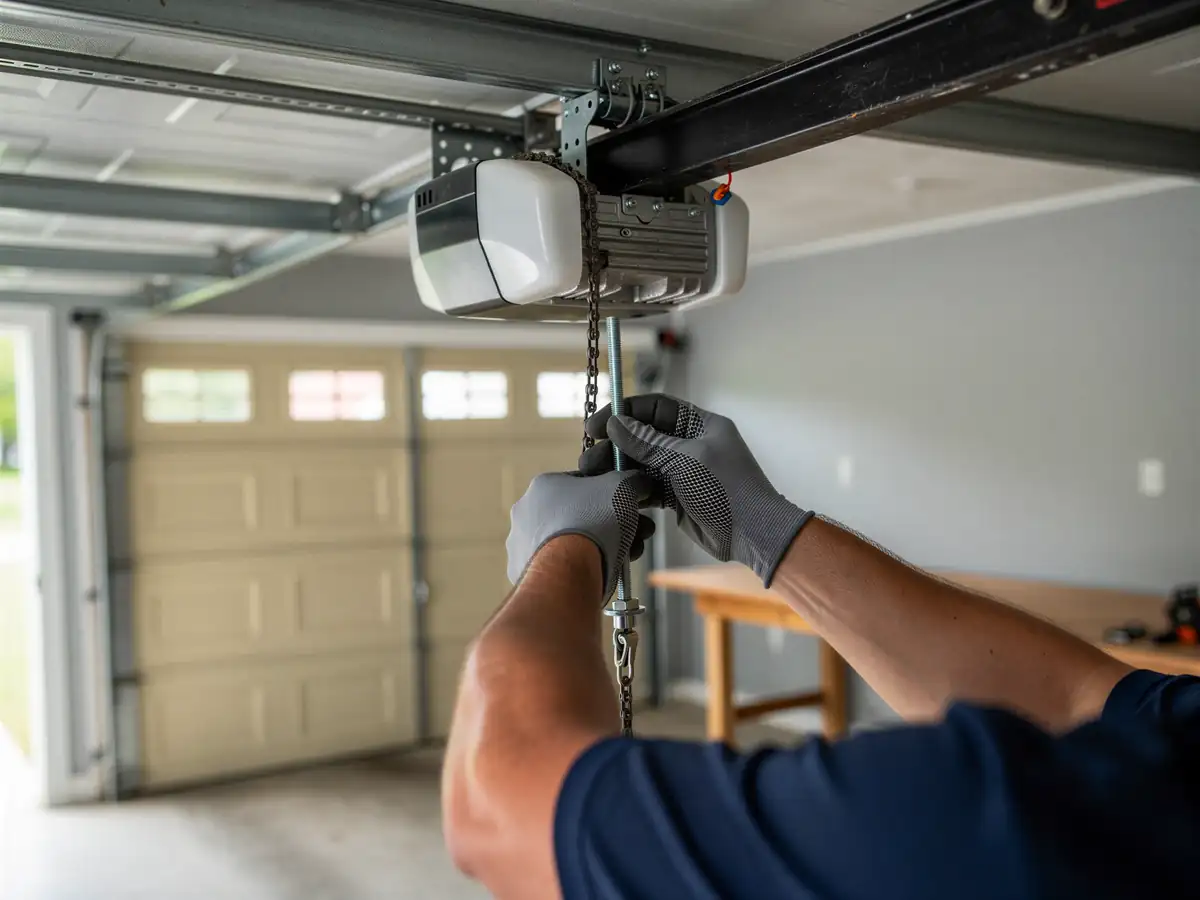
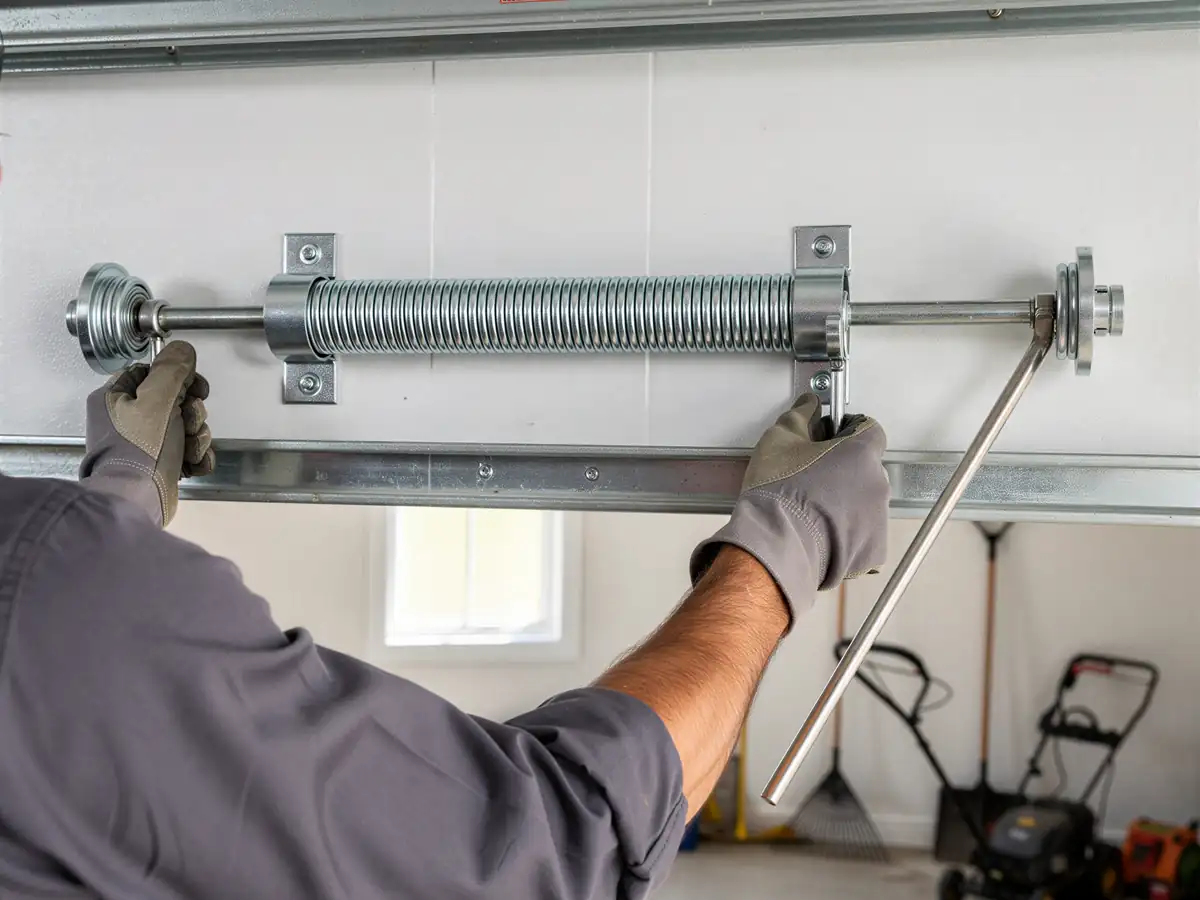
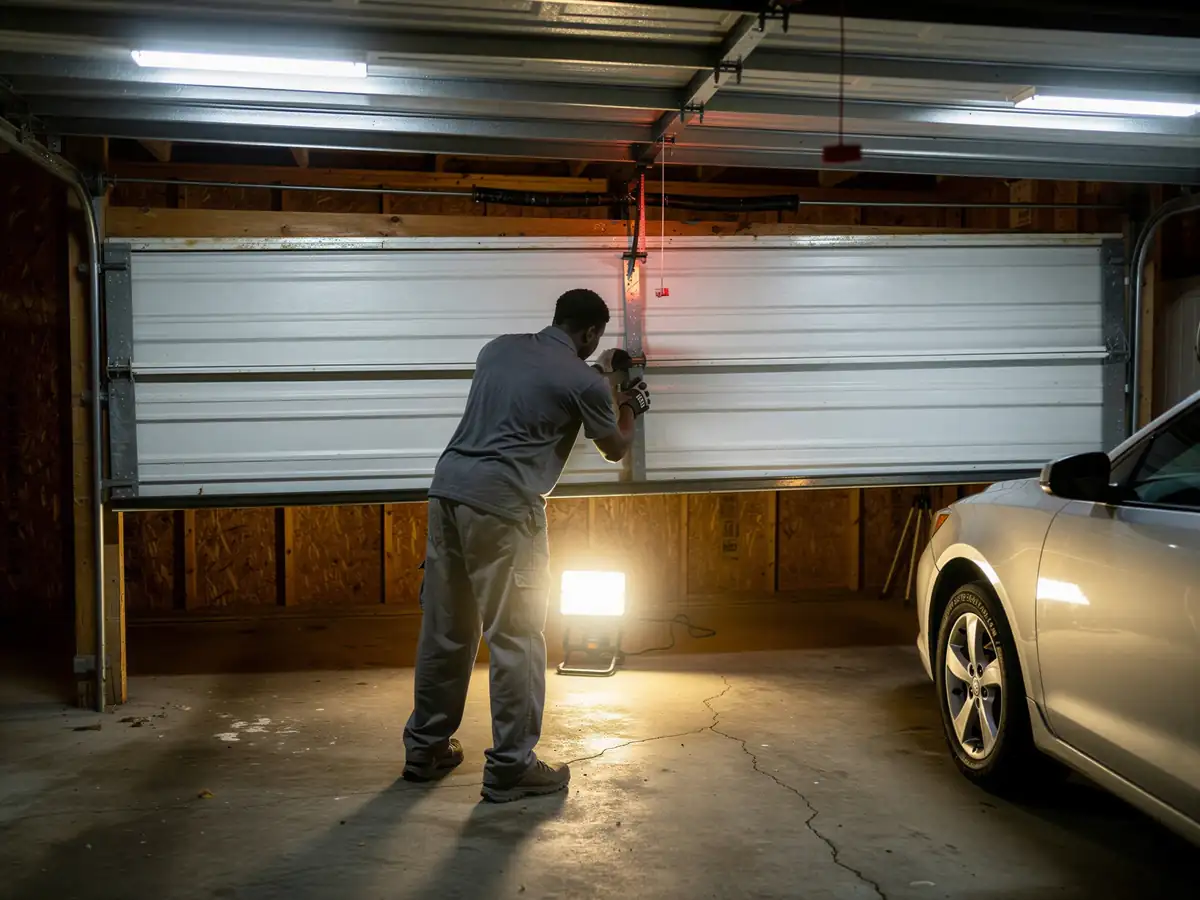
What we can tell you: the cost split is usually between the spring or cable itself and the labor of getting an old, undersized torsion system apart safely. If the opener is original to the house, swapping it is often cheaper long-term than chasing a fix on a 50-year-old motor. We'll tell you straight if that's where you're headed instead of patching something that's going to fail again in six months.
One honest limit: we don't carry every obsolete spring size on the truck. If your door uses hardware that stopped being made decades ago, we may need a day to source the right part rather than force a mismatched one onto the shaft.
How It Shows Up
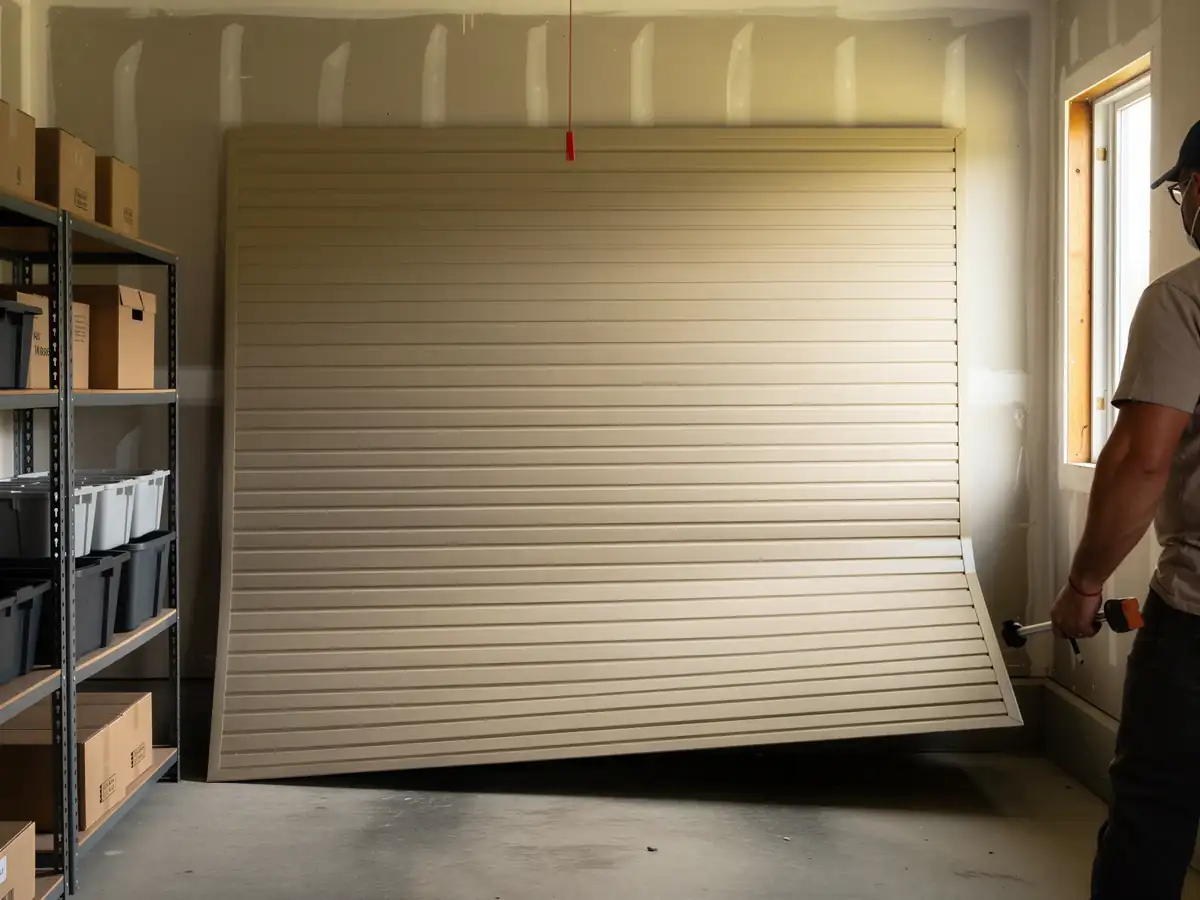
On a house built around 1975 - which is where Cocoa Beach's housing stock centers, a couple years earlier than the service area's overall 1977 median - the failure is usually mechanical fatigue, not electronics. A torsion spring that's done its 10,000 cycles finally lets go on a cold snap, or the cable frays where it's been riding an undersized drum for decades. The door either won't lift at all, or it lifts a foot and stops dead.
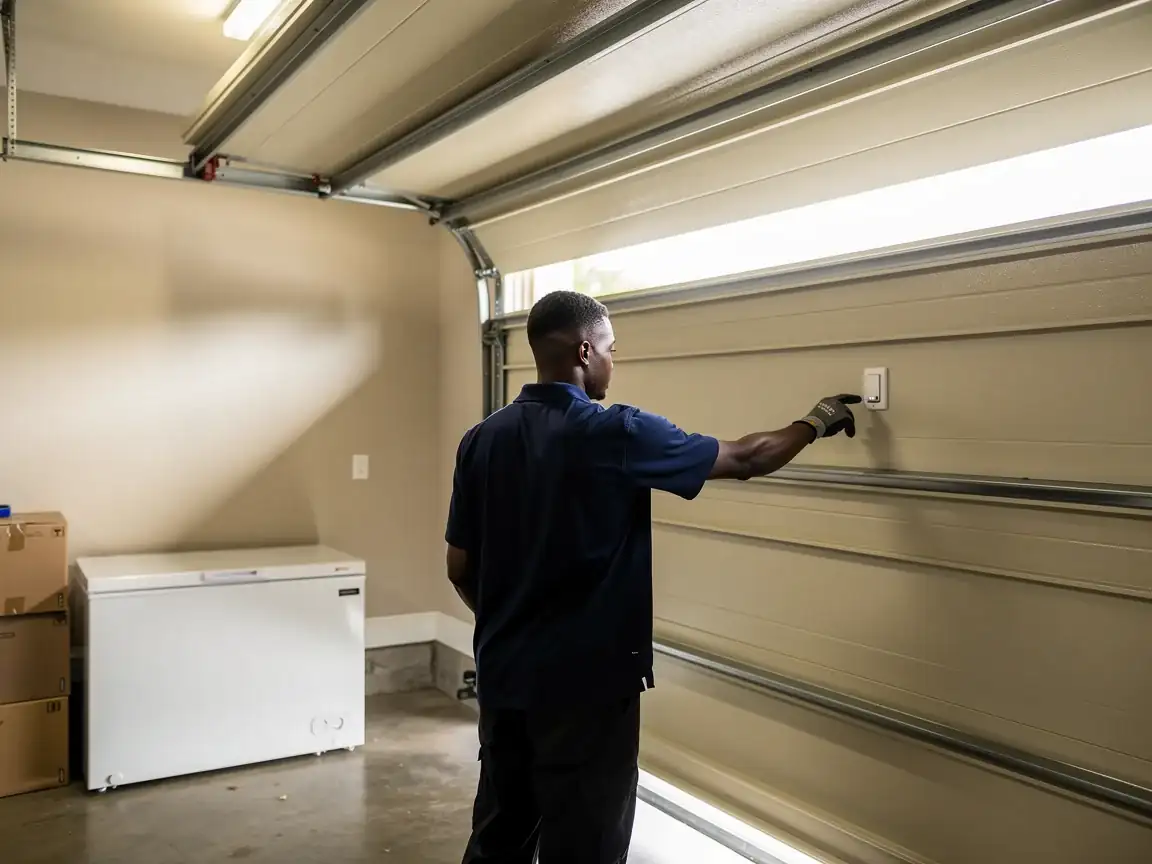
Newer openers in this area tend to throw error codes or refuse to engage the trolley; older ones here just go quiet, no lights, no hum, because the capacitor finally gave out. Either way, the panel doesn't move, and on a one-car garage that's often the only way in or out of the house.
How Long You Are Without the Door
We run out of Melbourne
And Cocoa Beach is a 15-mile drive, so we're not promising a number we can't hold to from across town. What we can say is that once we're on site, a broken torsion spring or snapped cable on standard residential hardware is usually a same-visit fix, assuming we're not waiting on an obsolete part for a door that's original to a 1975 build.
A stuck door with nobody able to get a car out is a different priority than a door that's merely noisy
And we'll ask you that up front rather than assume. If it turns out the opener needs replacing rather than repairing, that's a different visit, and we'll say so on the phone instead of after we've driven out.
What Can Go Wrong
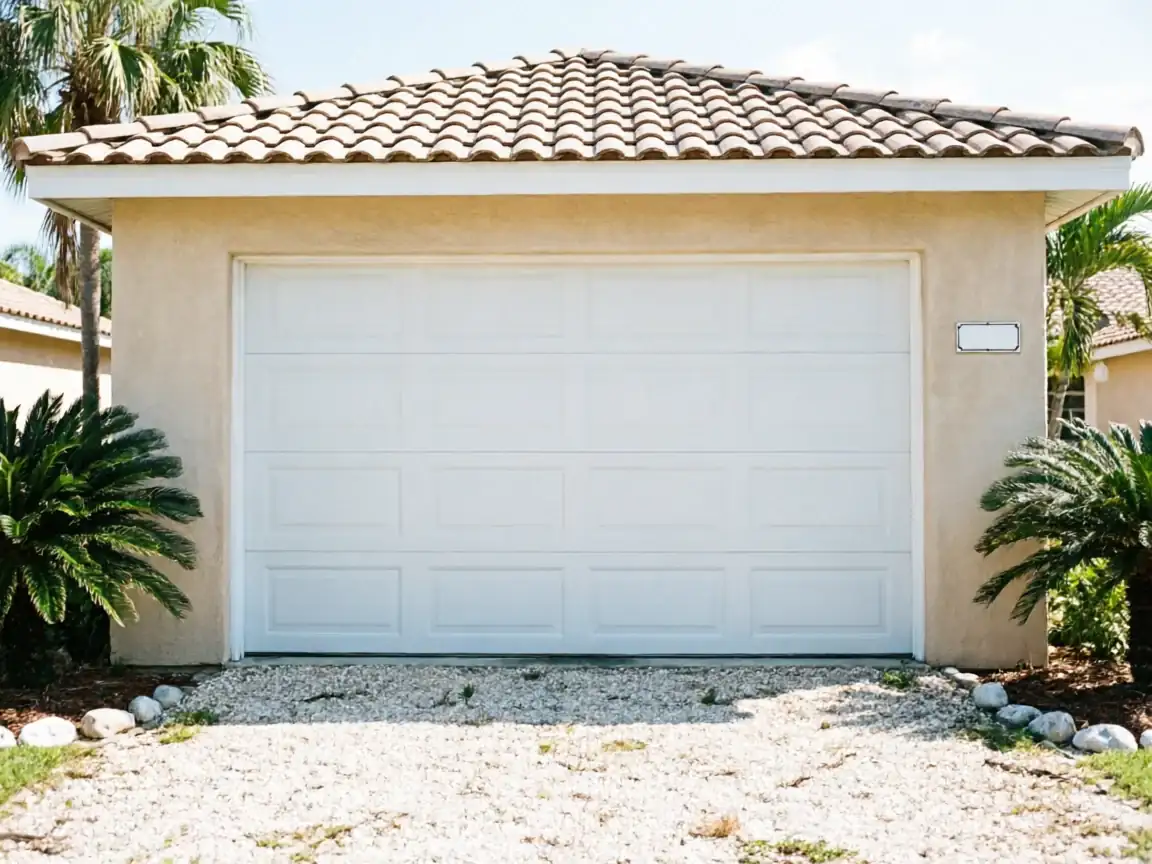
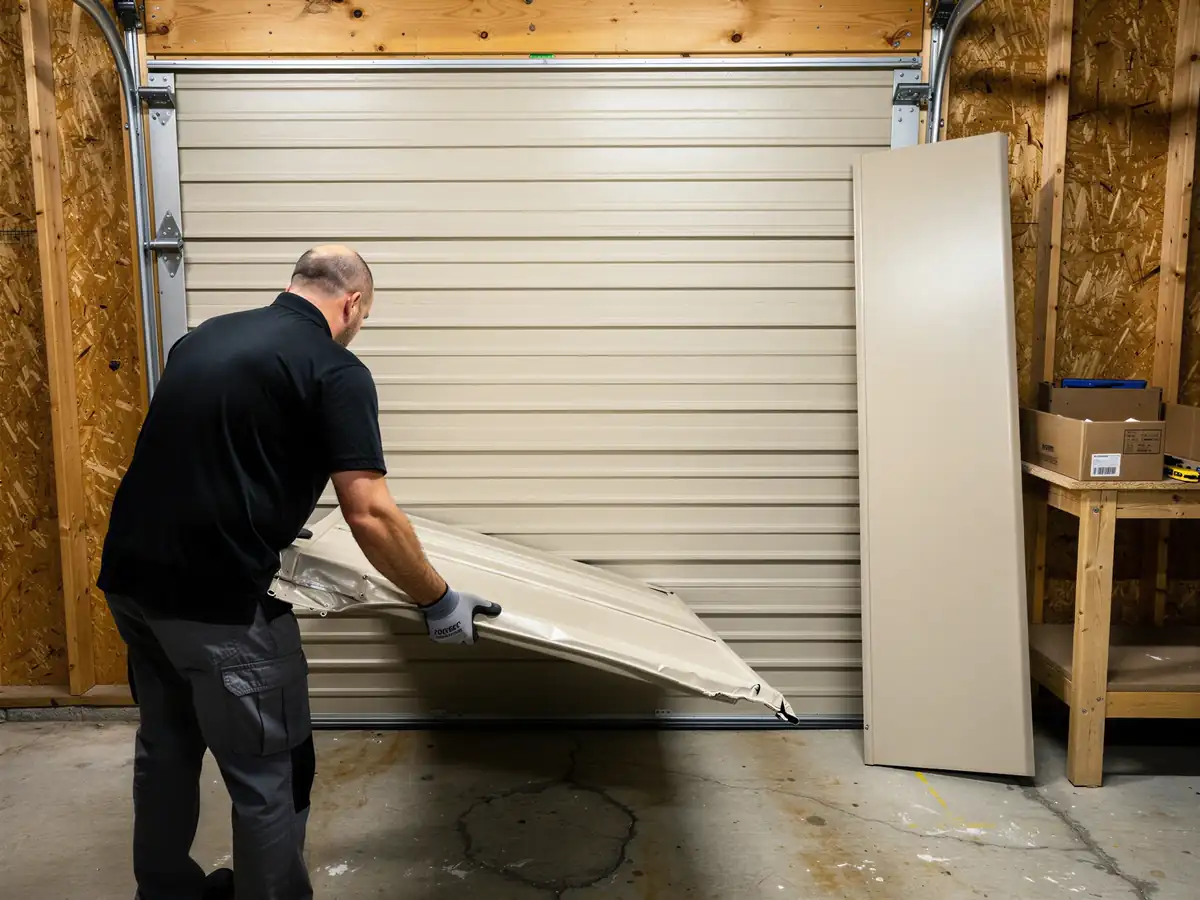
The housing stock here runs older than a lot of newer subdivisions inland, and older doors fail in specific ways. Torsion springs rated for a certain cycle count simply wear out - that's age, not abuse, and it happens on a schedule whether or not you've had trouble before. Panels on older steel doors can rust through at the bottom where water sits, and once a panel's gone soft there, fixing one section without replacing the matched set is sometimes not worth doing.
Openers from that same era often use chain drives and relay-based logic boards that don't have a direct modern replacement part - at that point we're usually talking swap, not repair. The area's mild year-round temperate climate means we're not dealing with deep-freeze spring snap like colder states see, but humidity and heat cycling still take a toll on lubrication and on steel hardware over 40-plus years.
Getting It Booked In
When you call, tell us the door won't move, not just that it's 'acting up' - that helps us bring the right spring stock for a house this age instead of guessing. If you know roughly when the house was built, that's useful too; Cocoa Beach households skew toward the mid-1970s, and that one detail tells us a lot about what's likely inside the header.
We travel to Cocoa Beach from Melbourne for this call, so there's no local branch to swing by - just a truck headed your way. You can see what else we cover from here on our coverage page, and if this isn't an emergency, our general repair page for the Melbourne area covers scheduled work instead.