Stocked Parts
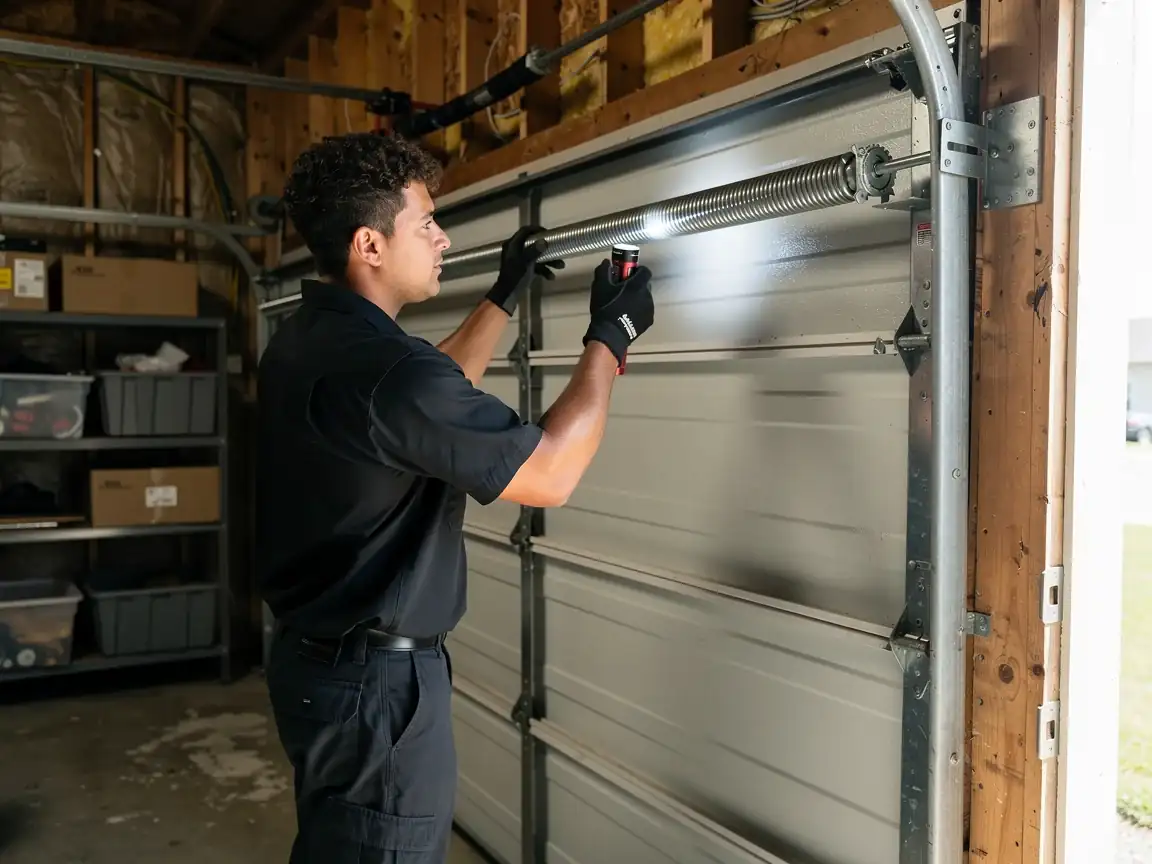
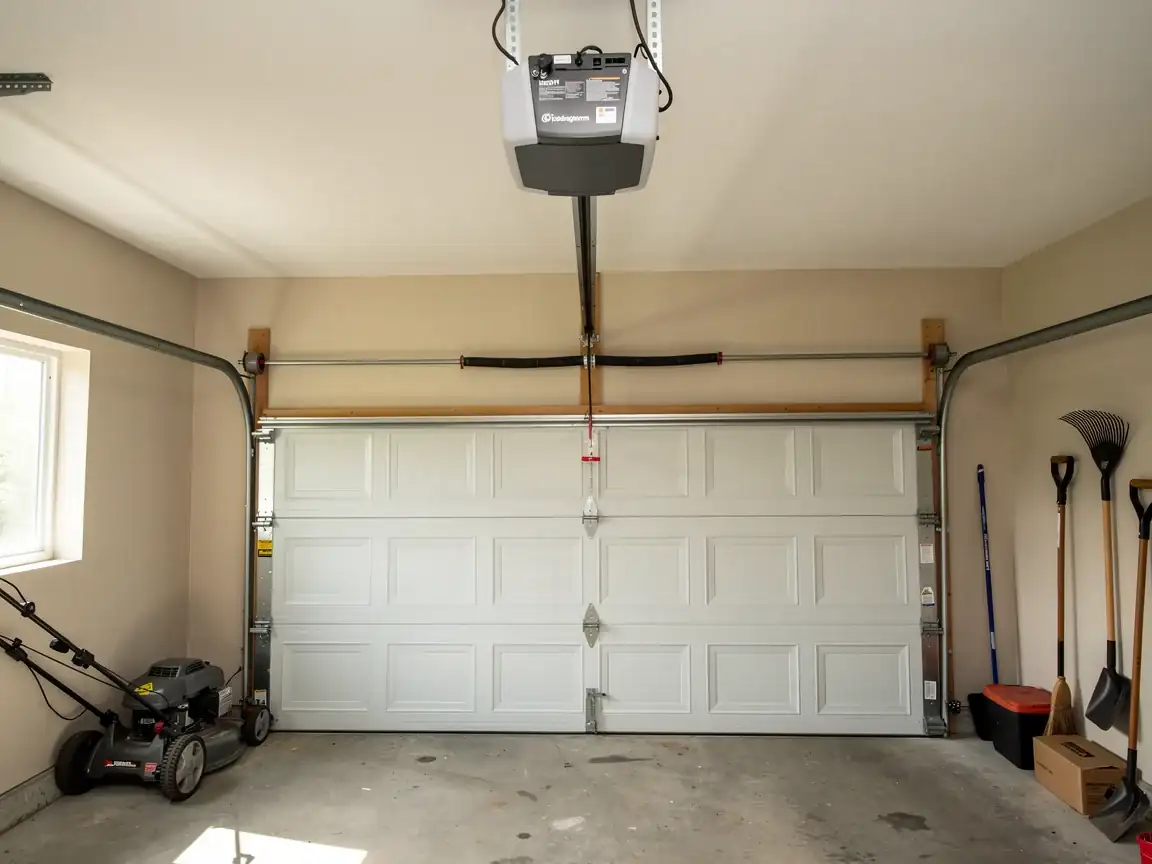
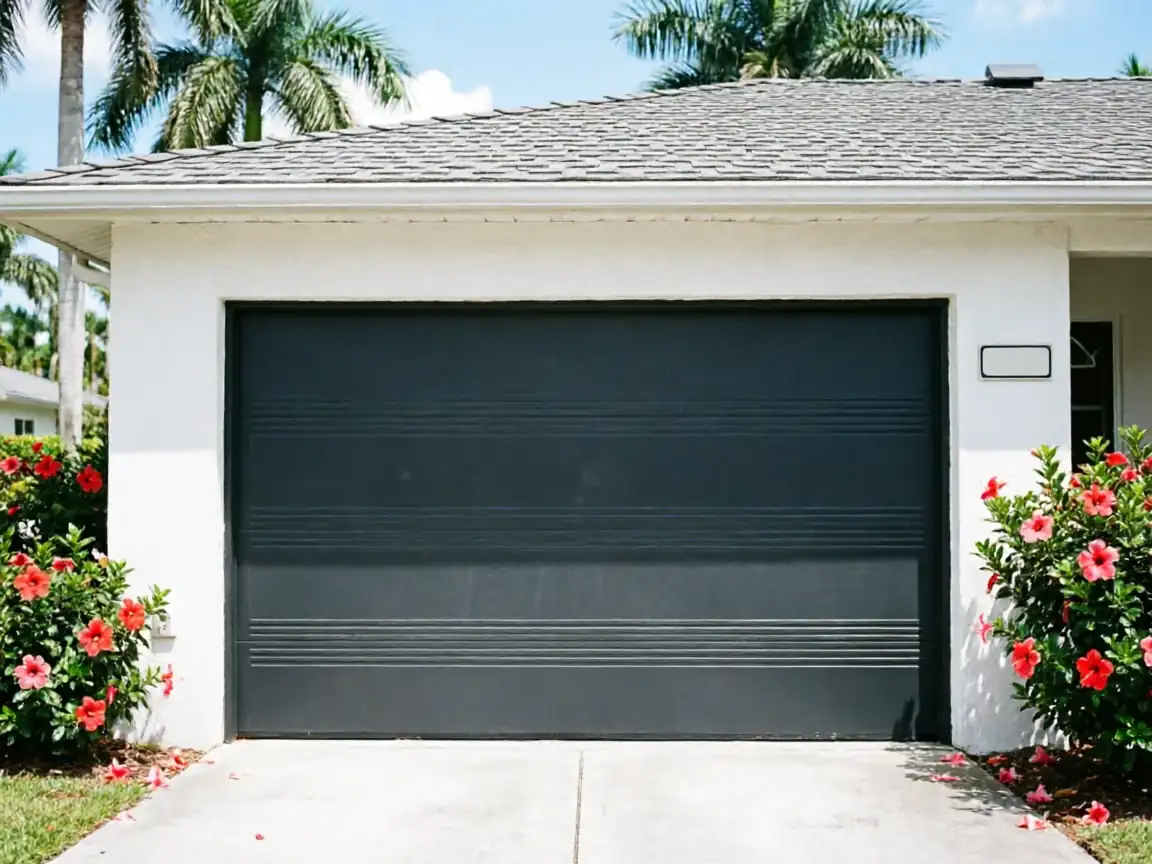
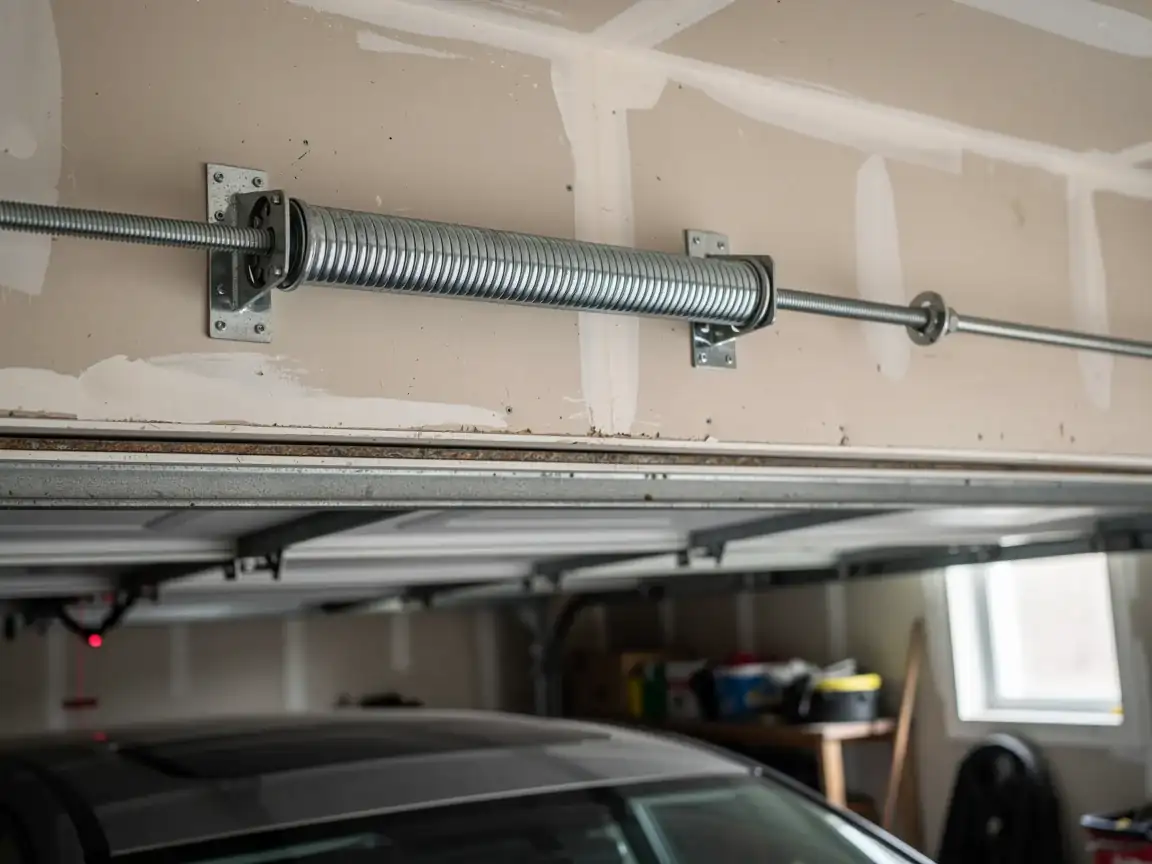
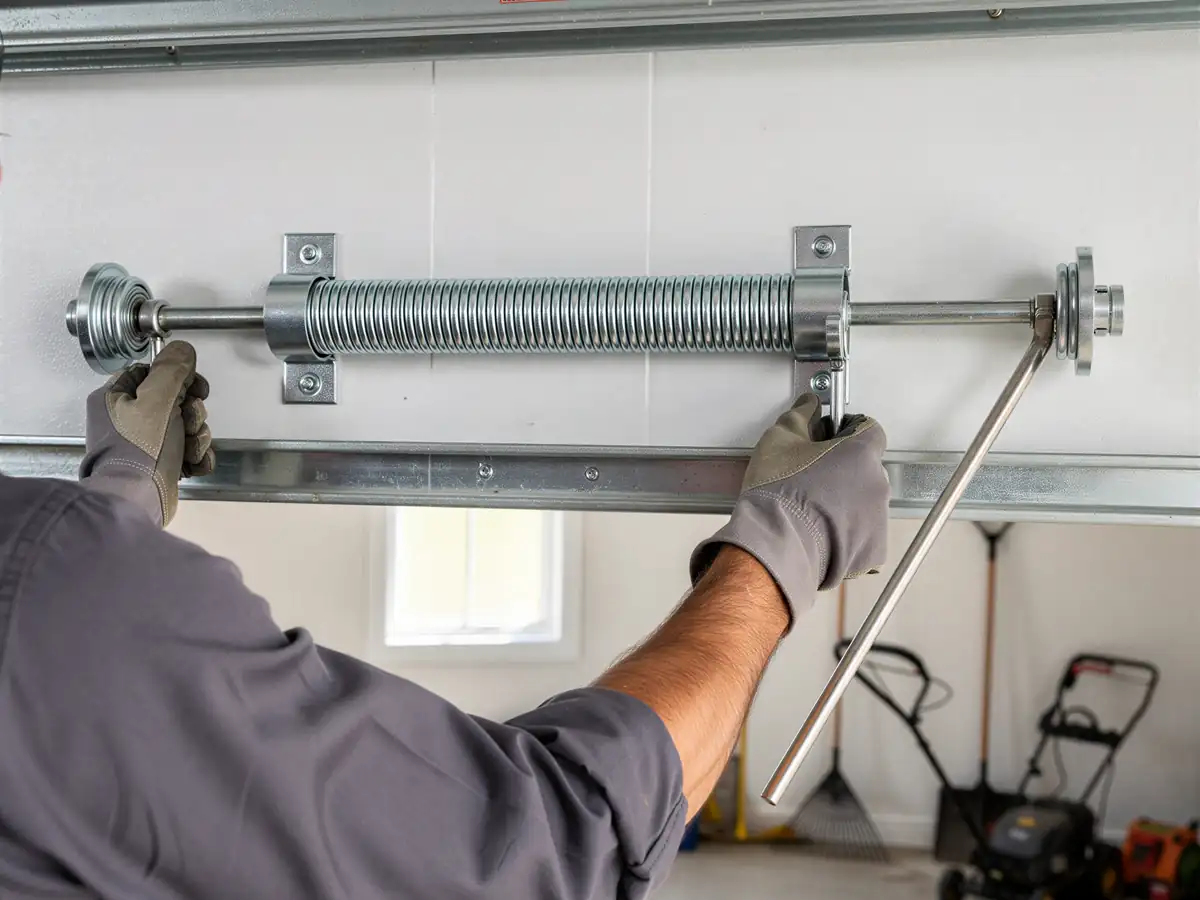
The truck that comes out to June Park carries rollers, track sections, hinges, and lift cables sized for the doors that actually went up here. June Park's housing runs newer than a lot of what we see across the wider Melbourne service area, where the median build year sits around 1977 - June Park's own median lands closer to 1988. That gap matters because doors from the late 80s were almost always built for torsion spring hardware rather than the older extension-spring setups, so the rollers, drums, and cable lengths we carry are matched to that generation, not to a 1960s door. We don't stock parts for every era on every run, but torsion-era hardware for a door this age is a normal stop, not a special order. If a door turns out to need something outside that window - an odd track width or a discontinued bracket - we'll tell you upfront rather than force a part that doesn't fit.</br></br>Nothing here is landmark-specific; we're not based in June Park, we drive in from Melbourne, about 3 miles out. That's close enough that a same-day look is realistic, but we're not pretending to have a branch on your street.
What You Pay
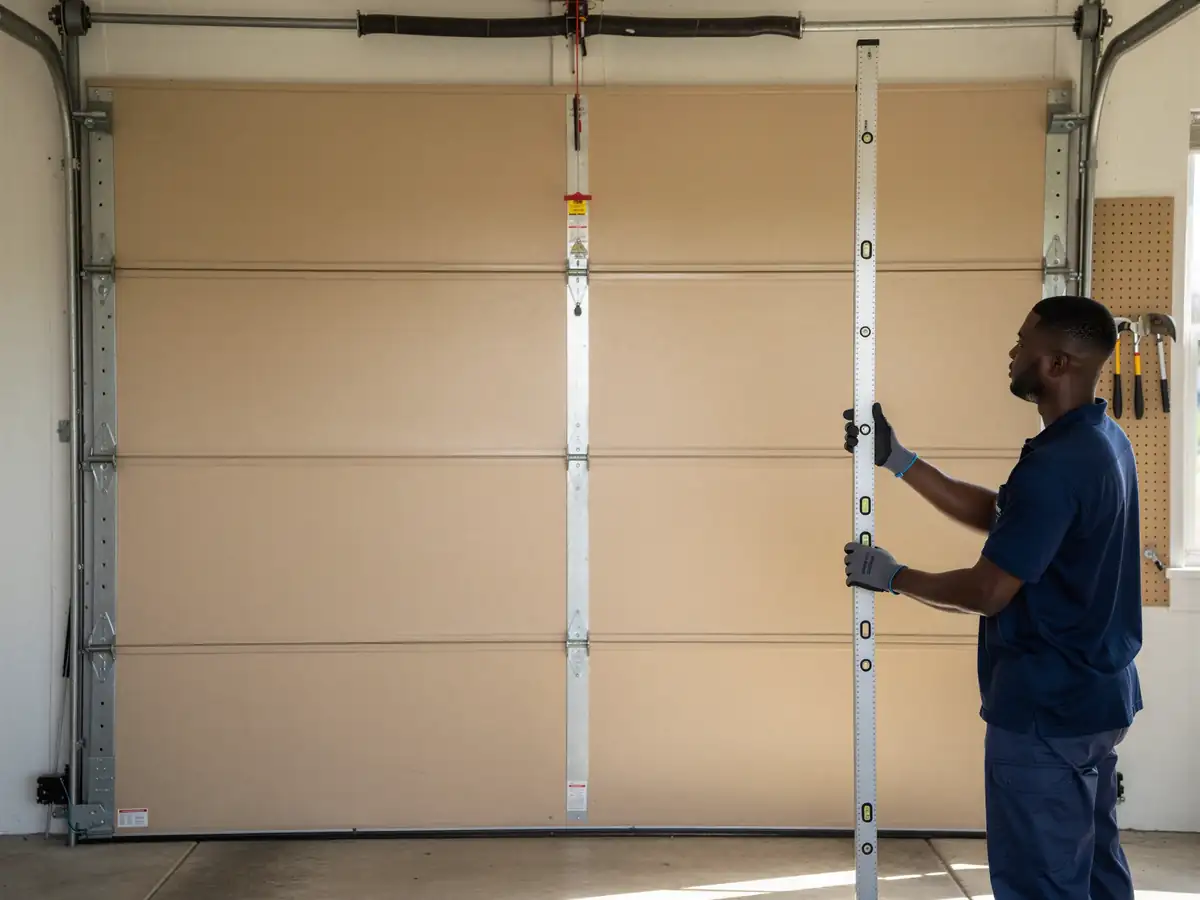
We don't quote a number sight unseen, and we're not going to invent one for this page. What a door costs to put back on track depends on whether the rollers are just worn, whether a hinge has bent and is binding the track, or whether the track itself has pulled away from the jamb and needs re-anchoring. A door that's merely jumped a roller is a different job than one where the cable has started to fray under load. June Park's median household income runs around $80,575, which is useful context for the area but not something that sets a price - we price the door in front of us, not the neighborhood. If you want a real number, that means a tech looking at the track, the hardware, and how the door is hanging before we say anything firm. That's the honest limitation here: nobody can price an off-track door over the phone and get it right.
How It Shows Up
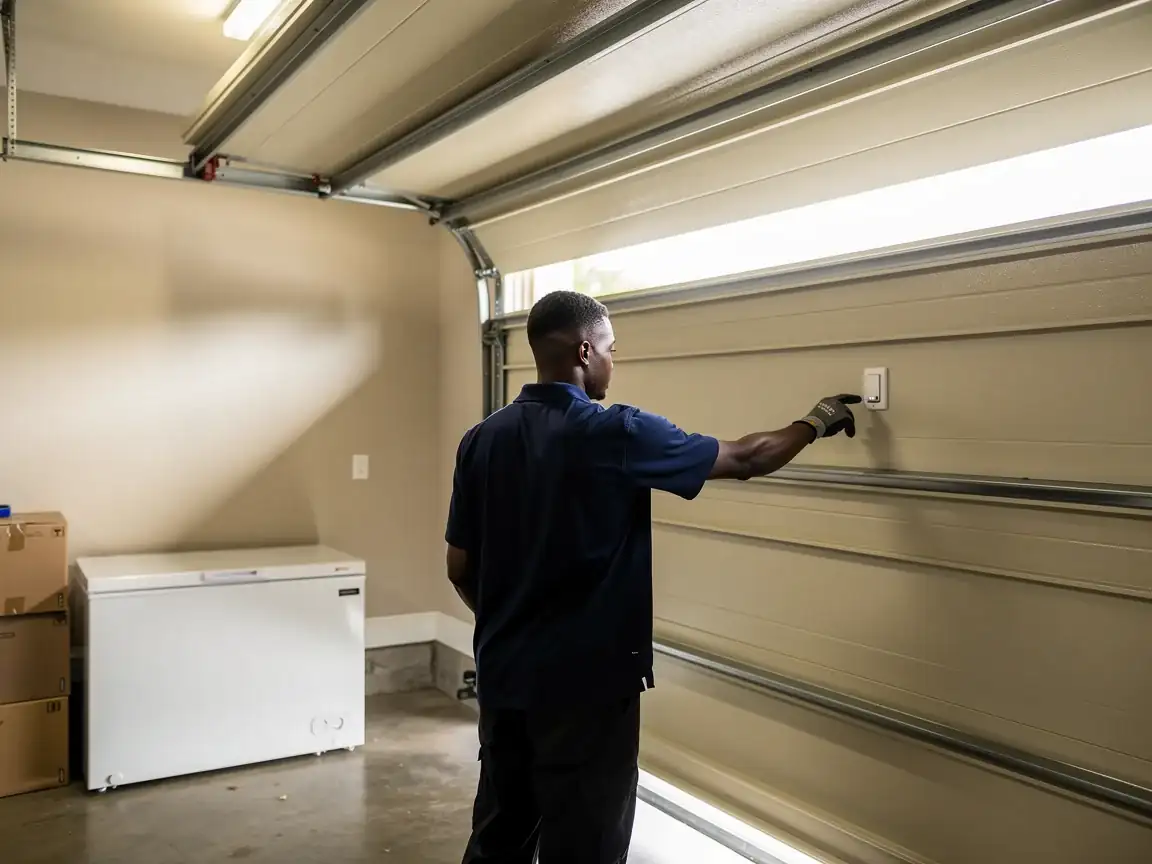
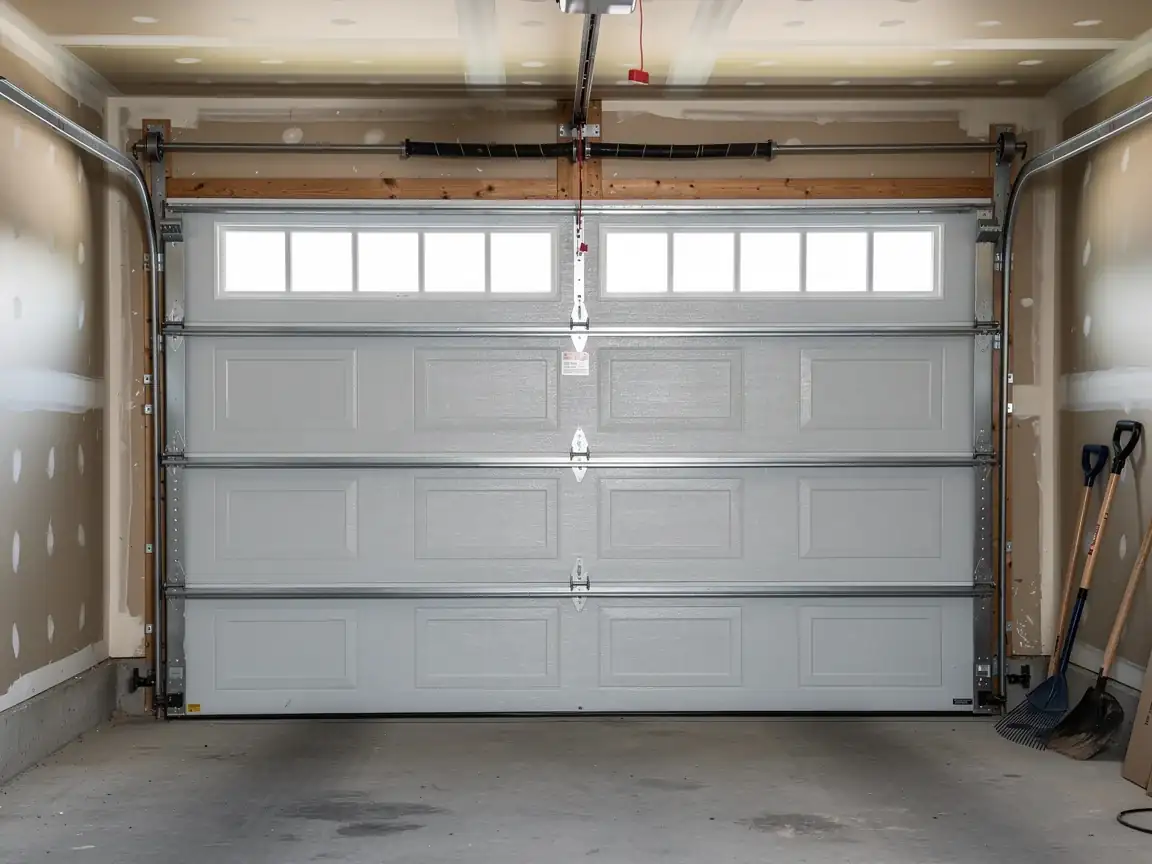
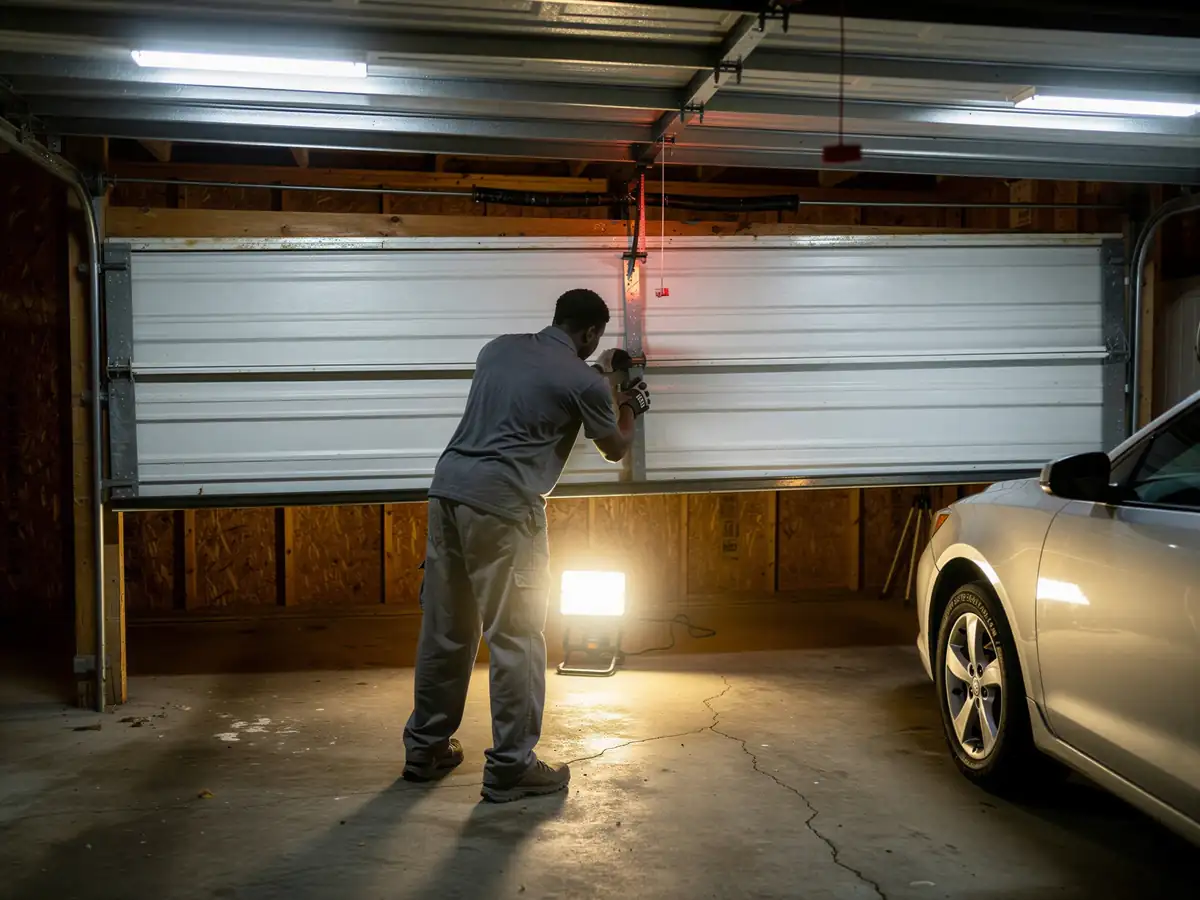
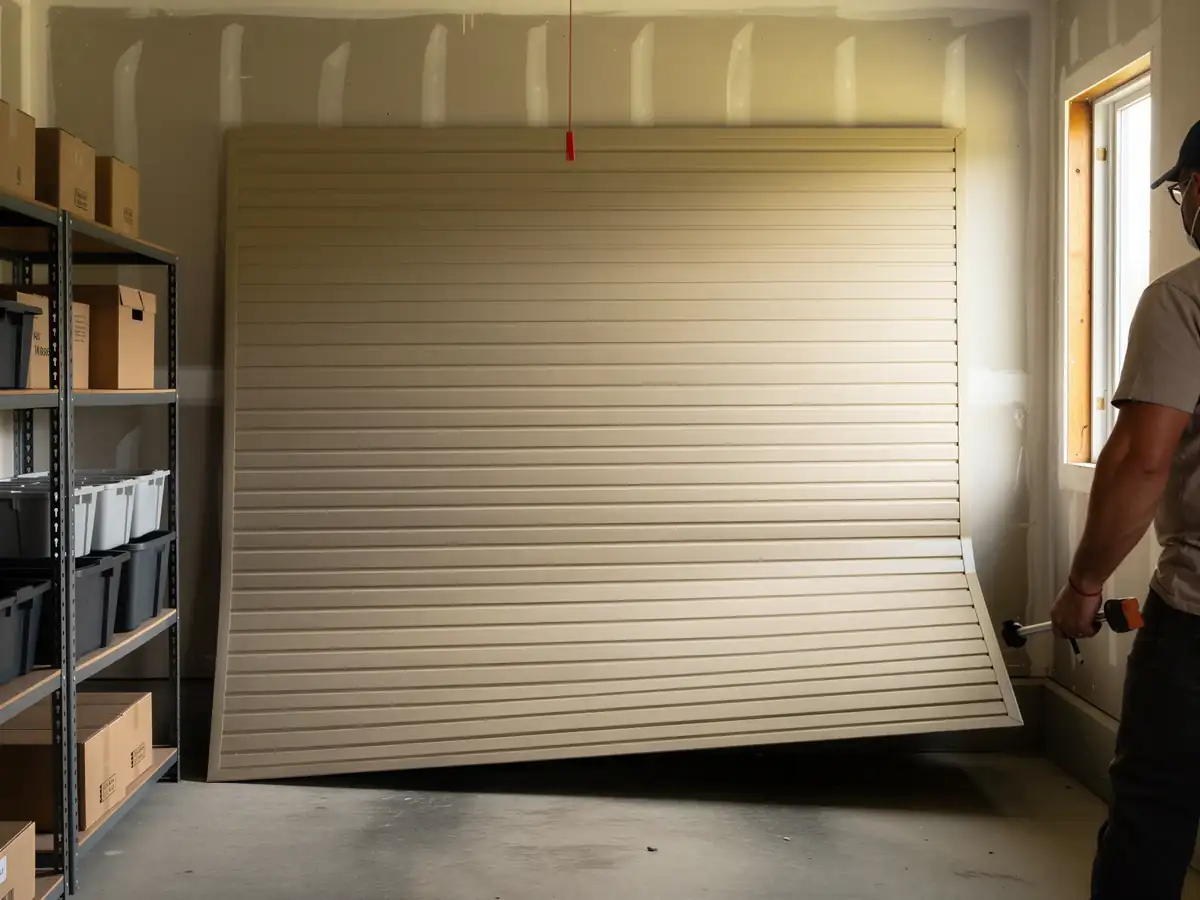
Usually it starts small: the door hesitates on one side going up, or you hear a grinding sound right as a panel crosses one particular spot on the track. Look closer and you'll often see a gap between the roller and the track rail, or a bottom corner of the door sitting a half-inch lower than the other. Some owners don't catch it until the door stops partway and won't close the rest of the way, stuck against a track that's no longer lined up with the rollers. On older torsion-hardware doors like the ones common in June Park, this tends to show up on one side before the other, because the two tracks rarely wear evenly. If you force the opener past that point, the grinding gets worse fast, and that's usually when a panel or a hinge takes damage.
What Can Go Wrong
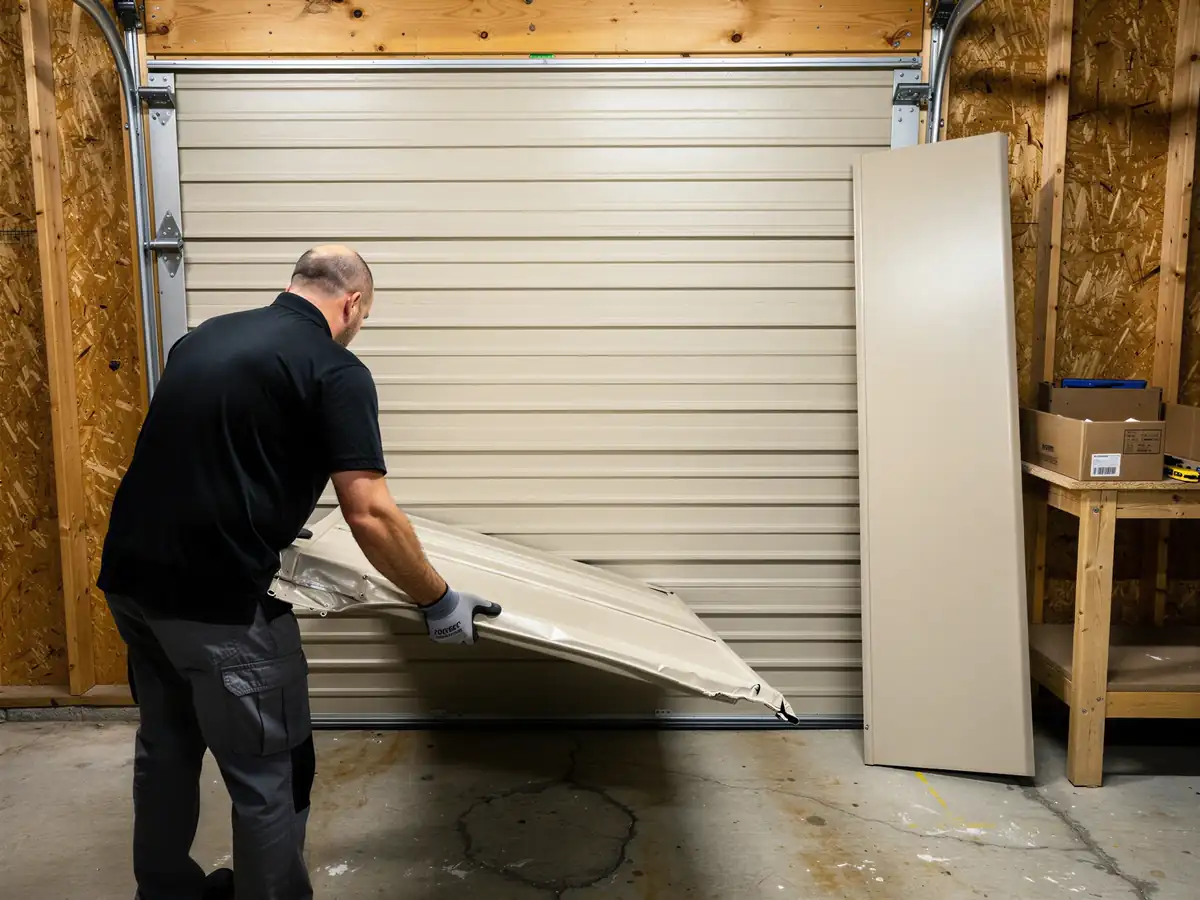
An off-track door under power is not a door to keep running. If the opener keeps pulling against a roller that's off the rail, the next failure point is often the cable - it can fray and then snap, and a door coming down uncontrolled on a cable failure is a real hazard, not a maintenance inconvenience. Panels can also bow or crack where the track is pressing wrong, which turns a hardware fix into a panel replacement. On double doors especially, pushing a door that's binding can twist the whole frame enough that even a fresh track won't sit right without straightening the jamb hardware first. The honest call here: if you notice the grinding or the gap, stop using the opener and call rather than cycle it a few more times to see if it clears itself. It usually doesn't.