Stocked Parts
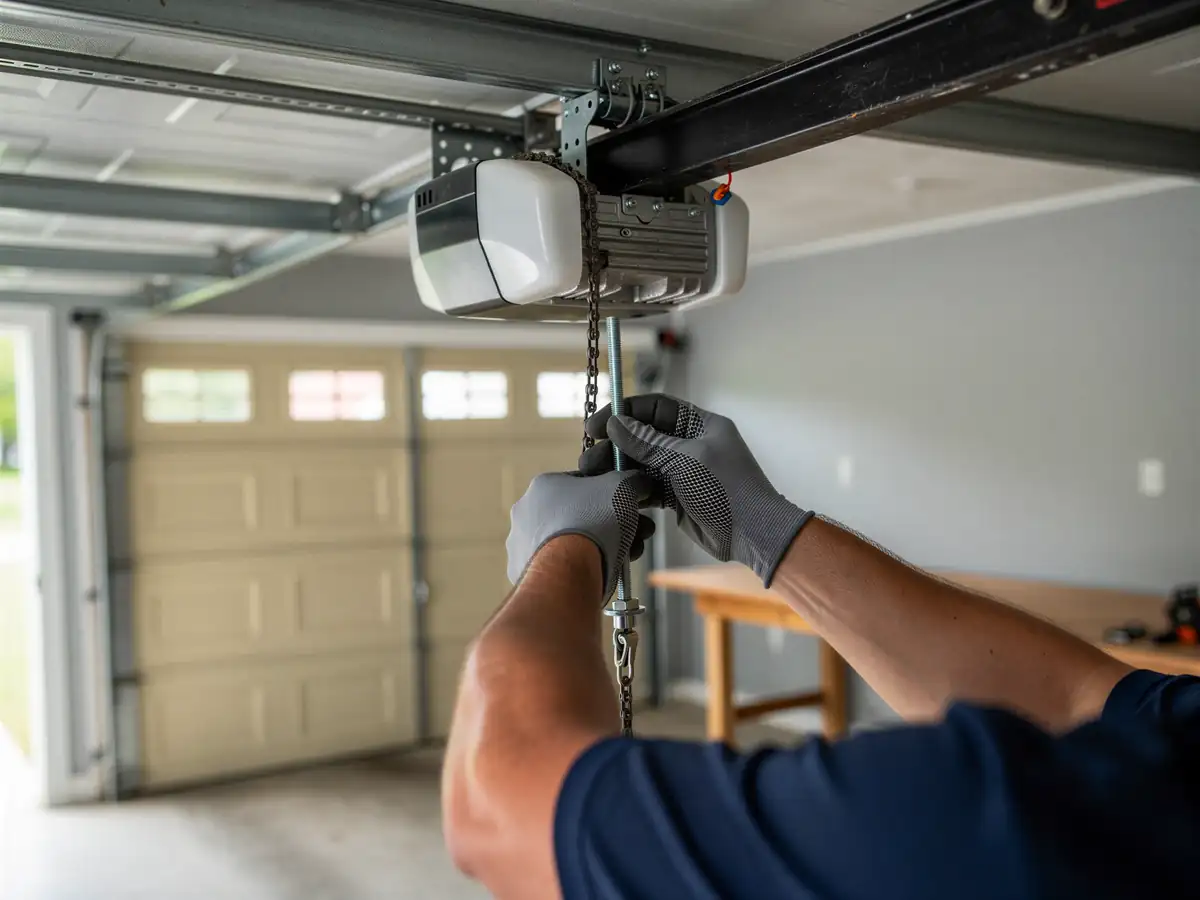
June Park's housing centers on 1988, which puts a lot of openers here at the same age as the houses around them - nobody's torn theirs out unless it actually died. That means we see a lot of logic boards with dried-out capacitors, drive gears worn down to the shaft, and travel modules that have been adjusted by hand so many times the limit switches barely hold a setting. We carry replacement circuit boards, drive gear and sprocket kits, capacitors, and receiver/remote pairs sized for the mid-size chain and belt units that went into subdivisions in that era. What we don't carry on the truck is a board for every obsolete opener model ever sold - some 1980s-era units used proprietary boards the manufacturer stopped making years ago, and for those a same-brand board swap isn't always possible. In those cases the honest answer is a new opener head on the existing rail, not a repair that chases a part nobody stocks.
What You Pay
June Park's median household income runs $80,575, a bit under the wider Melbourne service area's $86,305, and that shapes which jobs we actually get called for. Most calls here are for a repair - new gear kit, new board, new sensor pair - rather than a full opener swap, because the hardware is usually fixable and a repair costs a fraction of replacement. We don't publish a flat price here because the fix depends entirely on what's actually failed: a capacitor and a logic board are two different bills, and a stripped gear is cheaper than either. What we will say is that if your opener is original to a 1988-era build, you're closer to the point where a second or third repair starts costing more than a new unit, and we'll tell you that honestly instead of chasing the old board indefinitely.
How It Shows Up
The door starts reversing partway up for no clear reason, or it stops a foot short of fully closing. You hear the motor humming but the door doesn't move - that's usually a stripped drive gear, cheap to replace, easy to put off until the belt or chain jumps the track. The remote works from inside the garage but not from the driveway, which points to a failing receiver rather than a dead remote battery. Sometimes it's quieter: the opener runs fine until a humid week in summer, then the board starts acting erratic and clears up again once things dry out, which is a capacitor or board connection on its way out, not a one-time glitch.
What Can Go Wrong
Left alone, a stripped gear eventually lets the chain or belt go slack enough to jump off the sprocket entirely, which can drop the door mid-travel if the opener is also carrying the door's weight instead of properly balanced springs doing the work. A failing logic board can stop recognizing the safety sensors altogether, which either keeps the door from closing at all or, worse, lets it close without checking for an obstruction. On a 1988-era opener, a dying capacitor sometimes shows up as the motor straining and overheating on every cycle, which shortens the life of the motor itself well past what the capacitor alone would have cost to fix. None of this is an emergency on day one, but all of it gets more expensive the longer it runs.