What Can Go Wrong
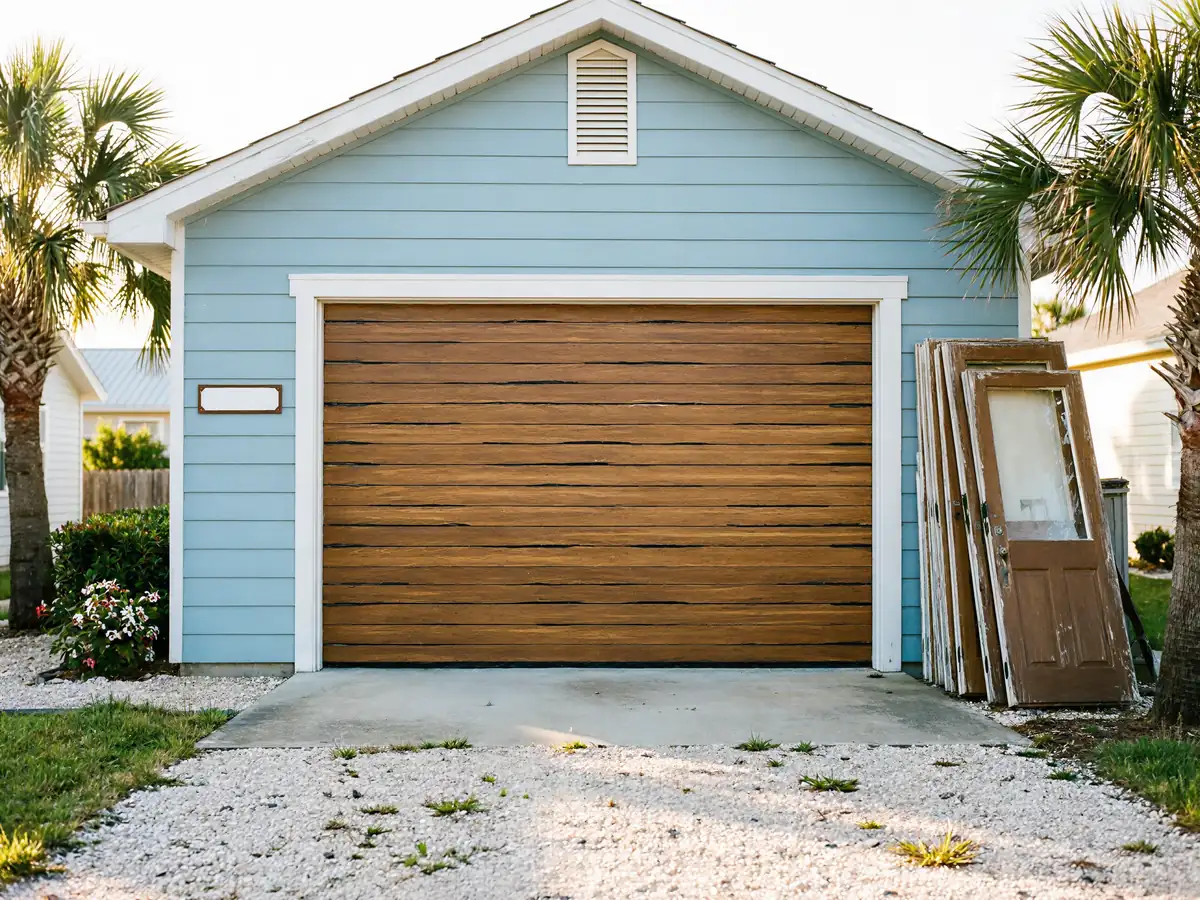
Indialantic's housing stock centers on 1966, a decade ahead of the median build year for the wider Melbourne service area. That matters here more than almost anywhere else we cover, because a house built in 1966 has had almost sixty years for its garage door track to drift out of plumb, for the original roller brackets to loosen one lag bolt at a time, and for nobody to have touched any of it. With only 1,475 households in Indialantic, the town never saw the kind of large-tract rebuild or remodel wave that replaces hardware as a side effect of other work. A lot of what's bolted to the jamb today is what went up with the house.
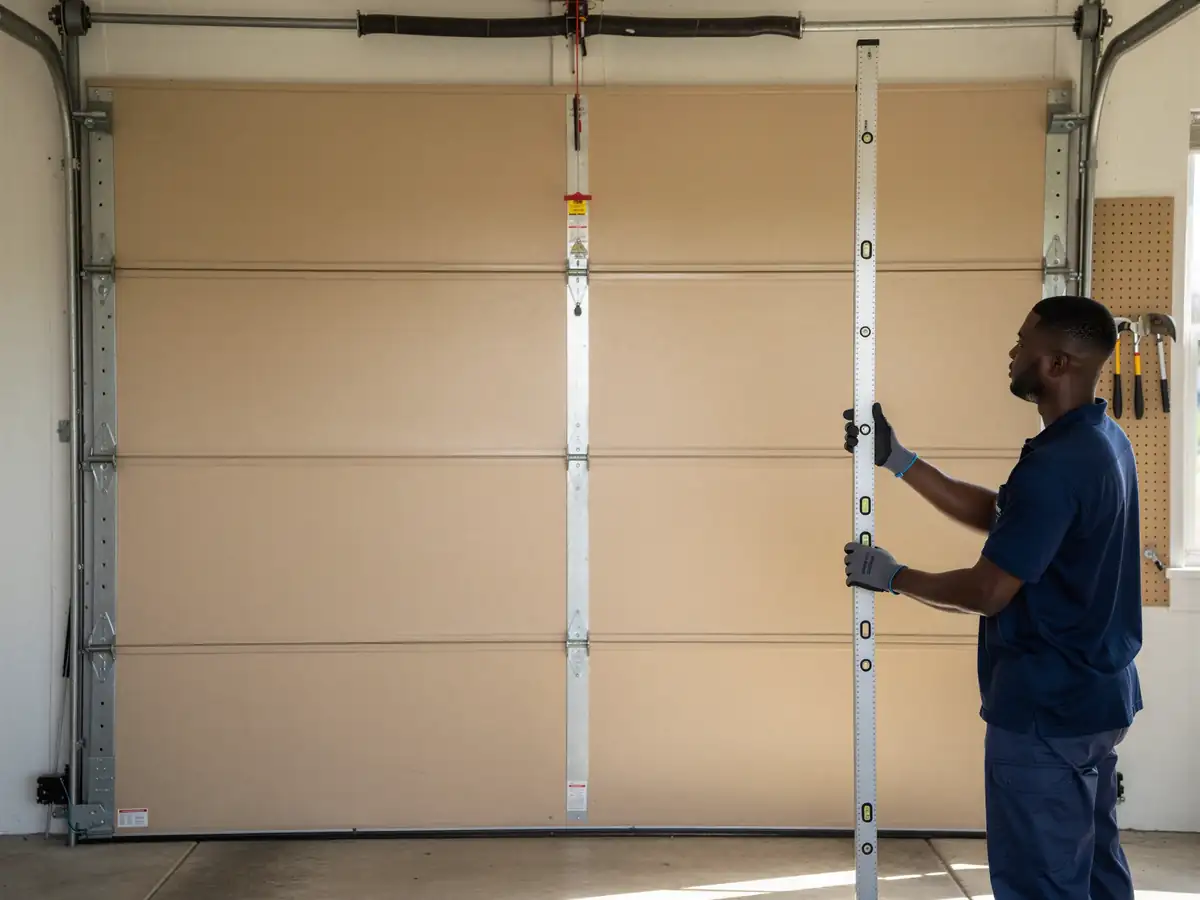
The climate band here is mild temperate, so we don't see the track corrosion or seal failure you'd get somewhere with hard freezes or heavy salt fog. What we do see is slow mechanical drift: track brackets that have worked loose from decades of thermal expansion and contraction, hinges worn oval instead of round, and horizontal track that was never perfectly level to begin with and has only gotten worse. None of that announces itself with a bang. It shows up as a door that starts binding on one side before it finally jumps the track.
What the Fix Involves
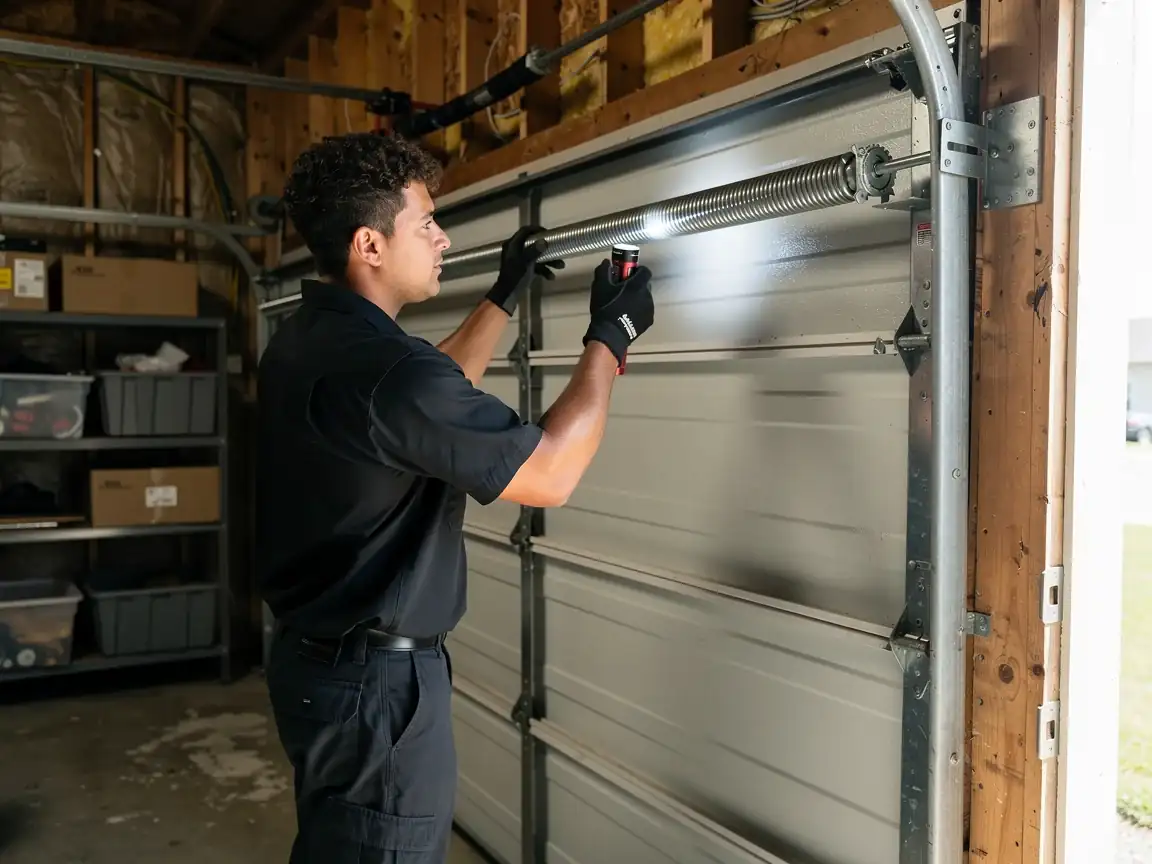
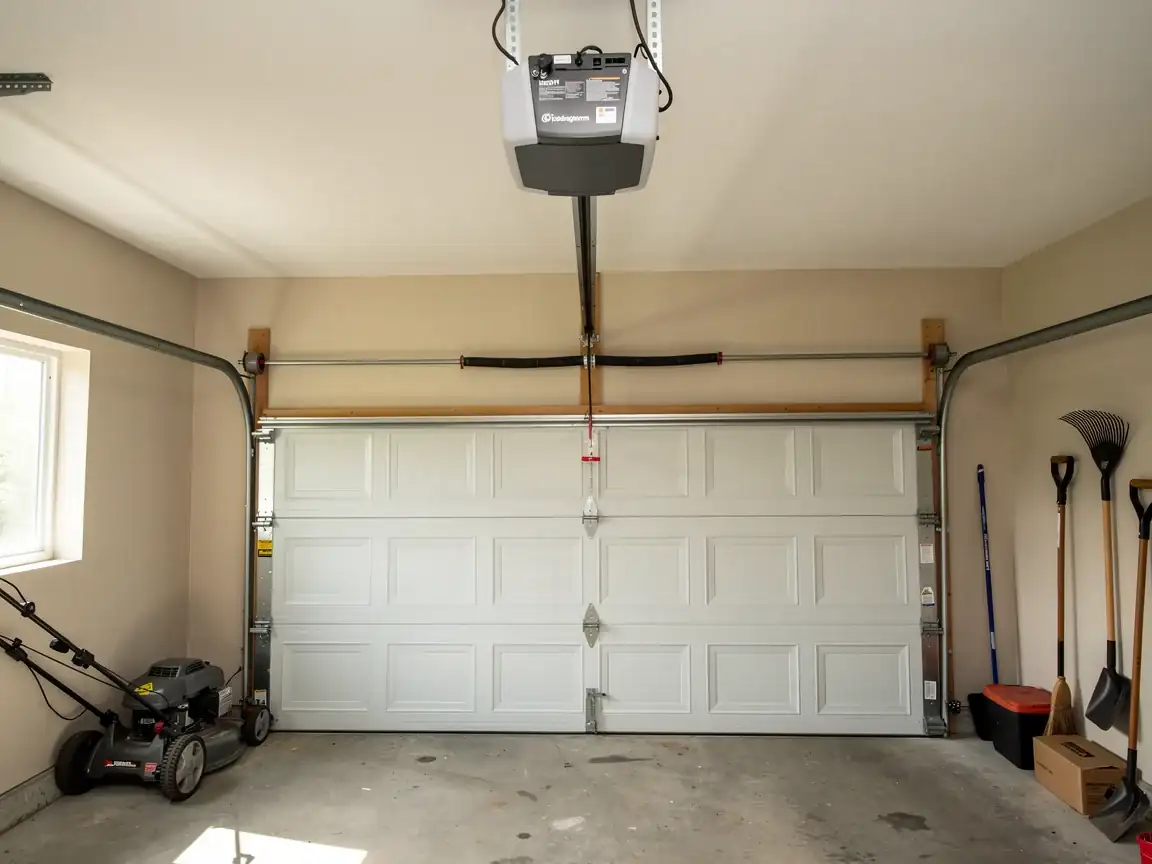
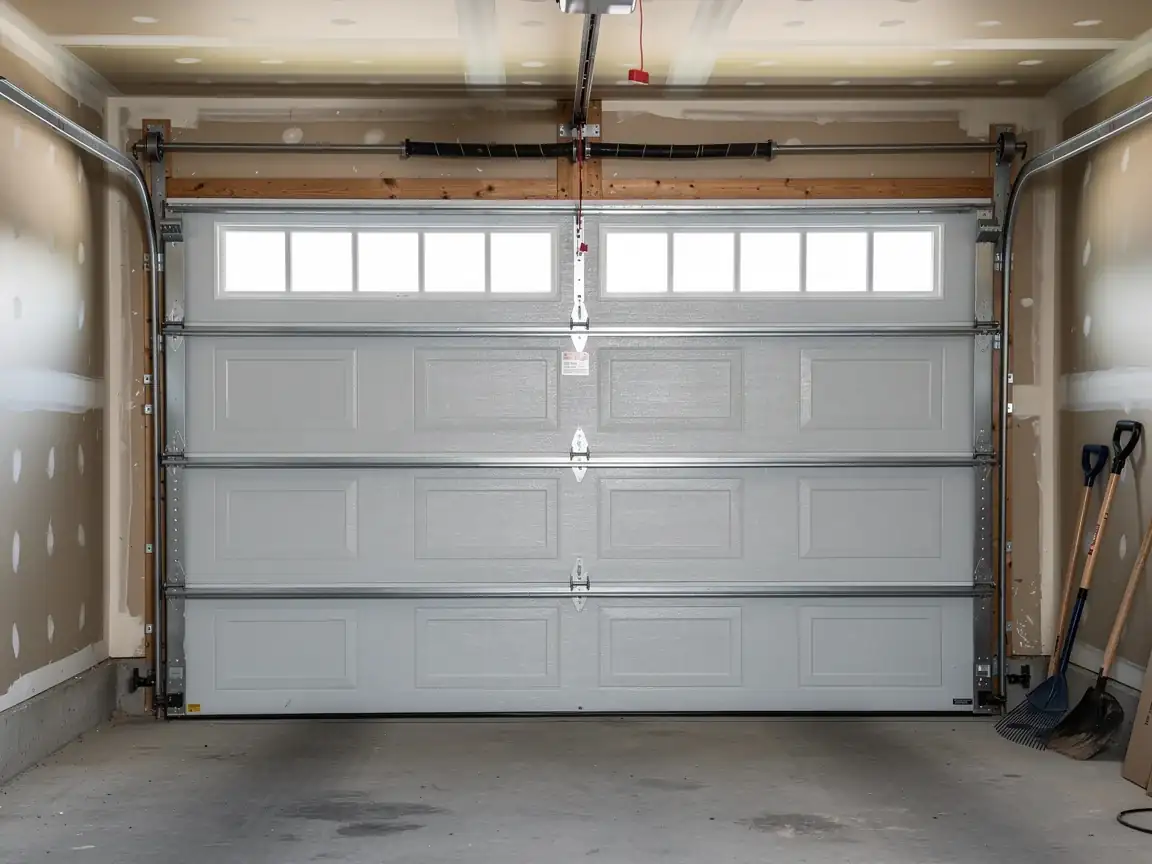
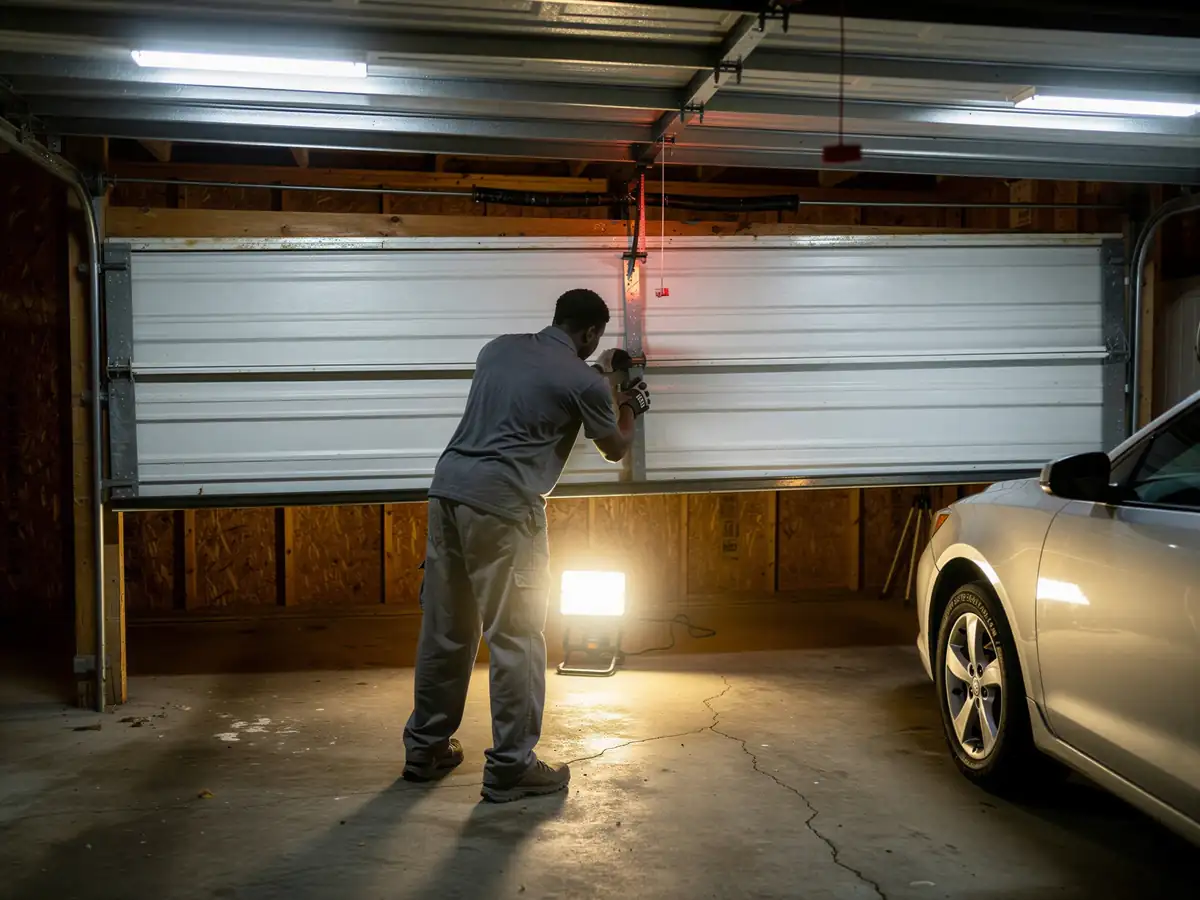
Fixing an off-track door almost never means replacing the door. In most Indialantic calls it means pulling the door back onto the track, checking whether the track itself is still straight or needs to come off and get re-hung plumb, and replacing whichever rollers or hinges have worn enough to let the panel wander. On a house from 1966, the rollers are often the original steel or early nylon units, and by now they're usually the actual cause, not just a symptom.
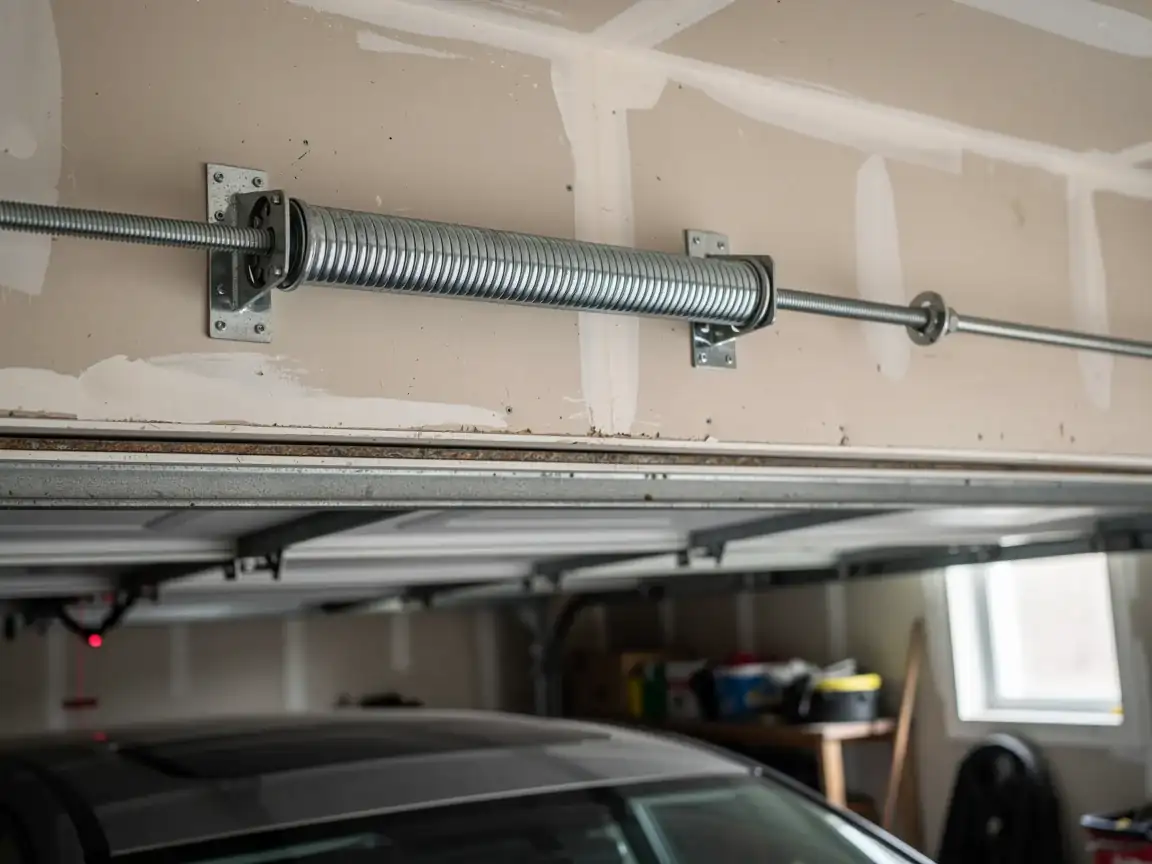
We also check the bracket lag bolts into the jamb, since wood jambs of that era have had a long time to work loose around repeated vibration. If the jamb itself has softened, that's a carpentry problem before it's a garage door problem, and we'll say so rather than bolt new hardware into wood that won't hold it.
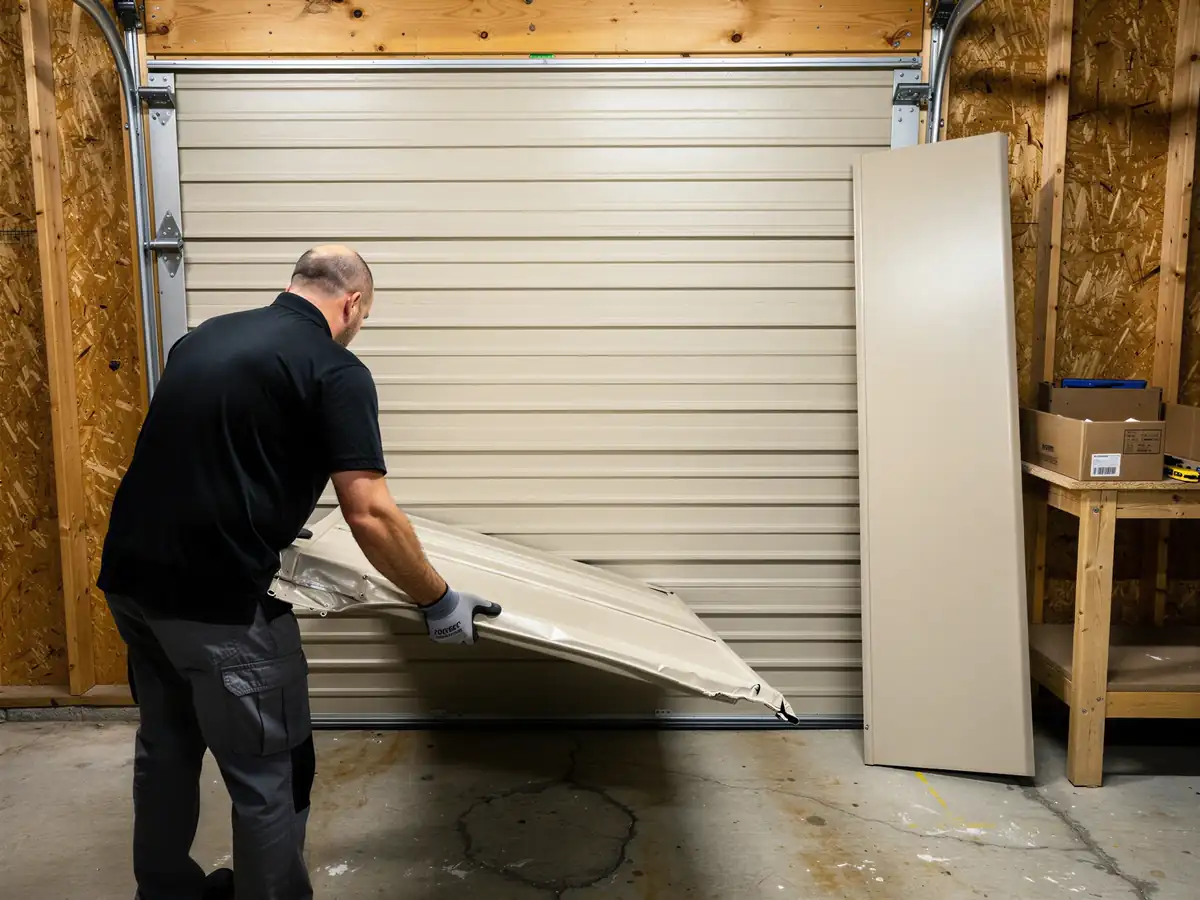
One honest limit here: if the track is bent badly enough, or the door panel itself got bent when it came off the track, straightening isn't always the right call. Sometimes a section of track and a section of panel both need replacing rather than reshaping, and we'll tell you which one you're looking at before we start, not after.
How It Shows Up
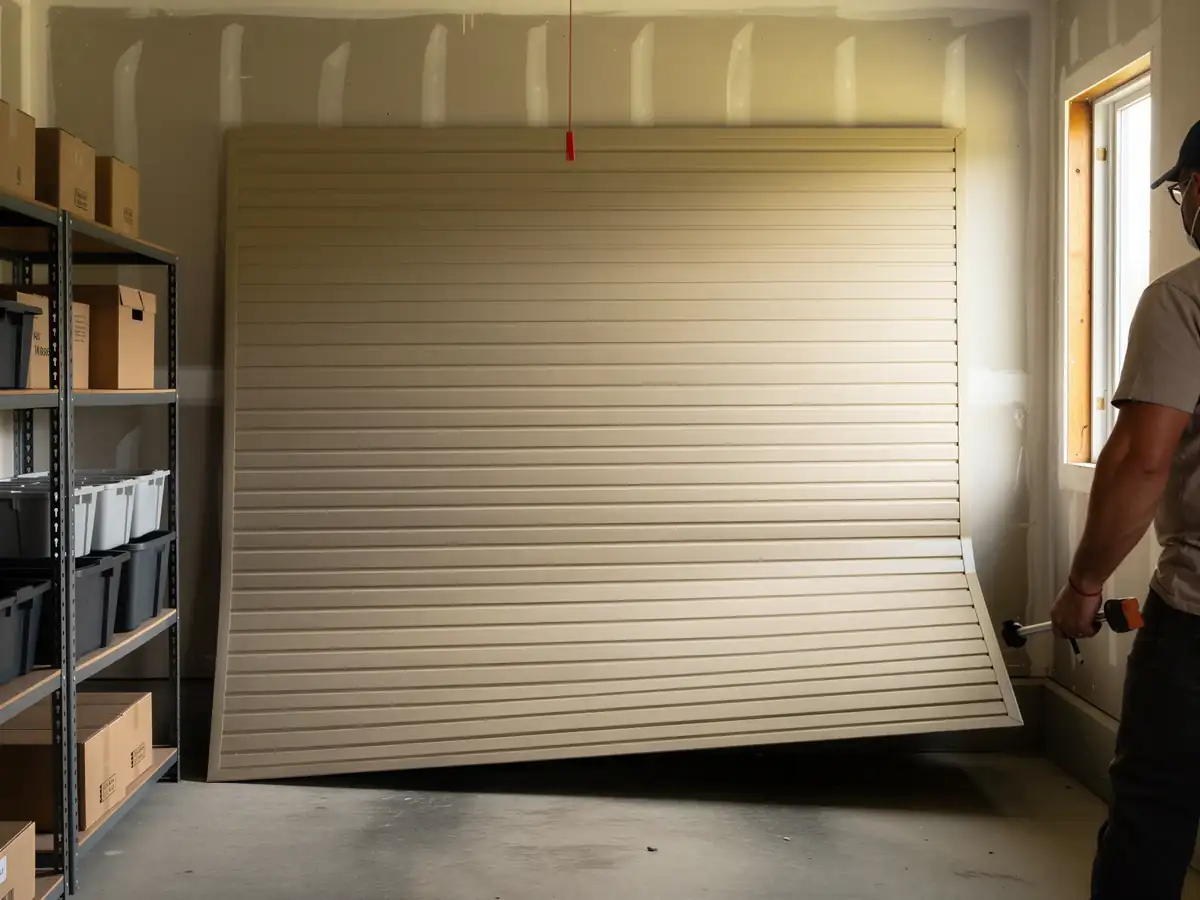
The most common call we get from Indialantic is a door that's stuck halfway, cocked at an angle
With one corner higher than the other. Usually the owner heard a bang or a scrape right before it stopped. Less dramatic, but just as common on houses from the mid-1960s: a door that's been drifting for weeks, rubbing against one side of the track every time it runs, getting louder and slower until it finally jumps clear.
A third pattern shows up mostly on the original hardware itself
A roller that's worn enough to rattle loose in the track on the way up, then catches wrong on the way down. If you've noticed the door shuddering at the same spot every single cycle, that's usually this, and it's worth a call before the roller fails completely and takes the track alignment with it.
What You Pay
We don't have a set number to quote you here - cost on an off-track repair depends on whether it's a roller swap, a track re-hang, or a jamb bracket that needs to be re-anchored, and we won't know which until we're looking at it. What we can tell you is that the job starts with diagnosis, not a guess over the phone, because two off-track doors that look identical from the driveway can need very different work depending on what's actually worn.
For a full look at pricing patterns and the rest of what we handle out of Melbourne, see our Melbourne off-track garage door repair page. For general service area details, our Indialantic coverage page has what we cover locally.