How Long You Are Without the Door
Indian Harbour Beach carries a median household income of $98,046, well above the $86,305 median across the wider service area. That number matters more than it sounds like it should, because it's the number that decides whether a fifteen-year-old opener gets a new logic board or gets hauled to the curb. At this income level, a lot of homeowners here skip the patch job and go straight to a new unit, because the math on labor plus a hard-to-source part rarely beats the cost of swapping the whole head.
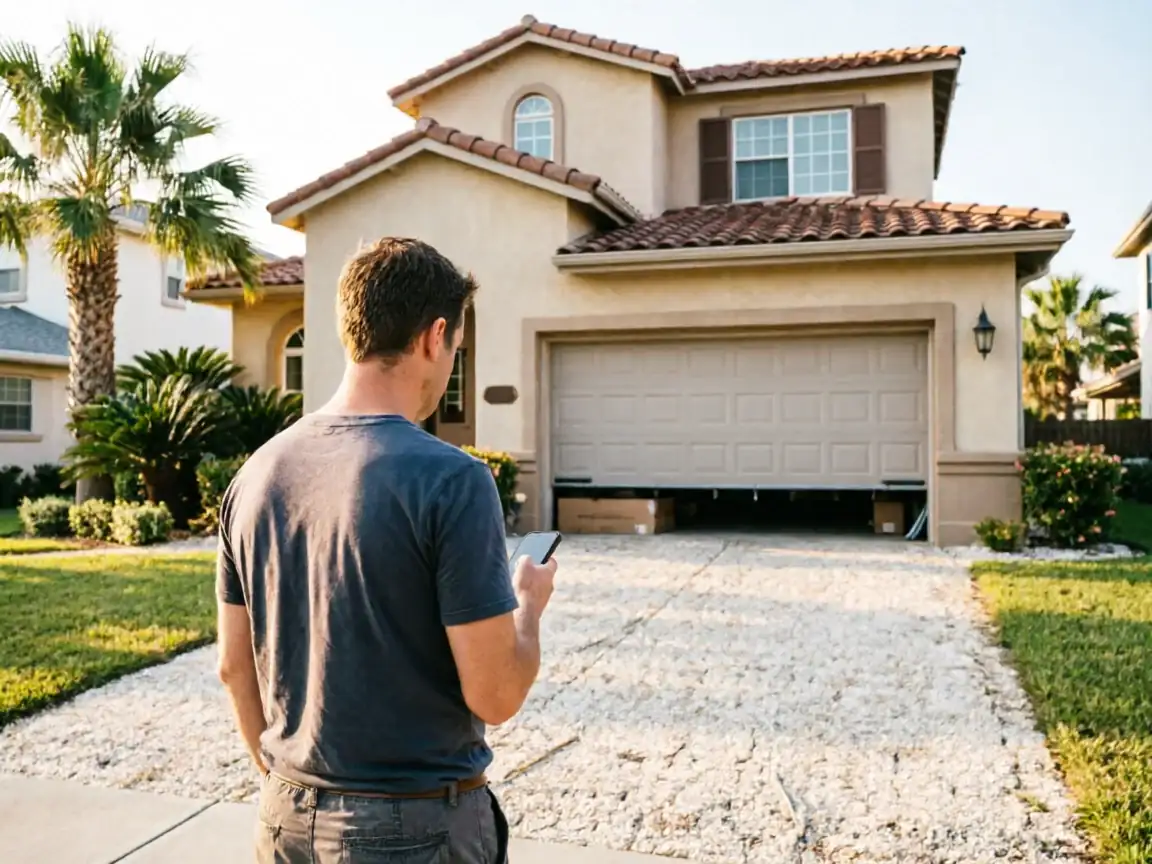
There's no depot in Indian Harbour Beach. The truck comes from Melbourne, about 5 miles out, and we don't promise a response window we can't back up with a real number - we don't have one to give you here, so we won't invent one. What we can tell you is that the distance is short enough that it isn't the bottleneck; the bottleneck is almost always parts, not travel.
How It Shows Up
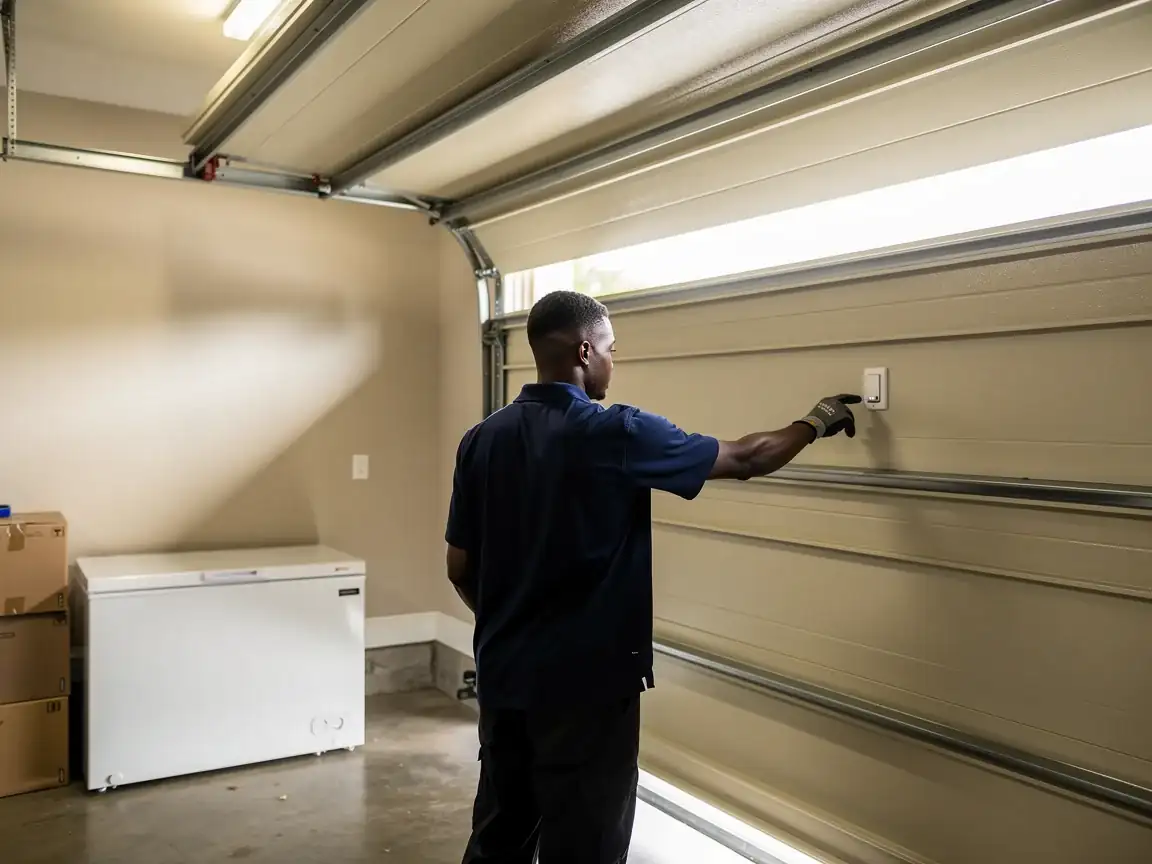
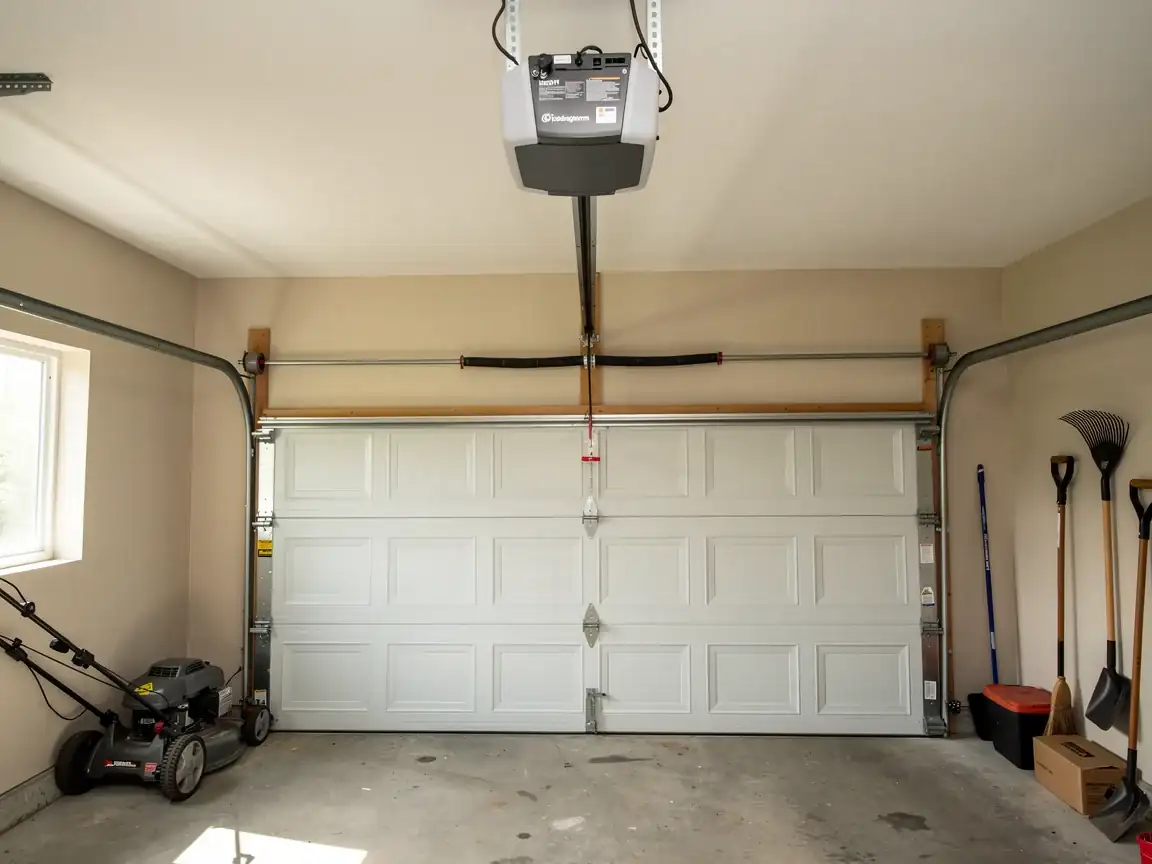
The opener runs - you hear the motor, maybe see the light - but the door doesn't move, or it jerks a few inches and stops. Sometimes the remote works from the driveway but not from the car at the curb, which usually means a failing antenna or logic board rather than a dead battery. On the chain-drive units common in houses from this era, you'll often hear the motor laboring against a stripped gear before it quits outright.
With 3,769 households in Indian Harbour Beach and a housing stock that centers around 1979, a good share of these openers are not the original unit. They're the replacement for the replacement - second or third logic board since the house went up. That matters for diagnosis: an opener installed in the 2000s fails differently than one from the 1980s, and guessing wrong wastes a trip.
What the Fix Involves
First call is diagnosis, not a part swap
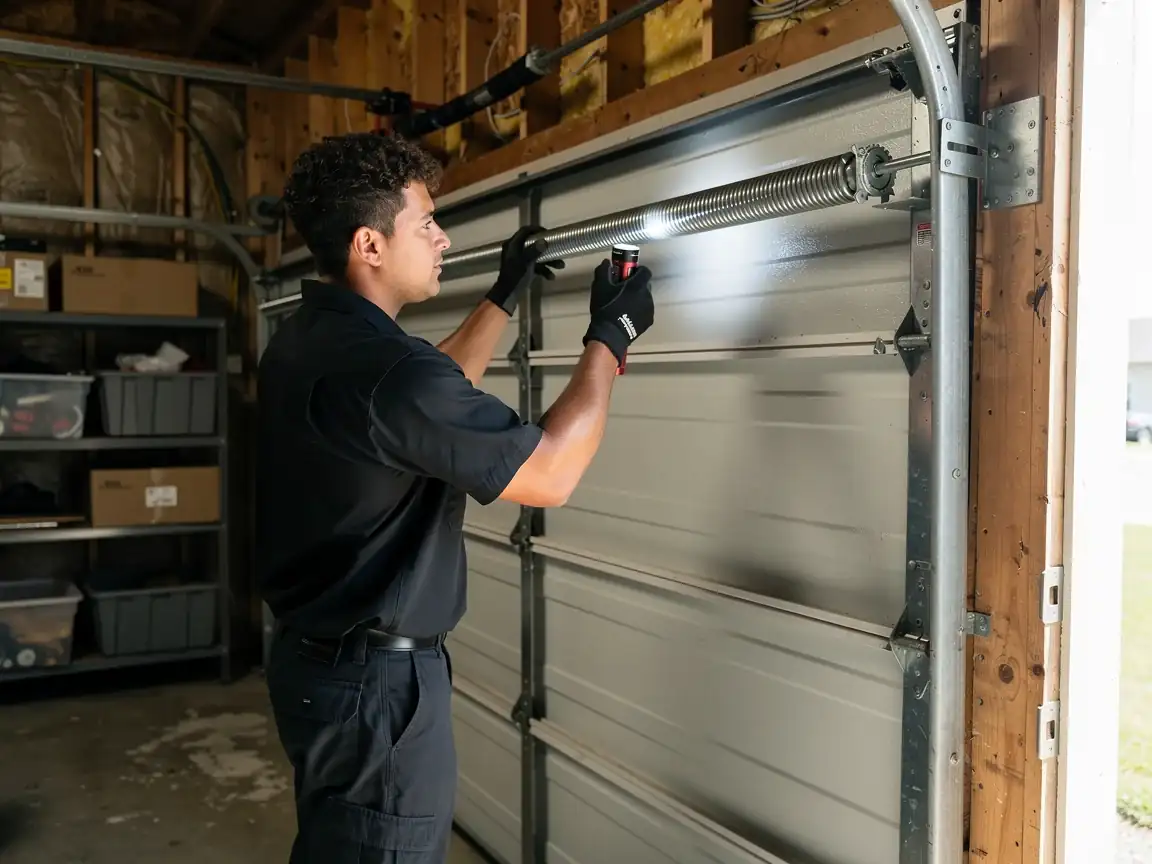
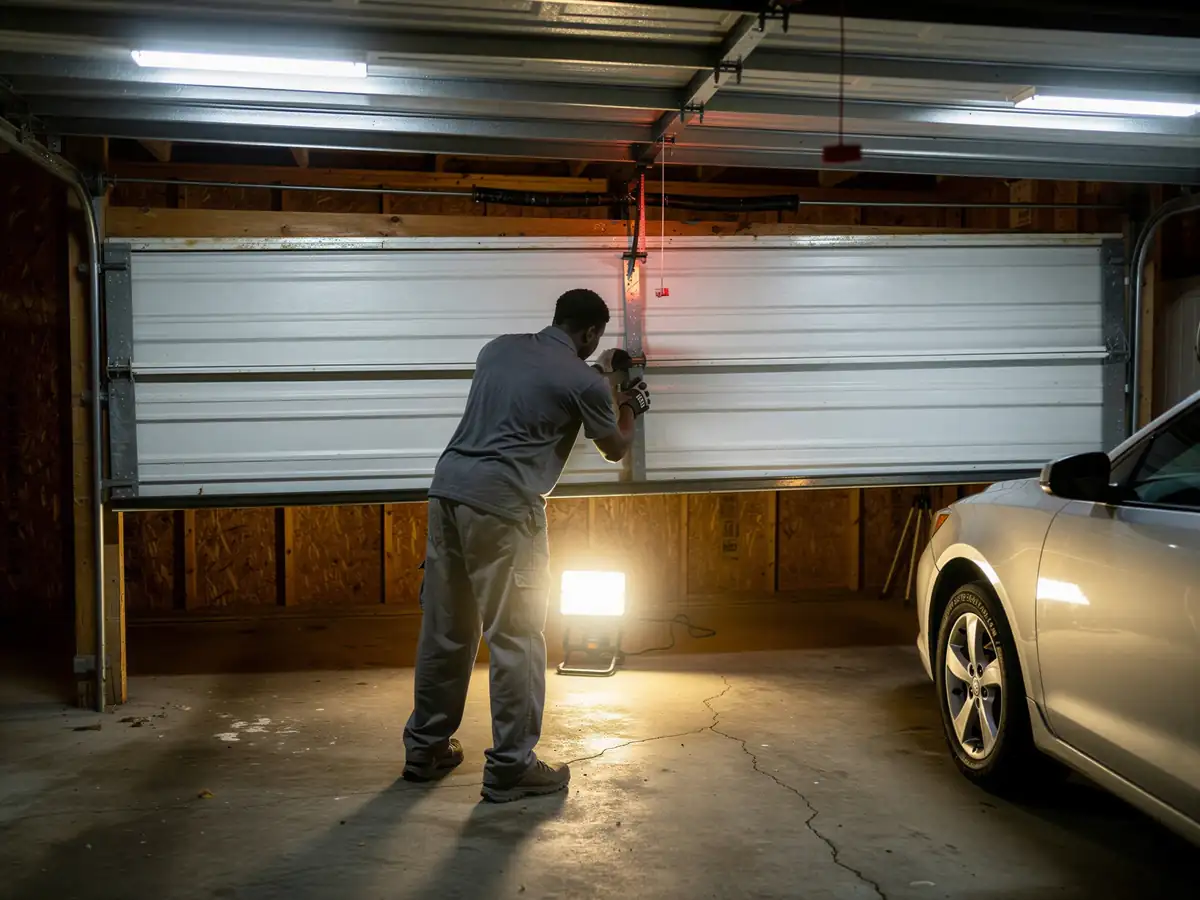
We check the logic board, the sensors, the drive gear, and the wiring before we touch anything, because an opener that won't close is just as often a misaligned safety sensor as a dead board. If it's a gear or sprocket, that's usually a same-visit fix. If it's a board on an older model, sourcing it can take longer than the repair itself - some boards for units from this housing era are no longer stocked by the manufacturer, and that's the honest limitation here: we'd rather tell you that up front than have you wait on a part that isn't coming.
That's also the point where replacement starts to look better than repair
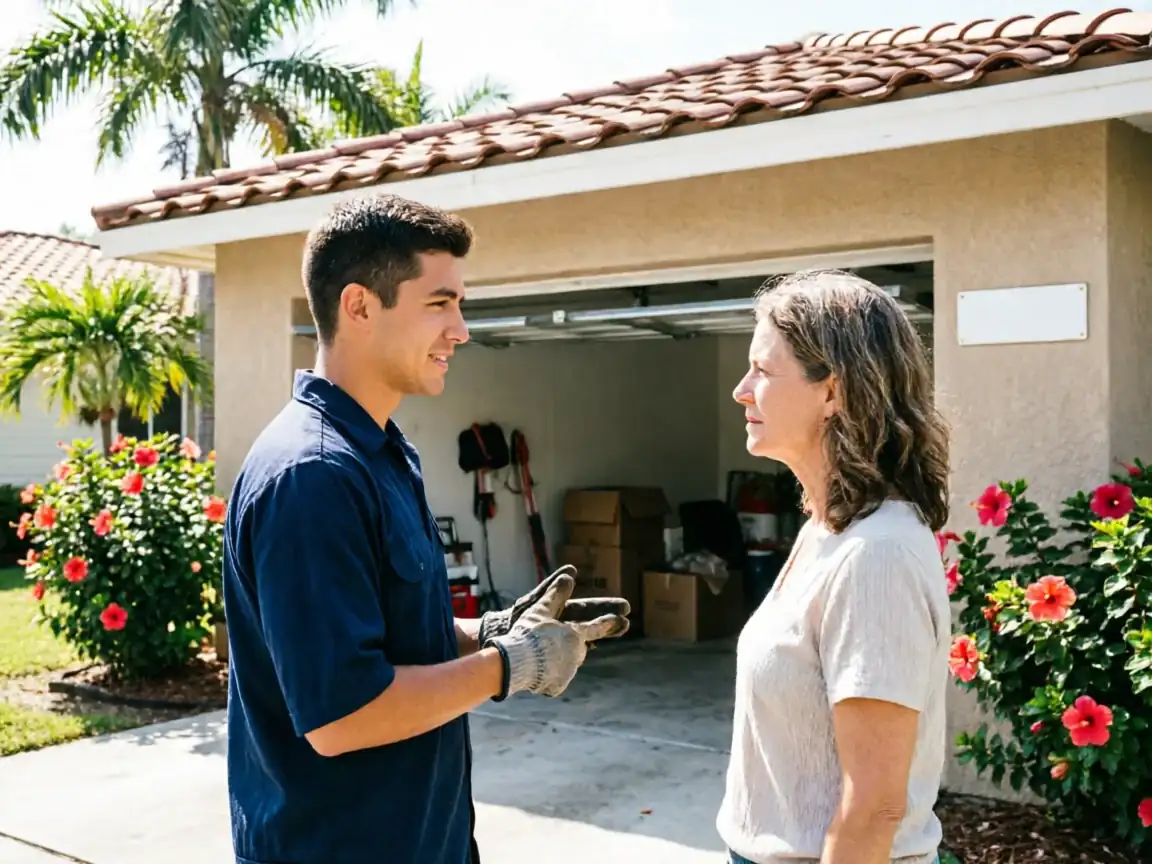
Especially given the income profile in this area and what a new opener costs against hunting down an obsolete board. We'll give you both numbers and let you decide, not push you toward the bigger job.
What Causes It Around Here
Indian Harbour Beach homes went up mostly around 1979, which sits inside the 1966-2003 window that covers this stretch of the coast. Openers from that build era were chain-drive, mechanically simple, and not built with the circuit protection that's standard now - which is why logic boards are the most common failure we see on the older end of that stock.
The climate here is mild and temperate, so you're not dealing with the freeze-thaw cycling that wrecks openers up north. But steady year-round humidity still works on gears, capacitors, and exposed hardware over decades, just slower and quieter than a hard winter would. It adds up the same way - it just takes longer to show up, which is part of why so many of these units are on their second or third board rather than their first.