How Long You Are Without the Door
A snapped torsion spring doesn't leave the door half-working. It leaves it stuck, usually down, sometimes half-up and dangerous to touch. We run out of Melbourne, about 5 miles from Indian Harbour Beach, so getting a tech to your driveway isn't a cross-county haul, but we're not based here and we won't pretend otherwise. There's no local branch to call, just a truck that makes the short run over.
Most houses in this part of the service area went up around 1979, which matters more than the mileage. A spring job on a door from that era is usually straightforward: standard torsion bar, standard drums, parts a tech carries on the truck rather than special-orders. The time sink isn't finding the part, it's diagnosing whether one spring failed or both are near the end and should go together. We'll tell you which, and we won't replace a spring that still has life in it just to round out the invoice.
How It Shows Up
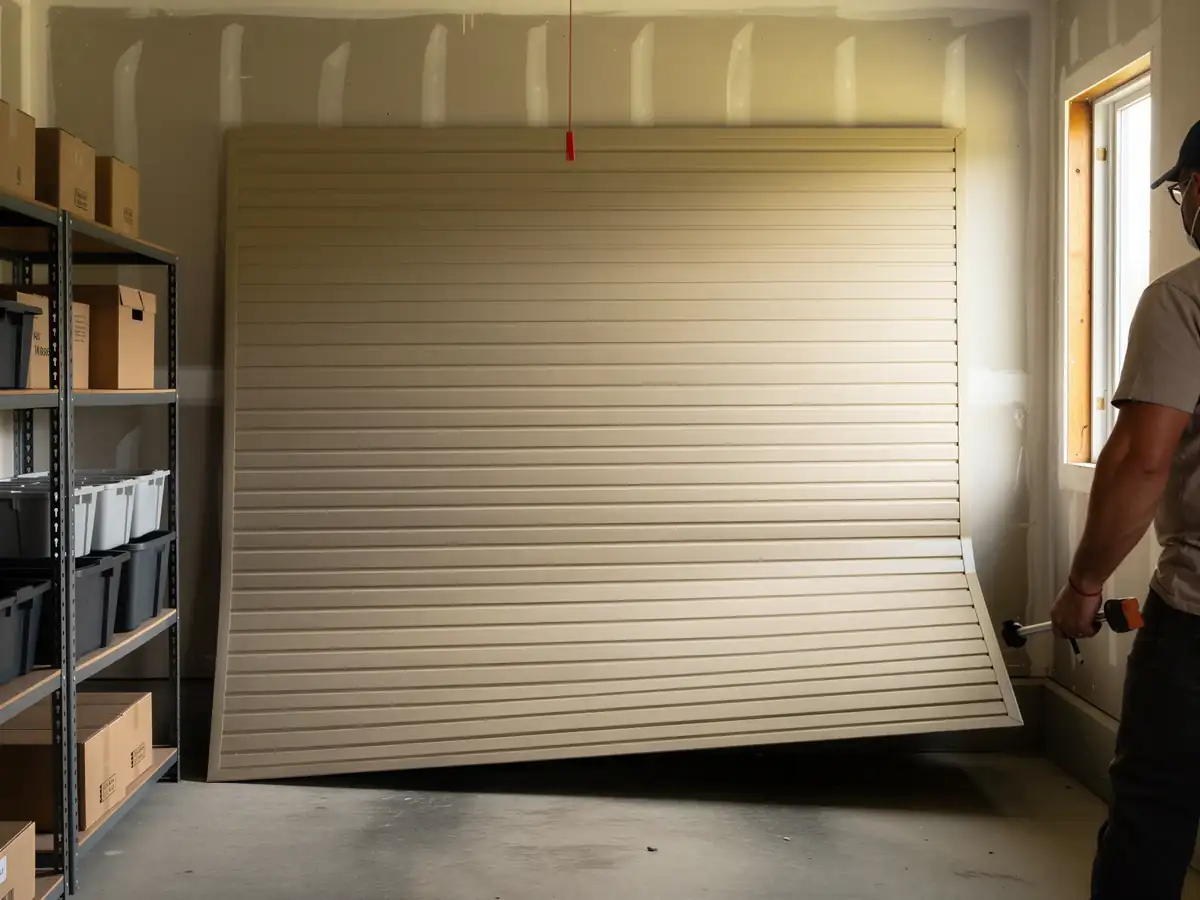
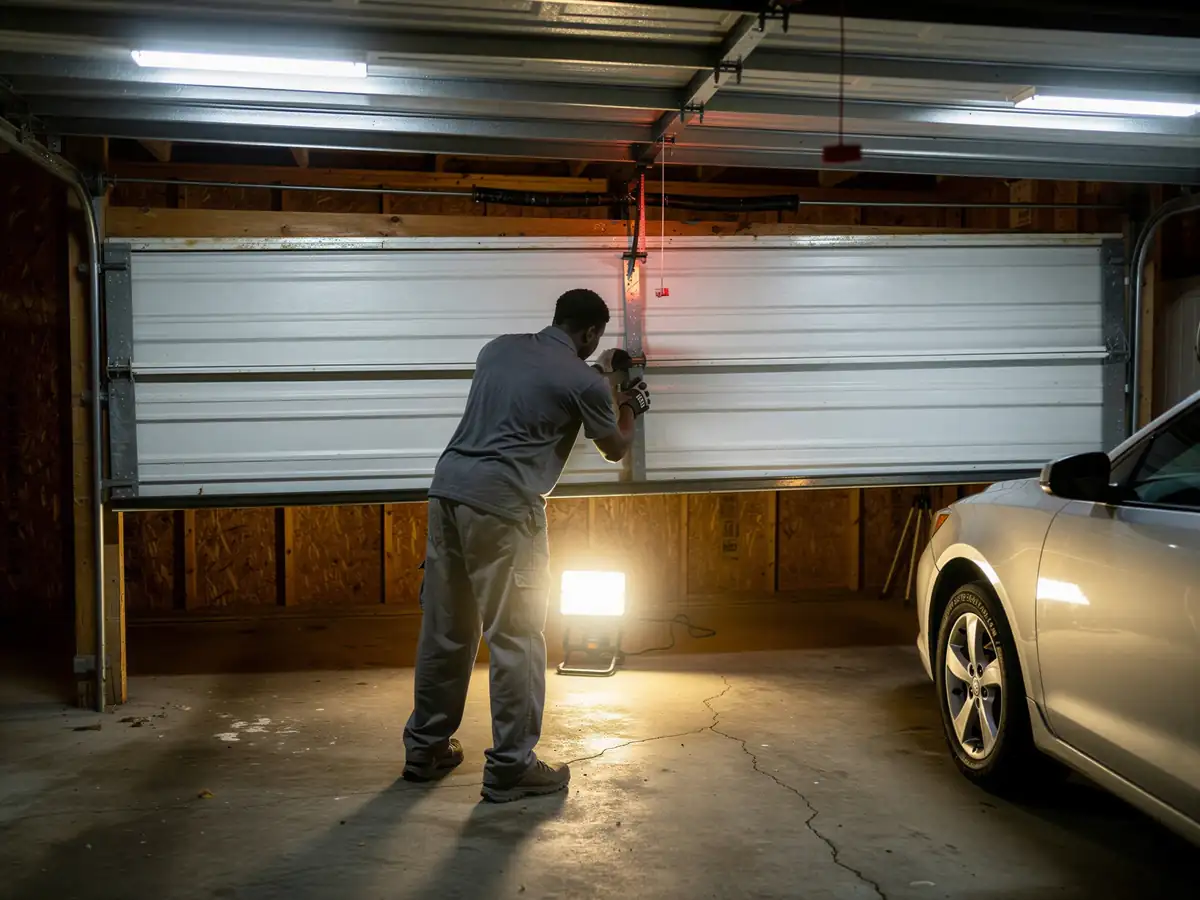
The door drops fast on one side, or doesn't move at all when the opener motor clearly is running. Sometimes you get a loud bang from the garage first, a cable or bracket taking the shock when the spring lets go. On a double door, a single broken spring will often still let the opener drag the door up, slowly and crooked, which is worse for the opener than doing nothing.
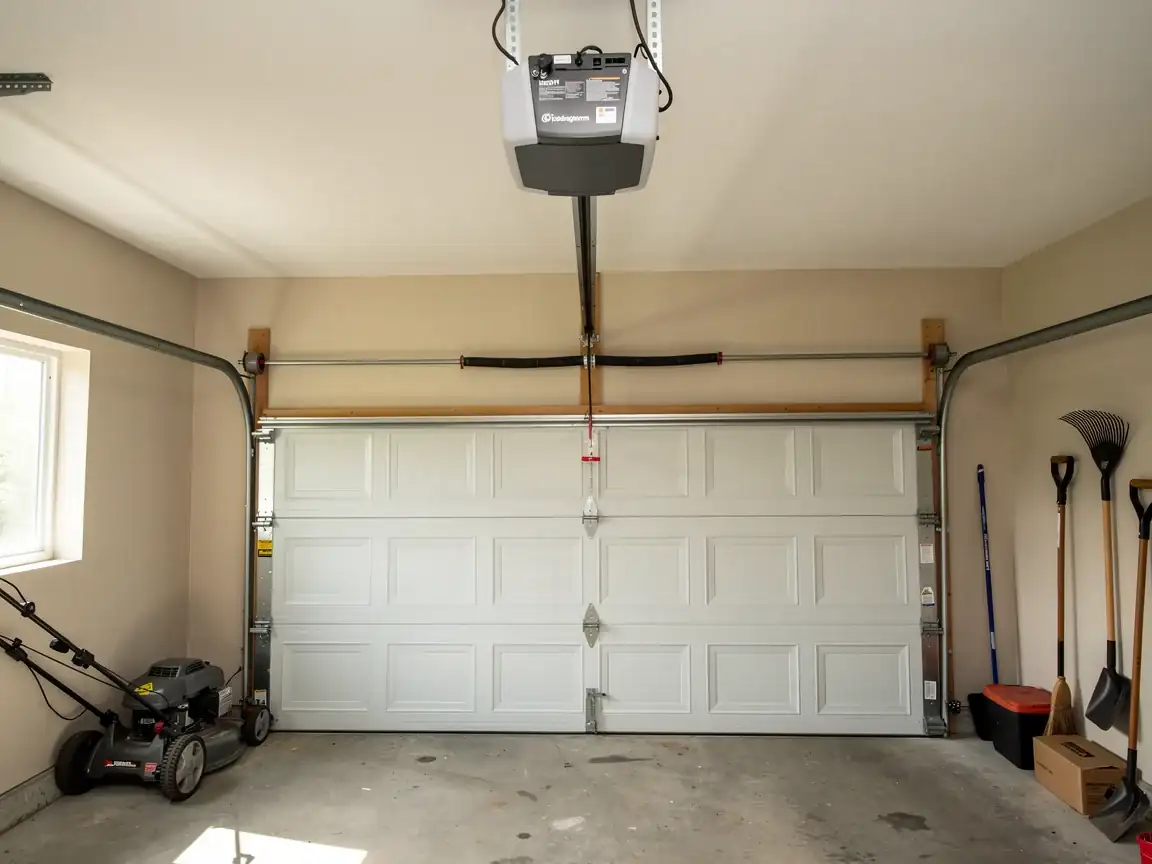
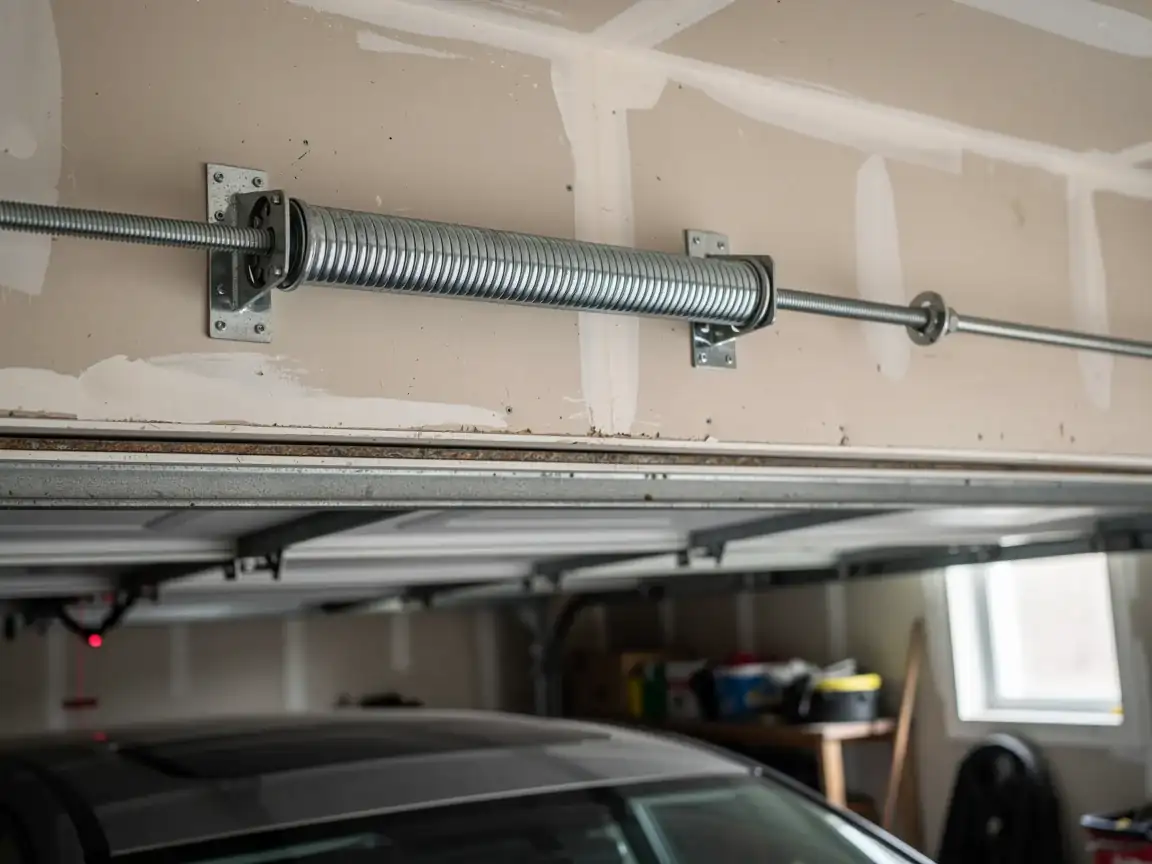
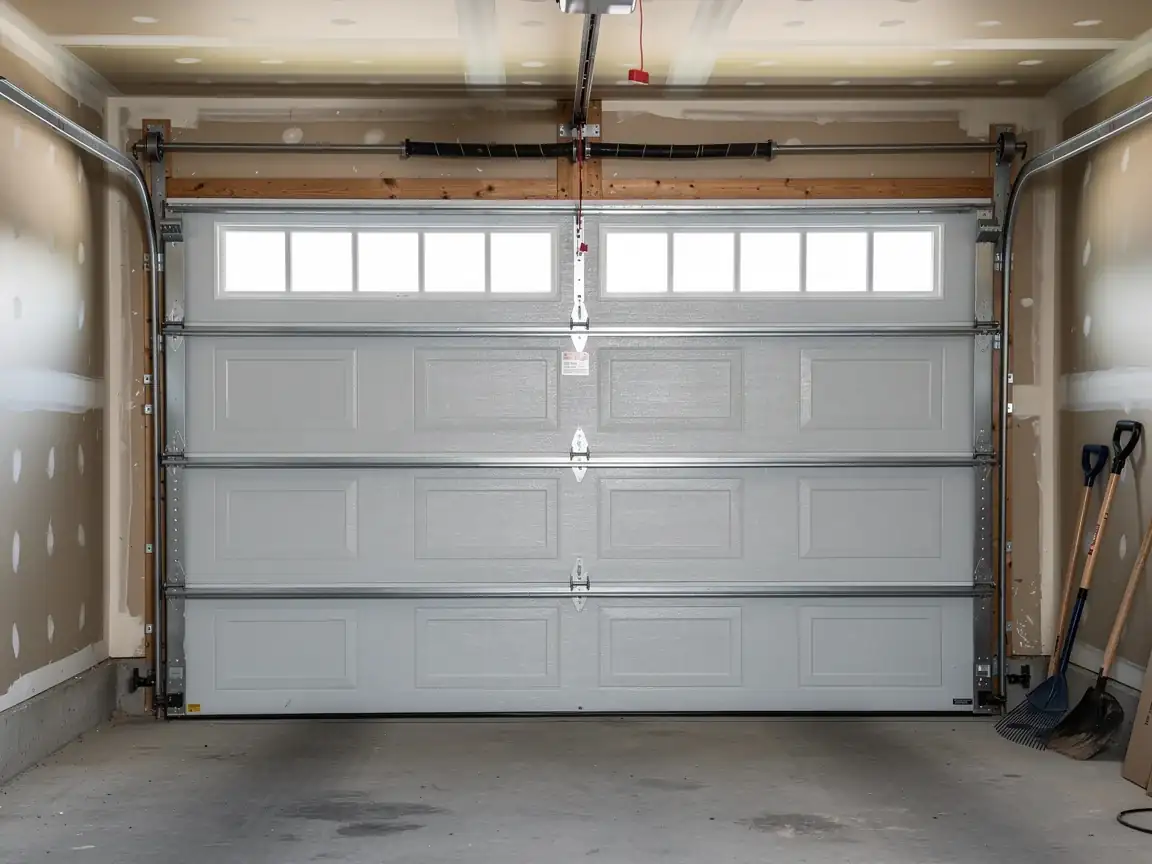
Houses built through the late 1970s and into the 1980s and 90s in this service area mostly used torsion springs mounted above the door on a single bar, a setup that's held up fine for decades but wasn't built to be serviced forever. When one spring goes on a door this old, the other is usually not far behind, even if it hasn't failed yet. We check cycle wear on both sides before we quote the job, not just the one that broke.
What the Fix Involves
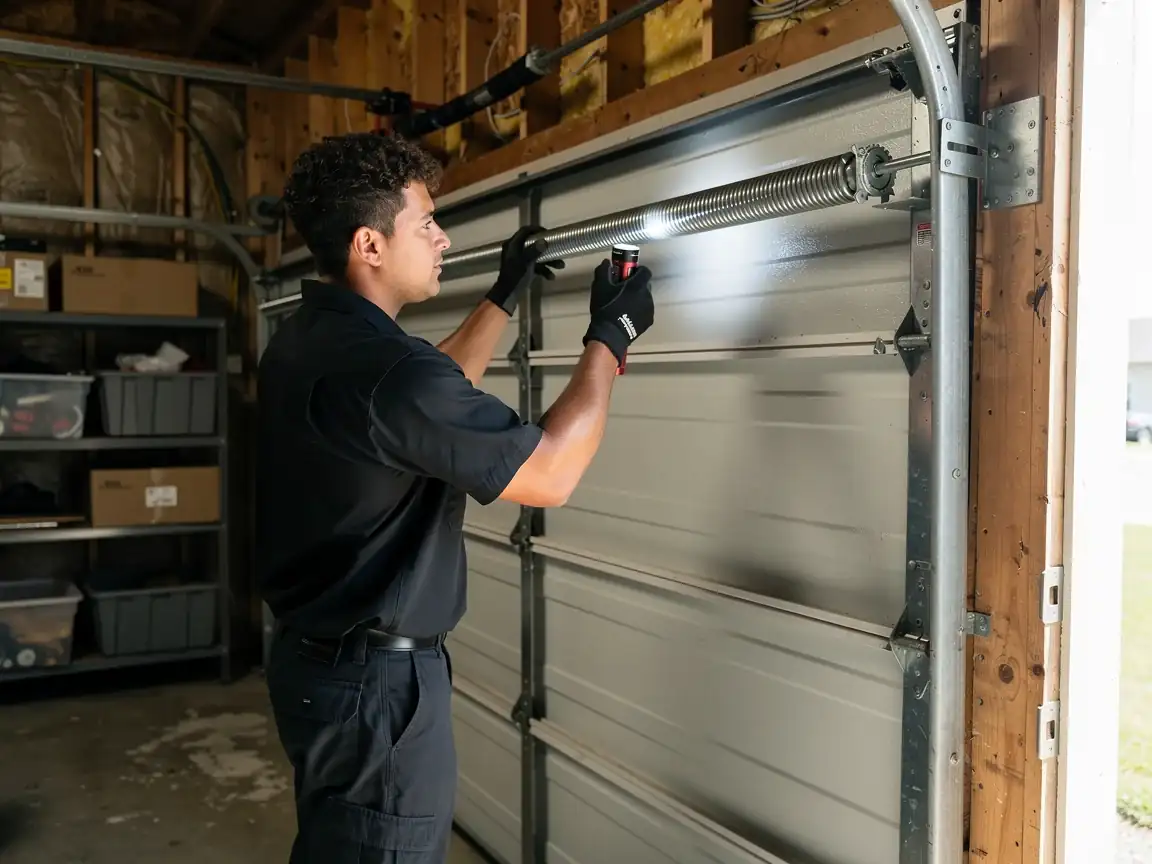
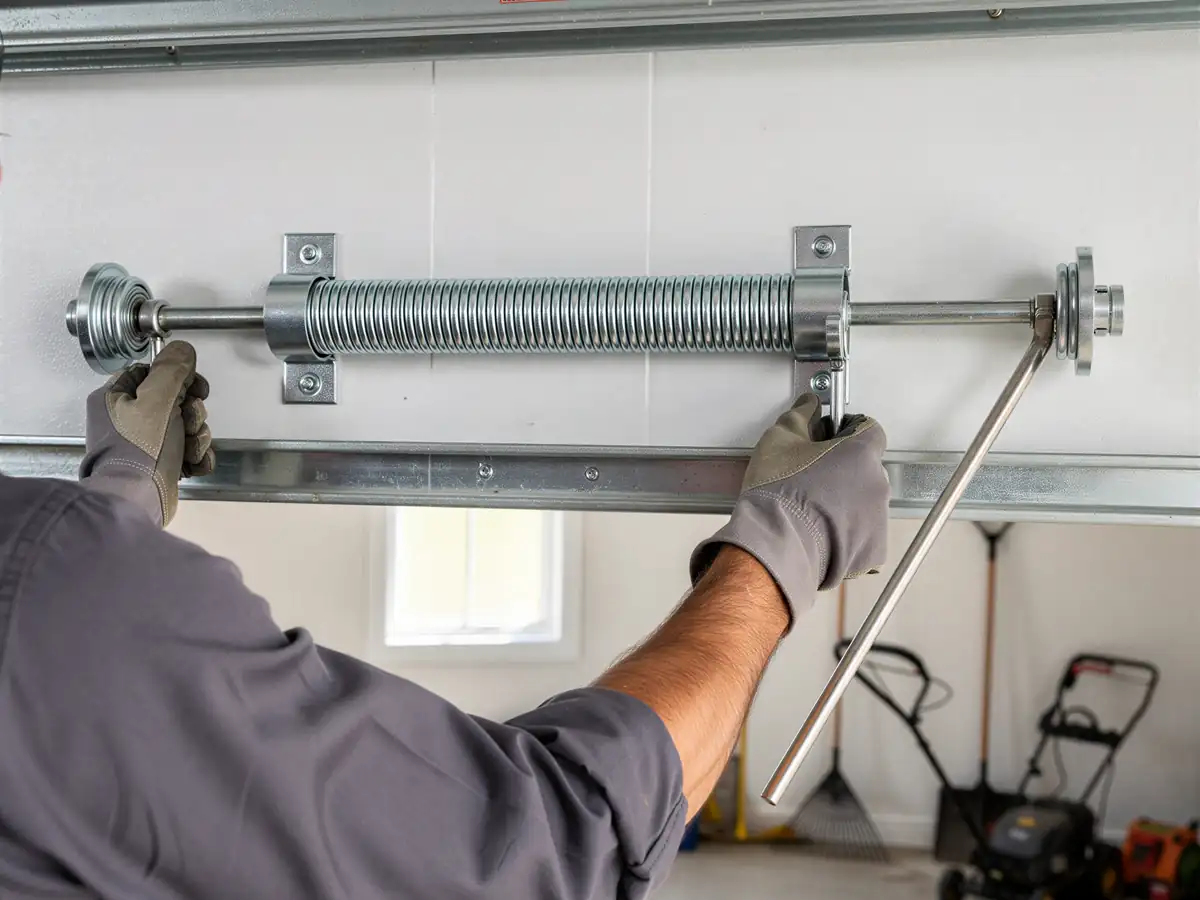
We measure the wire size, coil diameter, and wind direction off the existing spring rather than guessing from the door's weight alone
Because two doors that look identical from the driveway can be wound differently underneath. Replacement is a controlled unwind-and-rewind with winding bars, under tension the whole time. It's not a job to learn on your own door.
The honest limitation
If your spring is an odd length or an older style that's stopped being common, we may need to order it rather than carry it on the truck, which adds a day or two. That's rare on homes from the late 1970s and 80s, where hardware sizing was pretty standardized, but it happens more often on the handful of older or custom doors scattered through the area. We'll tell you up front if your spring falls into that category instead of quoting a same-day fix we can't actually deliver.
What Causes It Around Here
Torsion springs have a rated cycle life, and they don't care how well you've maintained anything else on the door. A spring installed when a house went up in 1979 has had roughly 45 years to work through its coils, lifting a door twice a day or more, and most fail from fatigue rather than any single event. That's the pattern across the broader service area too, where the median home dates to 1977 and the bulk of the stock runs from 1966 to 2003 - old enough that original springs are long gone, but not so old that hardware sizing gets exotic.
Indian Harbour Beach's roughly 3,769 households sit inside a service area of about 82,524, and the income here runs higher than the area median - about $98,046 against $86,305. That doesn't change how a spring fails, but it does change the decision afterward: more owners here choose to replace both springs on a double door in one visit rather than wait on the second one, since the labor to come back out costs more than the part.