How It Shows Up
Merritt Island is home to roughly 13,867 households, which is a fraction of the 82,524 households across the wider Melbourne service area. That smaller number matters: the off-track calls we get from the island cluster around one kind of house rather than a dozen different eras of construction. Most doors here were hung when the neighborhood went up, median year 1973, and they're still running on the original track in a lot of cases.
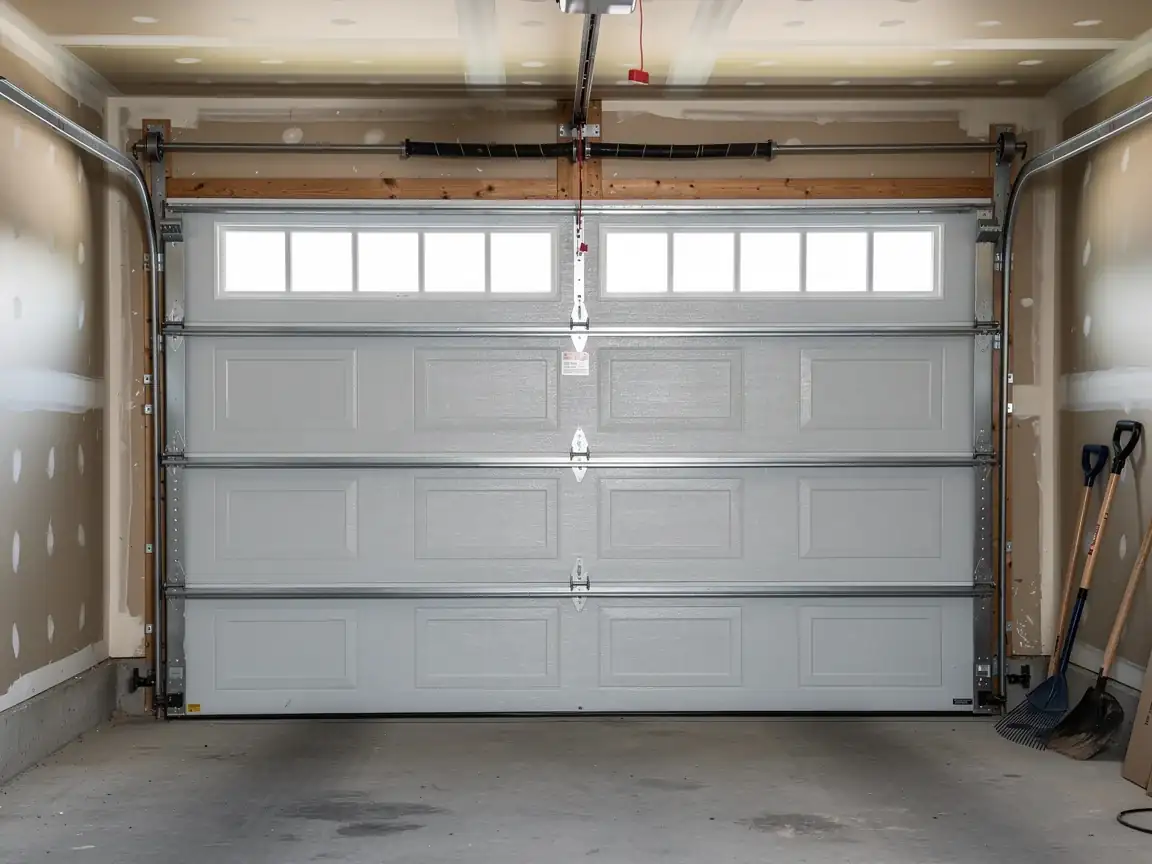
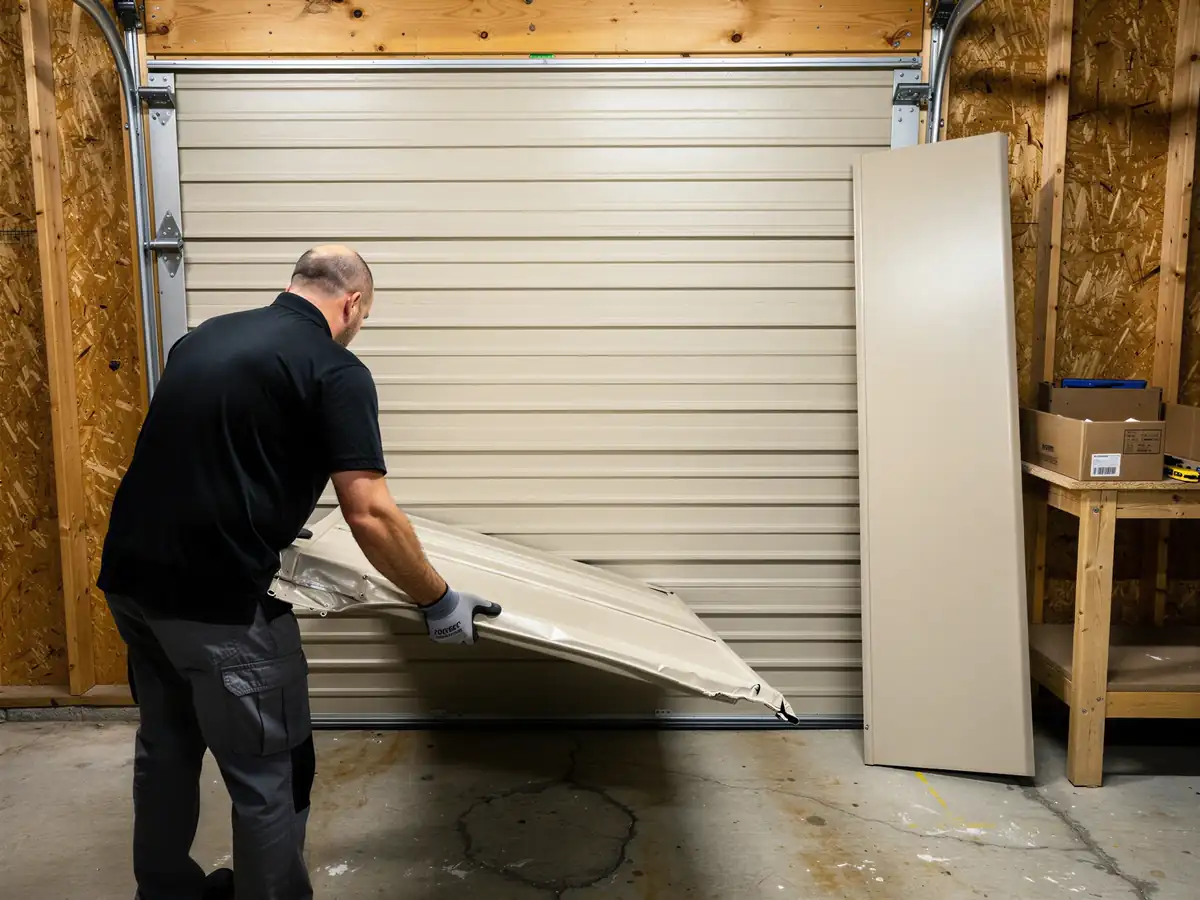
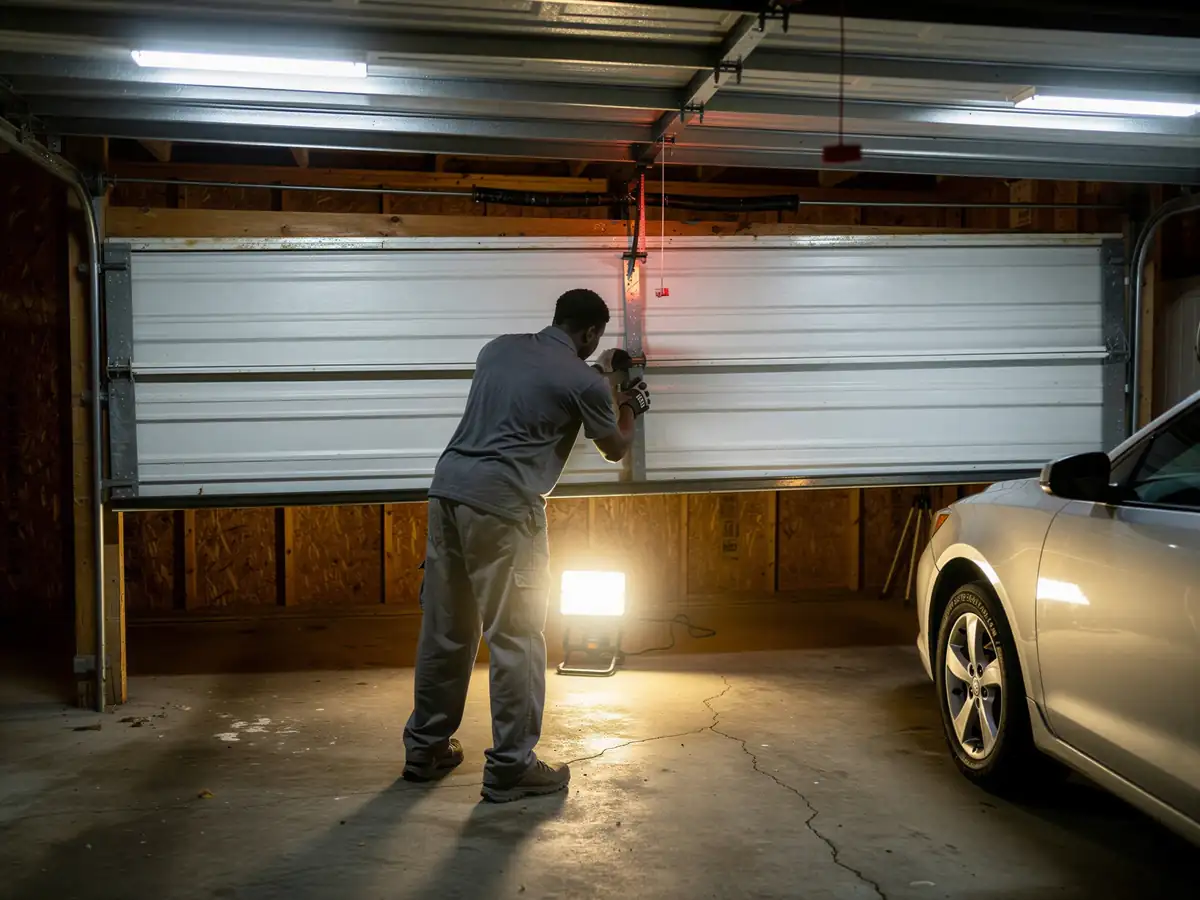
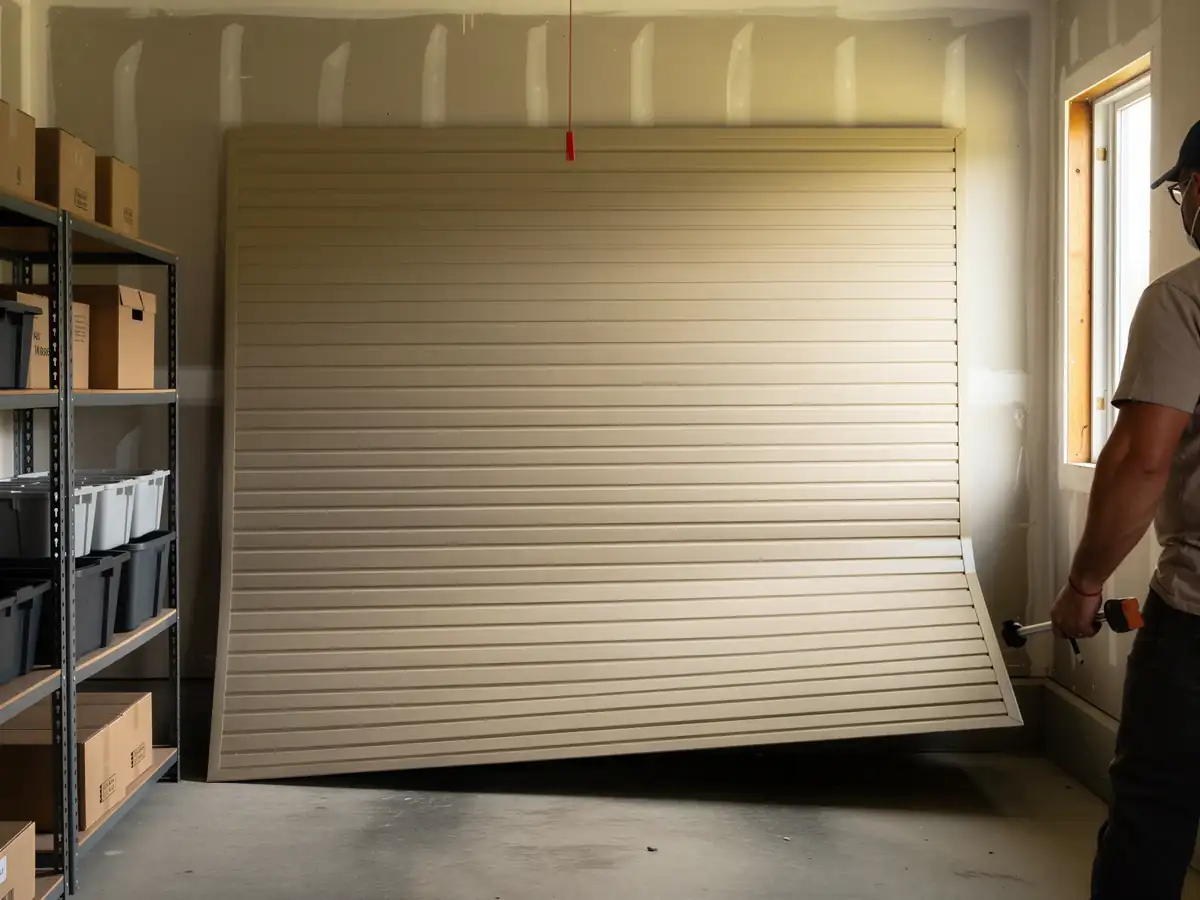
The symptom is almost always the same. The door starts to open, one side lags, and a roller pops out of the track at the bend near the top. Sometimes it's quieter than that - the door just stops a foot off the floor and won't go up or down, because a cable has come loose at the bracket and the opener senses the resistance. On an island this size, with this much of the housing stock from the same decade, that bent-track call repeats itself a lot more than it would somewhere with a mixed 1950s-to-2010s mix of builds.
Doing It Yourself
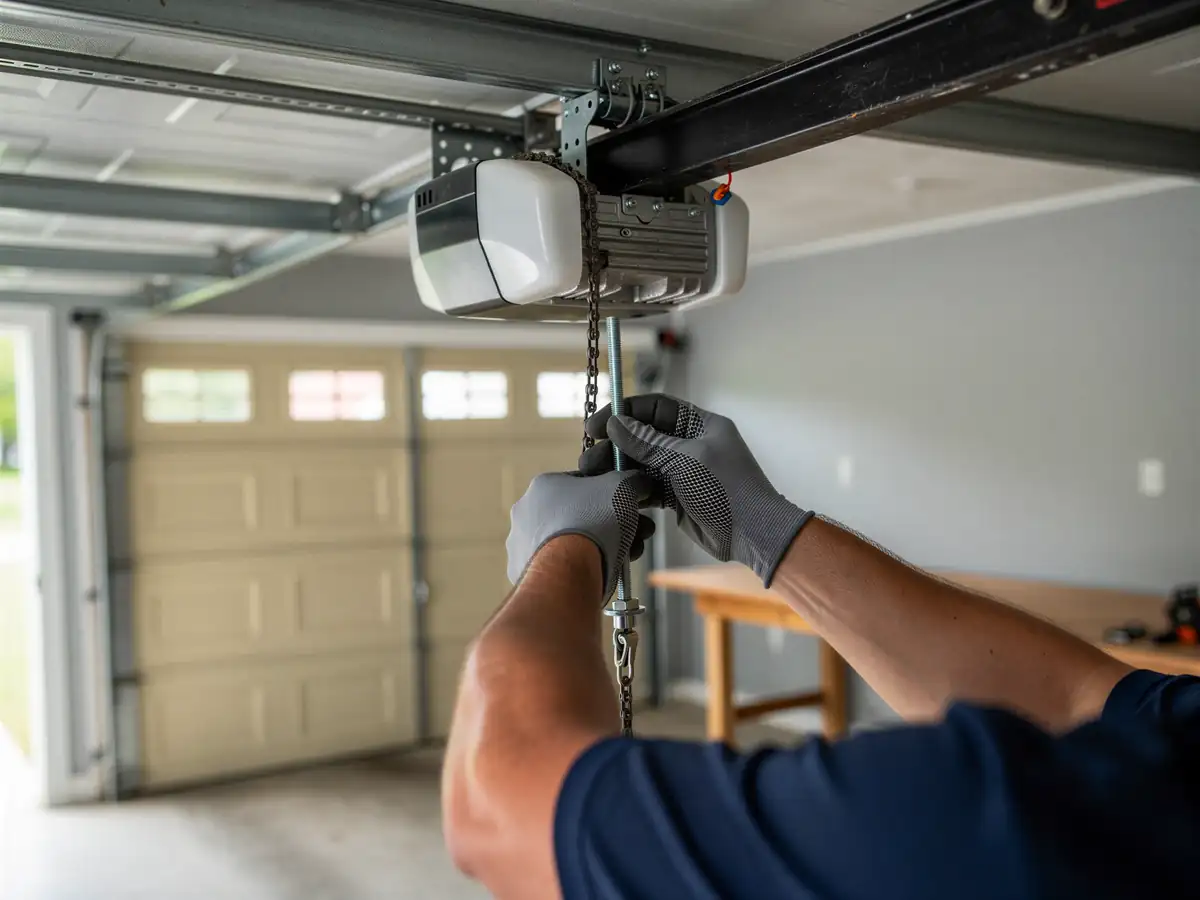
If a door is off track, the safe move is to stop. Don't run the opener again - every cycle with a roller out of the channel bends the track further and can pull the bottom bracket loose from the panel, which turns a $150 fix into a full panel replacement. Unplug or disconnect the opener so nobody in the house hits the button by accident.
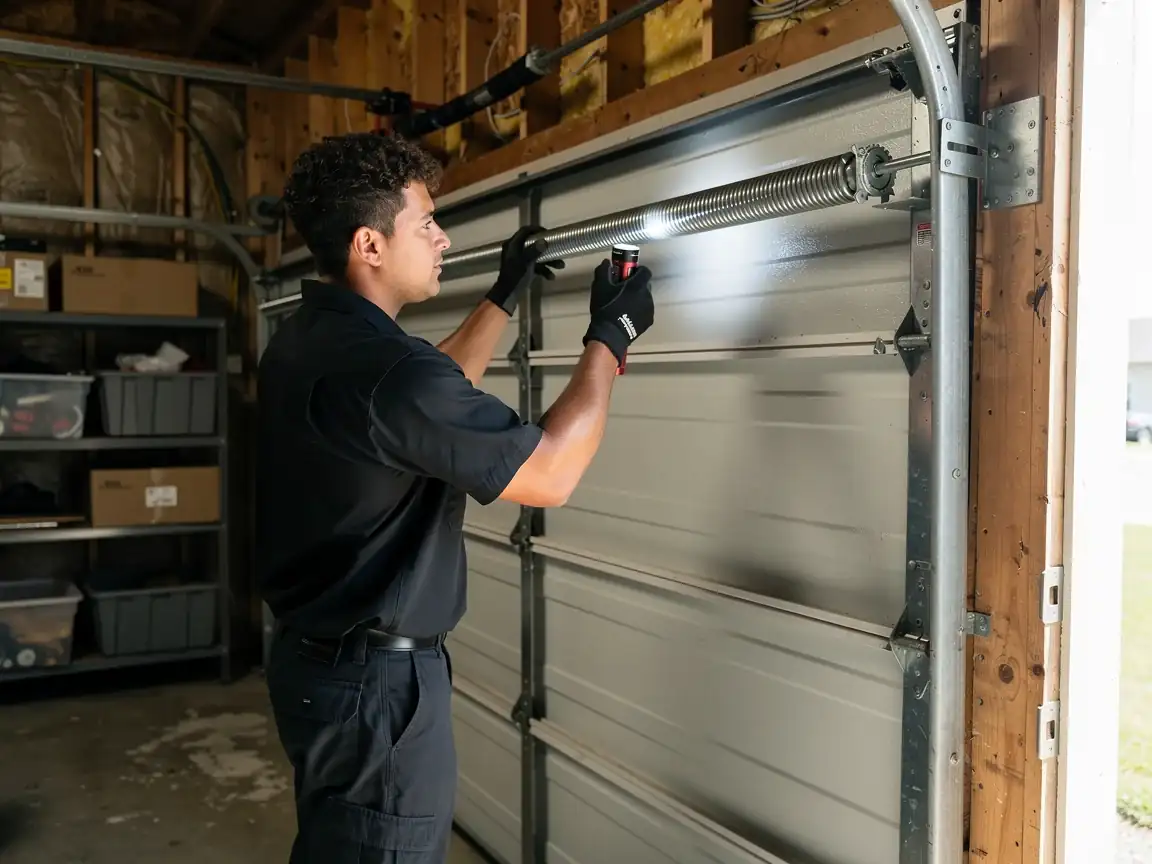
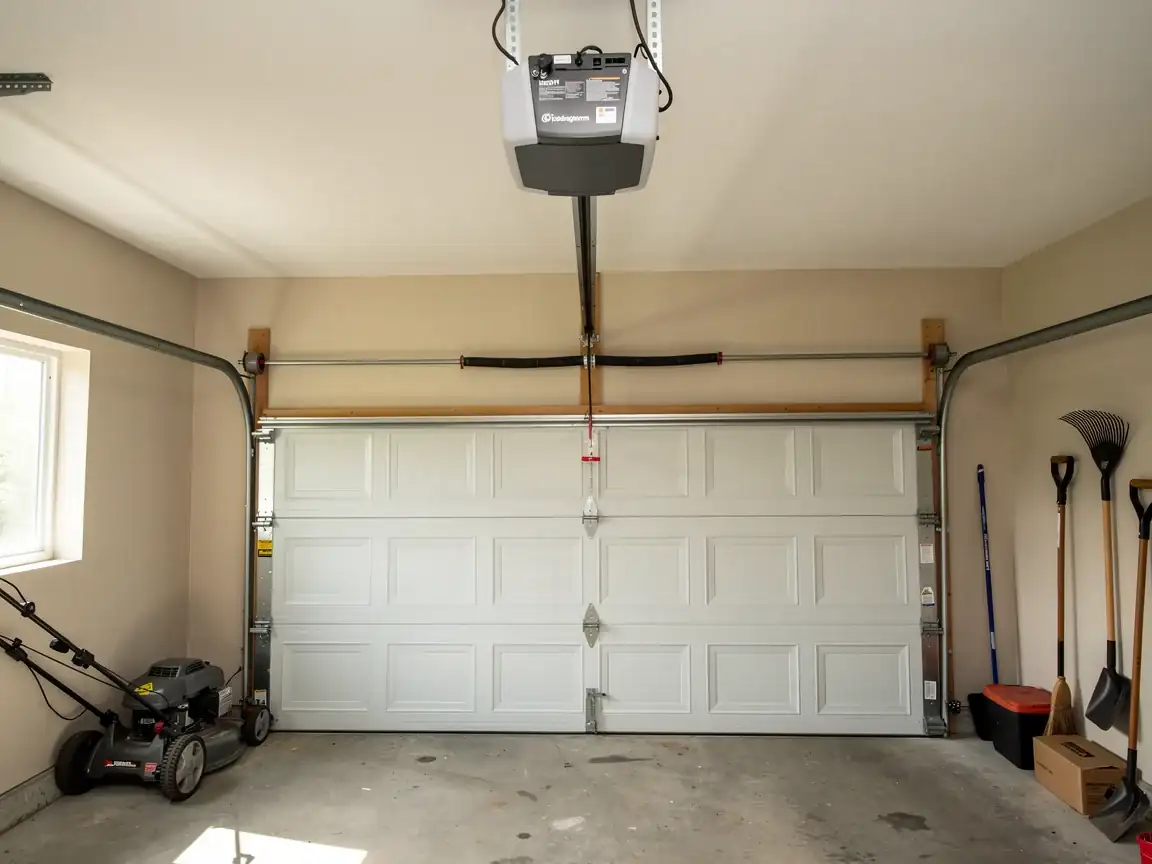
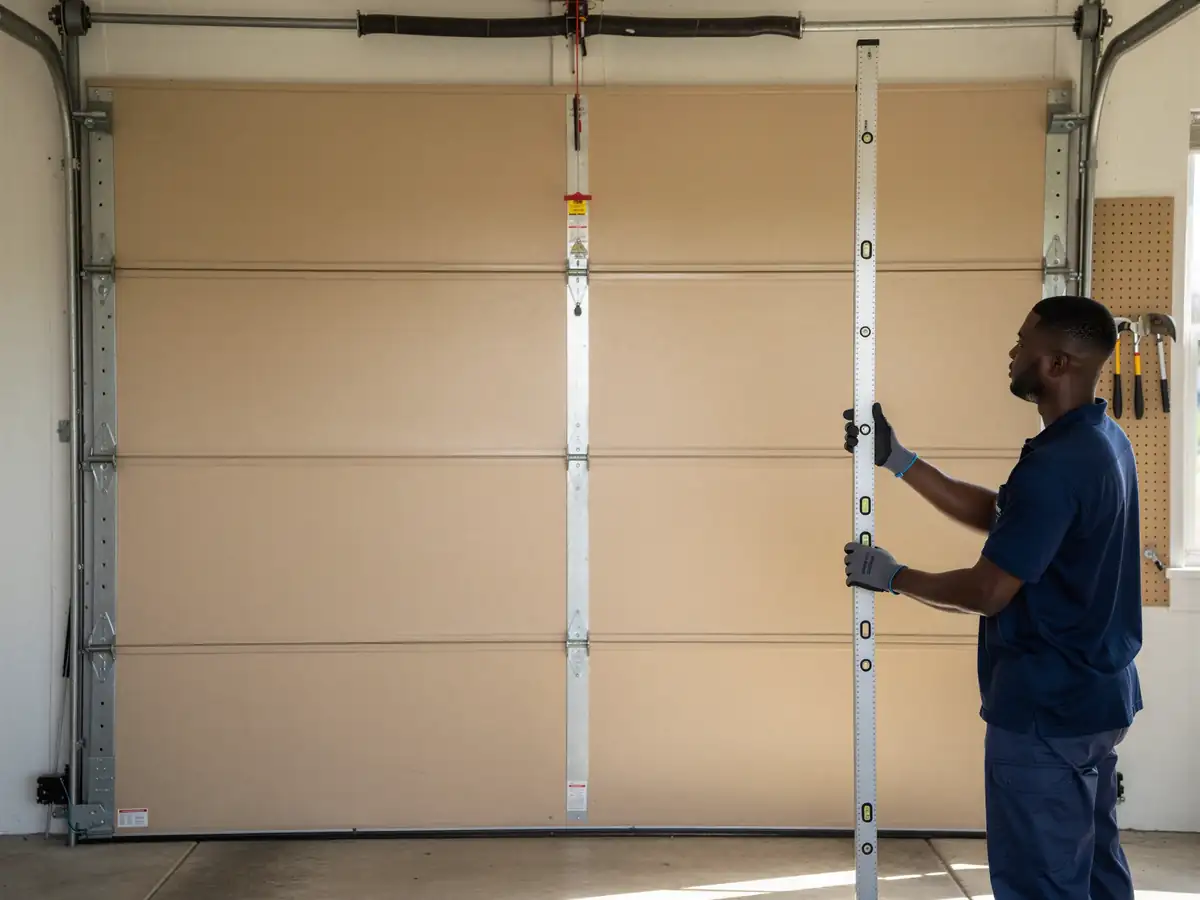
You can look, though. Check whether the cable is still wrapped around the drum on both sides - if one side has unspooled, that's a job for a tech, not a ladder. Check whether the track bracket bolts are visibly pulled away from the framing; on a house built in the early '70s like most of this island, those lag bolts have had fifty years to work loose in the wood. What you shouldn't do is try to force the roller back into the channel by hand while the door is under spring tension. That's the one honest limitation here: once a door's off track and under tension, there isn't a safe homeowner fix, only a safe way to wait for one.
What Can Go Wrong
The obvious risk is a bent track, but the hardware underneath it fails too
On houses from this build era, the bottom roller brackets are usually bolted straight to a steel bracket that's held with two or three lag bolts into the jamb. Fifty years of door cycles loosens those bolts, and once a bracket shifts even a half inch, the roller rides the edge of the track instead of the center - that's what pulls it out.
There's also the spring side of it
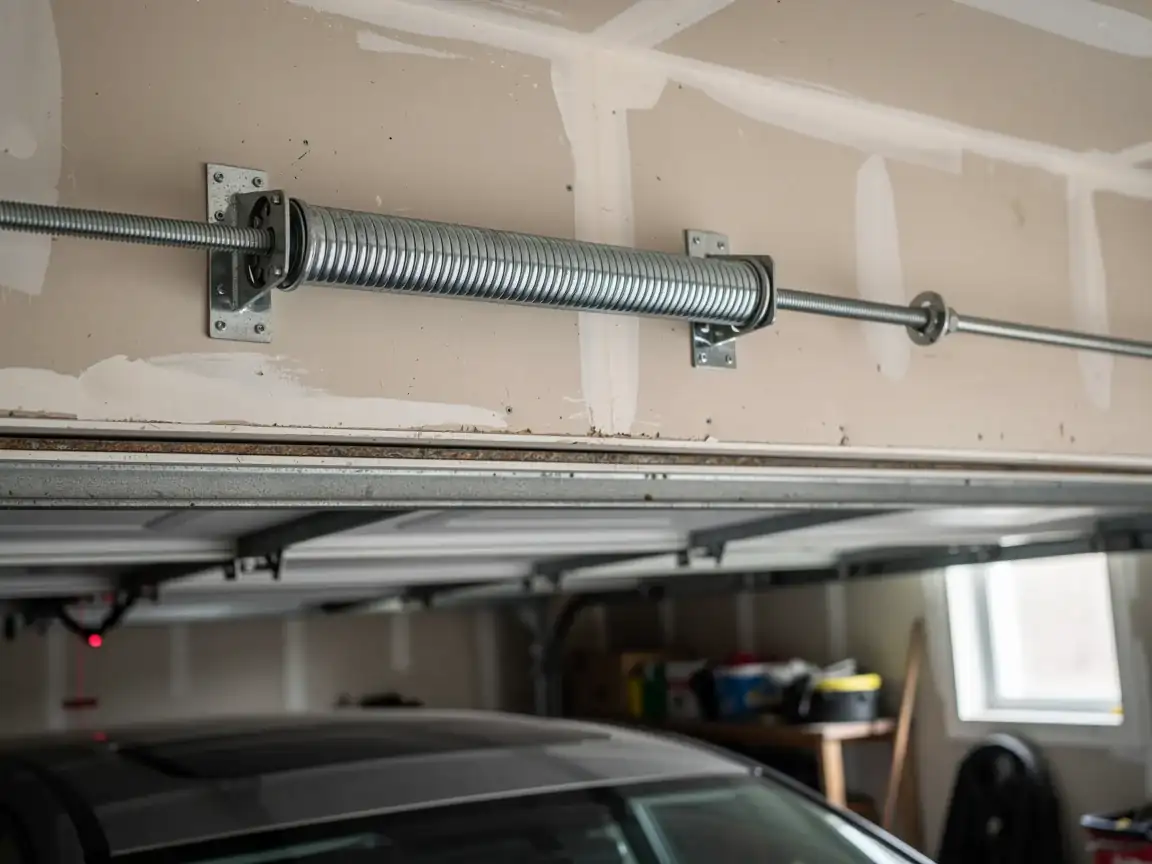
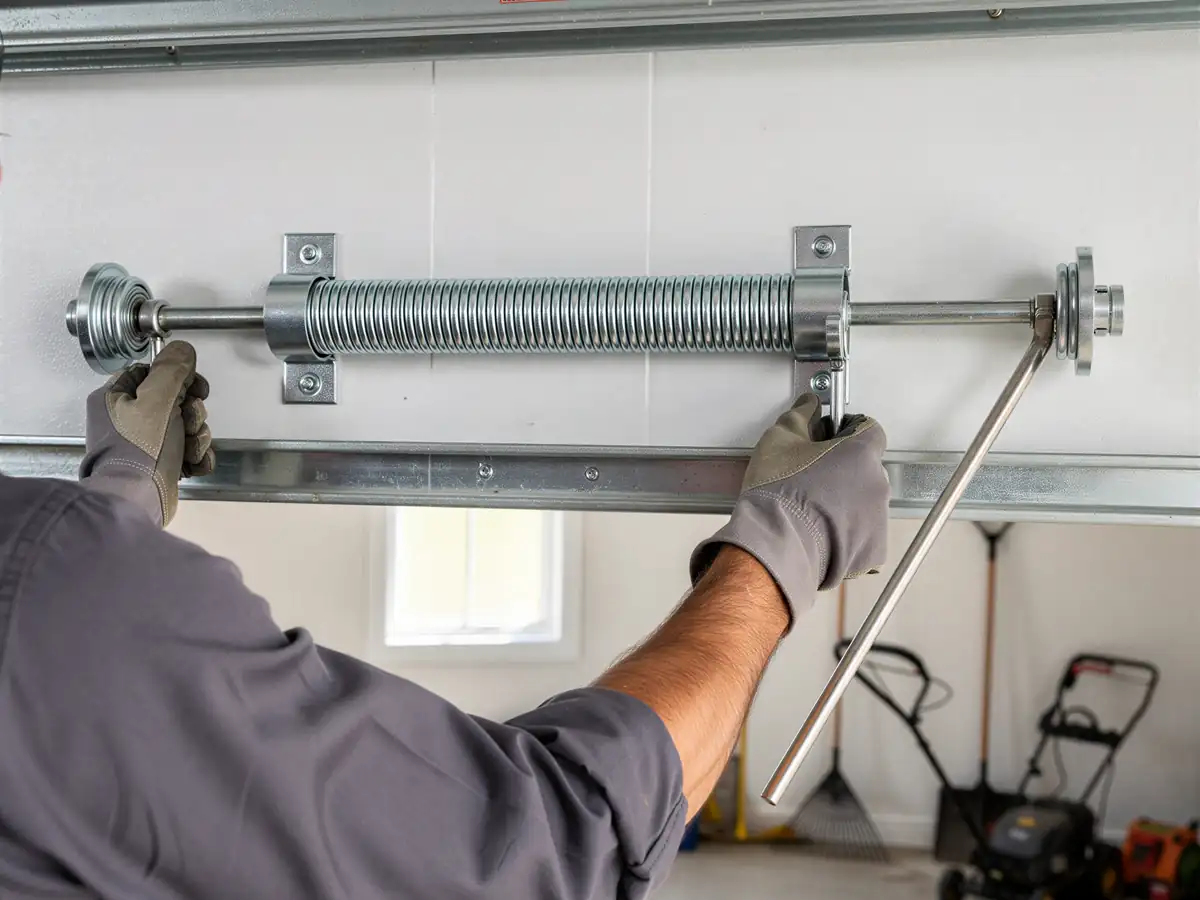
A torsion spring that's original to a 1970s build is well past any reasonable service life, and a spring that lets go while a door is off track puts a lot more force through already-stressed hardware. We don't recommend re-hanging a door onto a track without checking the spring first, because fixing the track and leaving a tired spring just moves the failure point.
Worst case, the door comes off the track far enough that a panel cracks at the hinge
At that point you're not fixing the track anymore, you're replacing panels, and depending on age, matching a discontinued panel profile from the 1970s isn't always possible.
What Causes It Around Here
Age is the core of it. With a median build year of 1973, Merritt Island's housing sits squarely in the 1966-2003 window typical of this part of the Melbourne area, and most of that stock used the lighter steel track common to that period rather than the heavier reinforced rail sold today. Lighter track flexes more at the bend radius near the top of the opening, and flex is exactly what walks a roller out of the channel over time.
The area's climate band is mild temperate, so this isn't a freeze-thaw problem like you'd get further north - it's a cycles-and-age problem. Doors here aren't fighting ice; they're just old, and they've gone up and down a comparable number of times to any other door of that vintage.
One more thing worth noting: at $91,020 median household income, Merritt Island runs higher than the $86,305 median across the broader service area. In practice that shows up as more owners choosing to replace an aging track-and-roller setup outright rather than keep patching it, once a tech points out the age of the hardware. We make the drive out - it's about 14 miles from our Melbourne base - rather than running a branch office on the island, so we're not the first call for an emergency; we're the call once the door's off track and staying that way.