What the Fix Involves
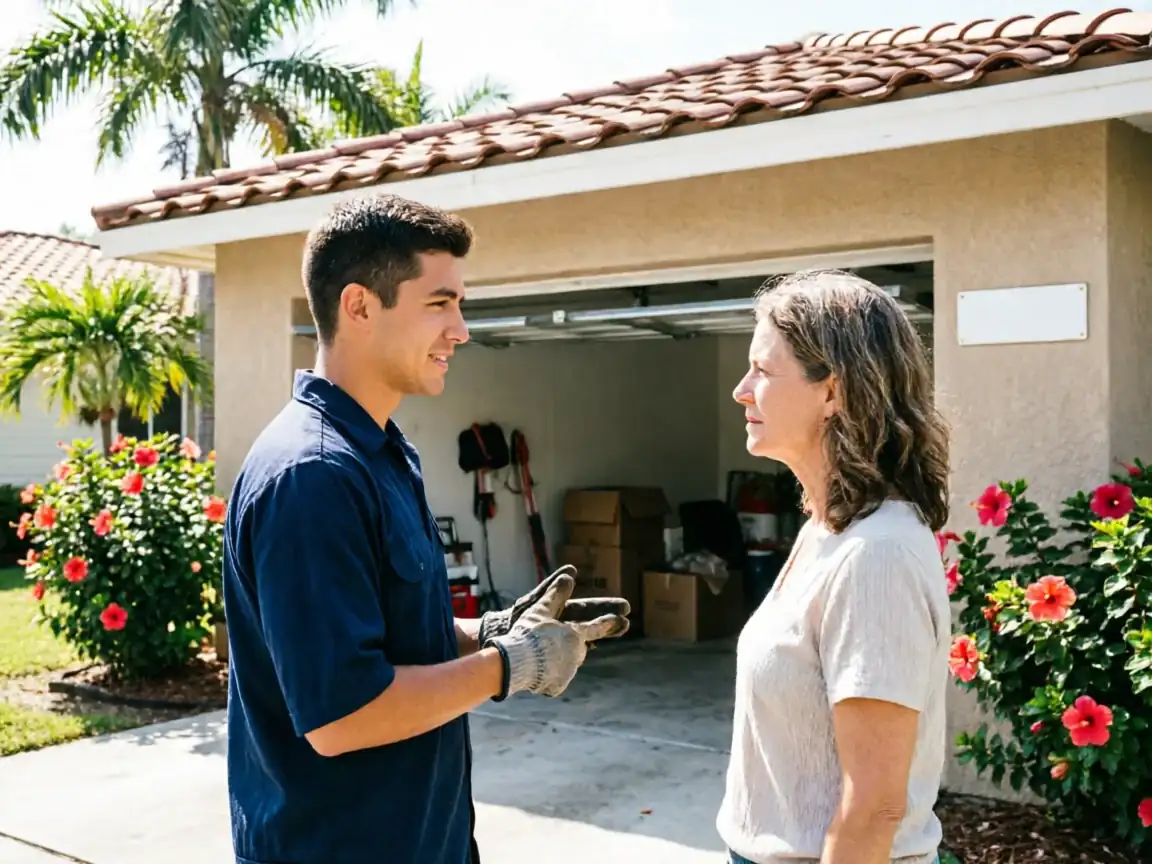
South Patrick Shores sits about 7 miles from our Melbourne shop, so when a door jumps its track out here, the call starts with a drive down A1A-adjacent streets rather than a five-minute trip. That matters less for the repair itself than for scheduling - we batch calls in this direction when we can, and we're upfront that a same-area emergency in Melbourne proper will usually get wheels moving faster than one out here.
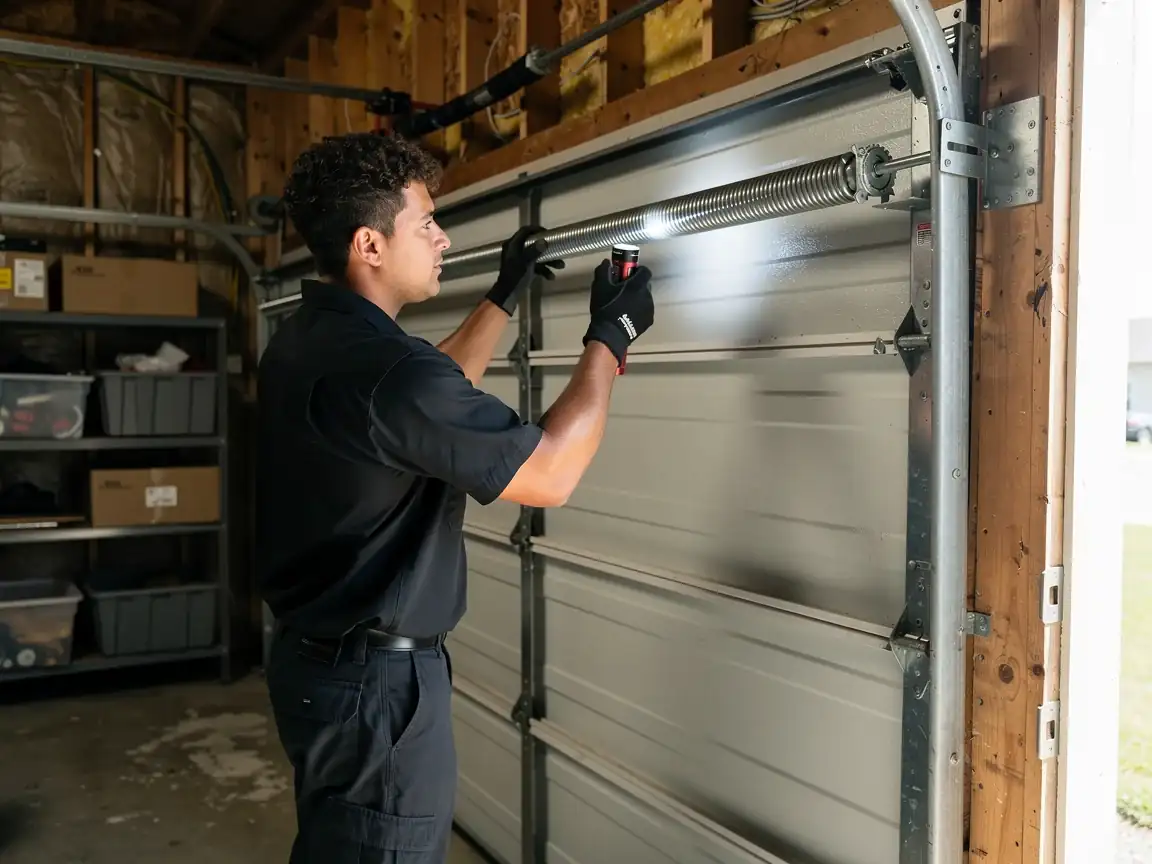
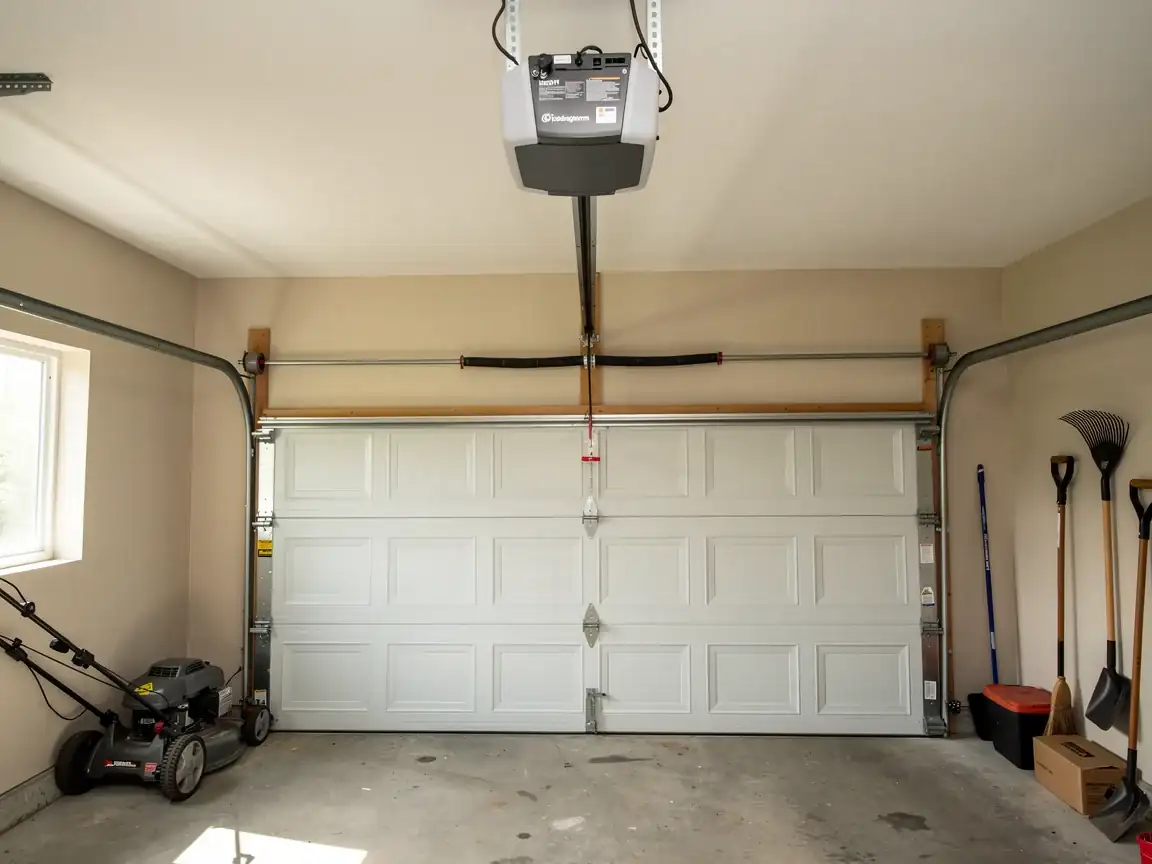
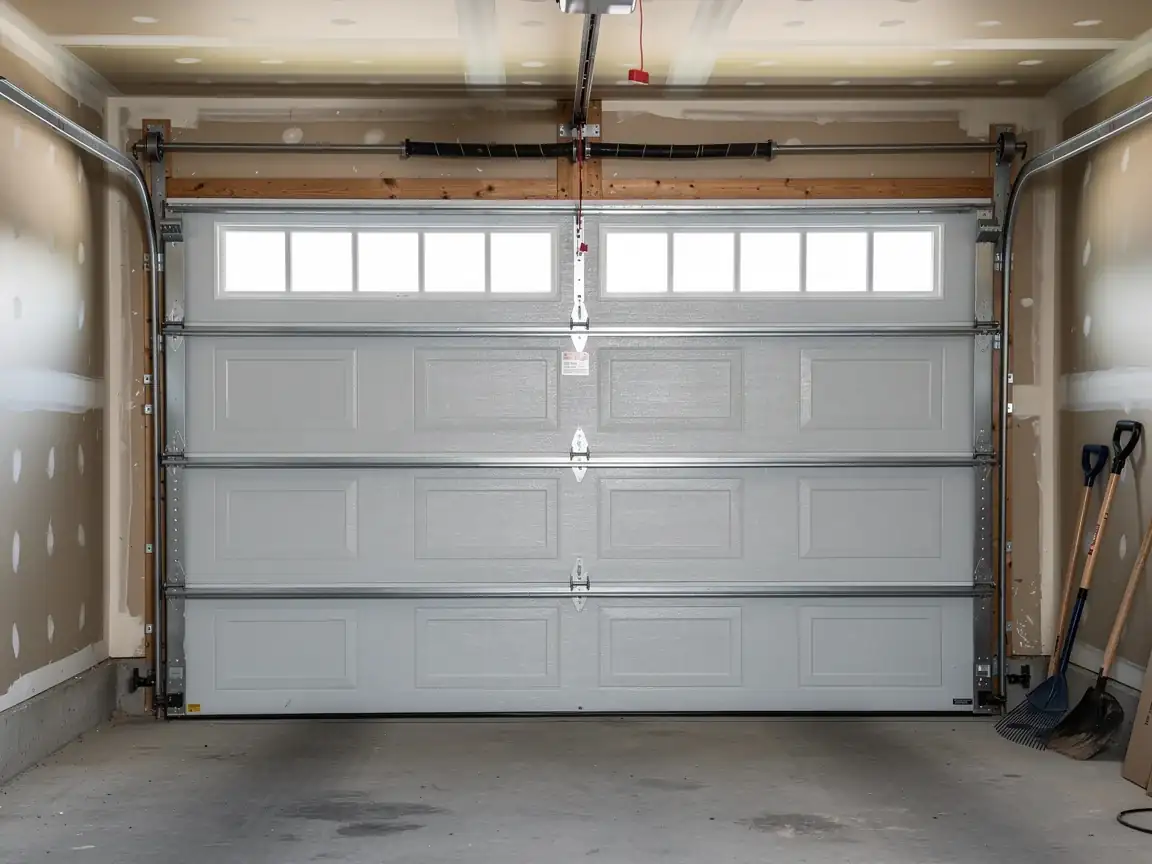
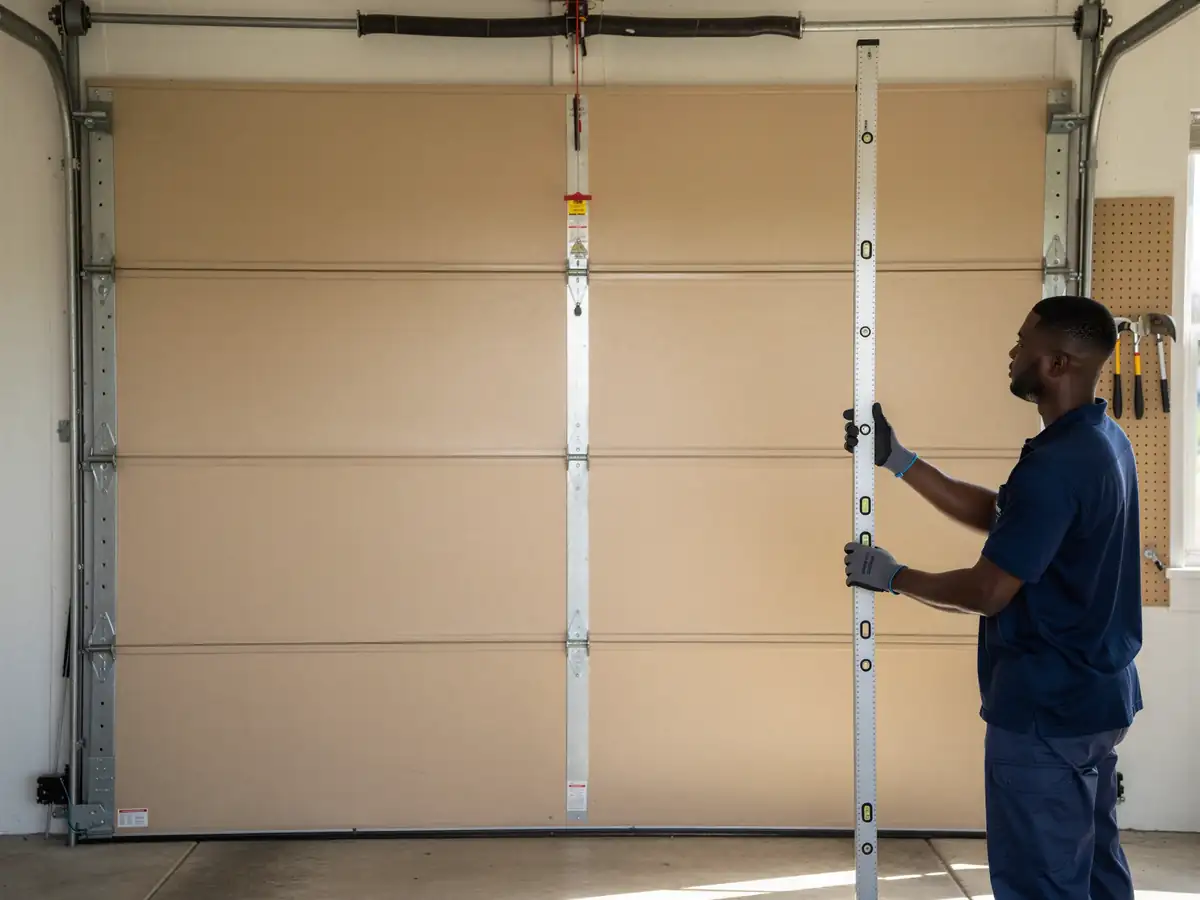
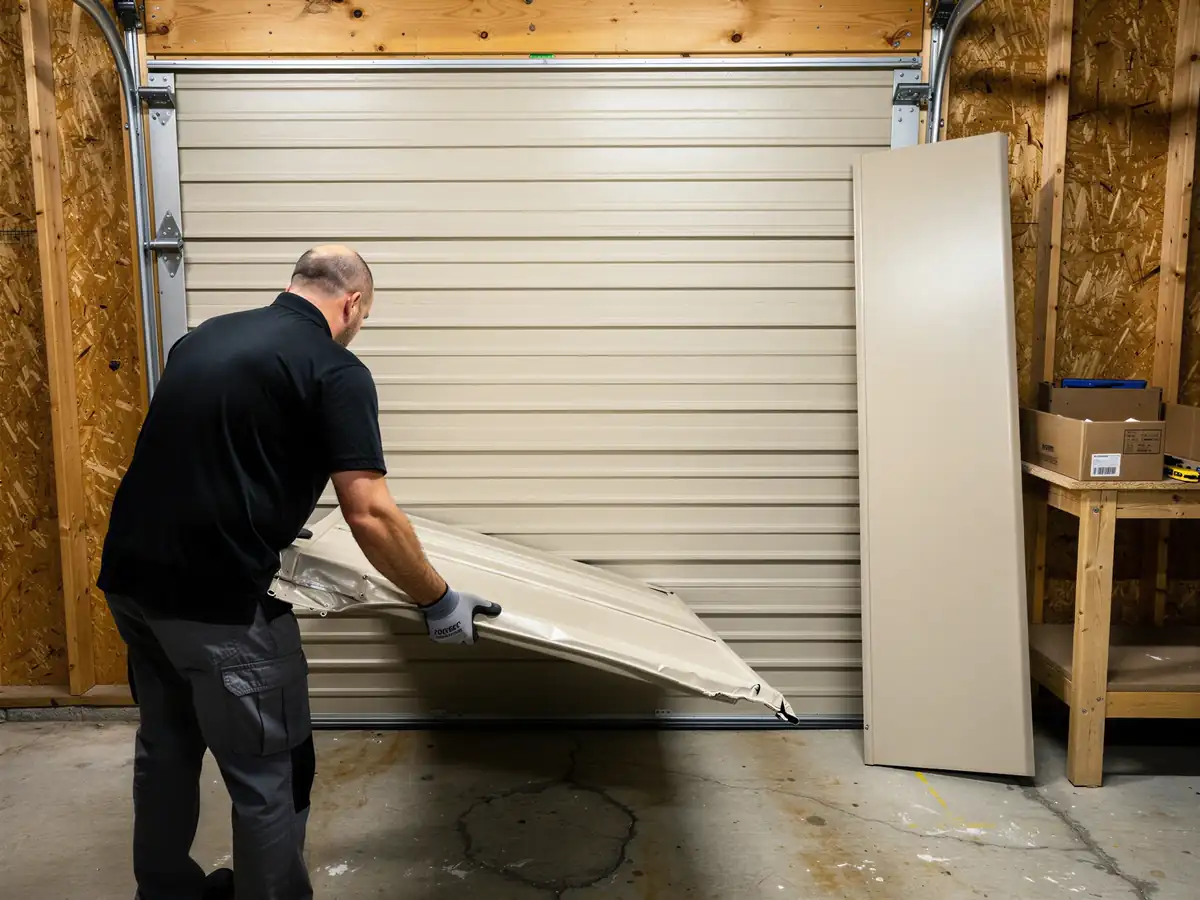
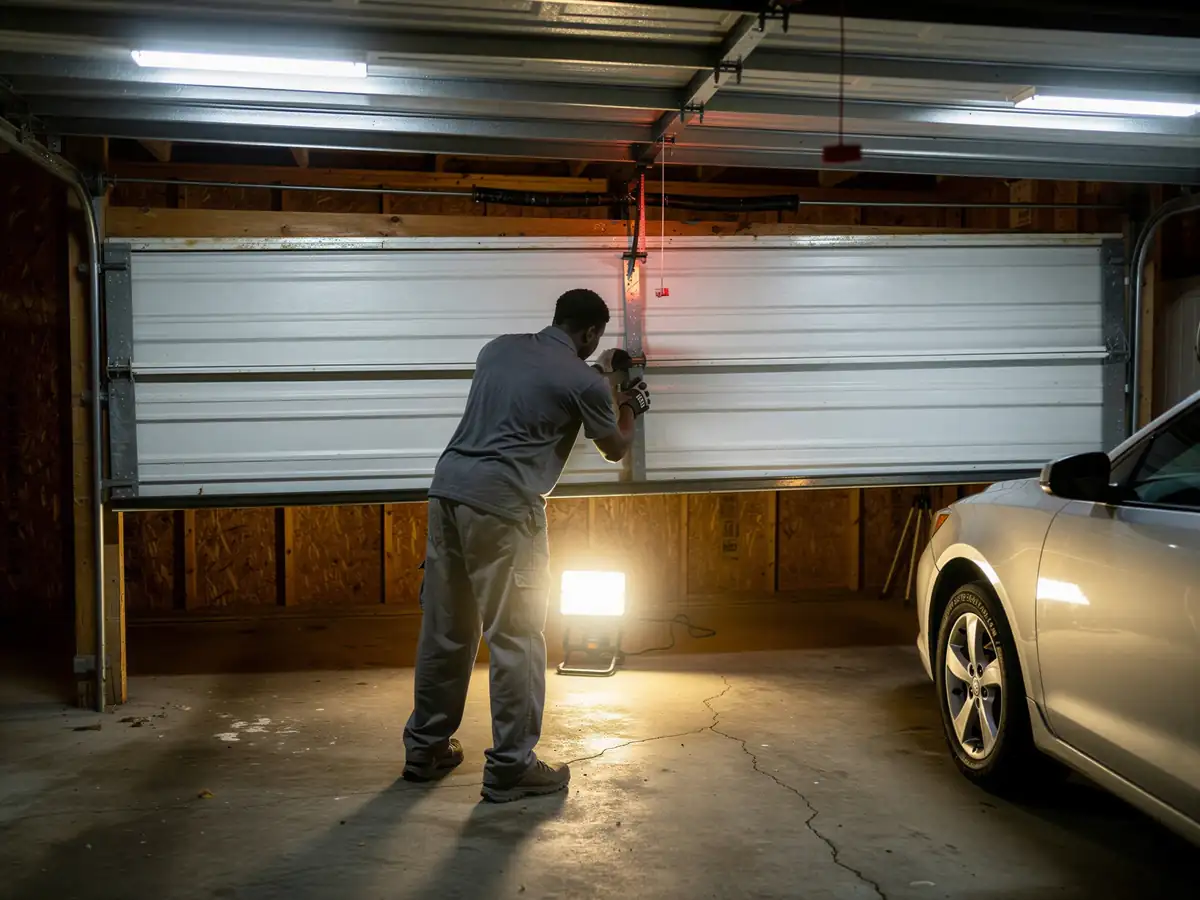
Once we're on site, off-track repair is mechanical, not guesswork. We check whether the rollers jumped the track from a bent rail, a snapped cable, or a door that got shoved sideways by wind or a backed-up car. On the housing stock common to this part of the county - built mostly around 1968 - the track brackets are often the original galvanized steel, lightly rusted from decades of coastal humidity even under the mild temperate conditions here. We re-seat the rollers, true the rail, and check the track-to-header fasteners before we call it done, because a track that goes back on crooked just jumps again in a month.
What Can Go Wrong
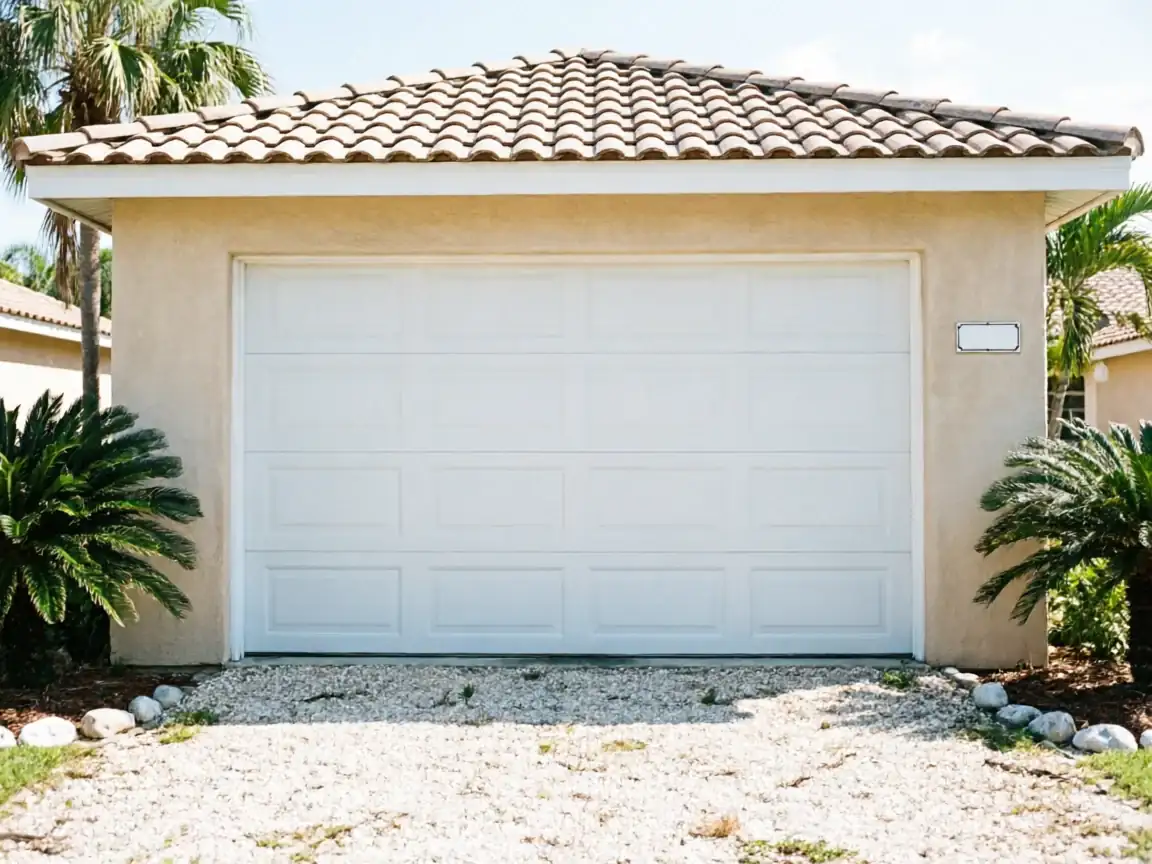
A door built around the late 1960s was engineered for the hardware of that era - lighter gauge track, fewer safety cable runs, and roller sizes that don't match what's sold off the shelf today. When a 1968-era track takes a hit, the bracket holes have often stretched from decades of vibration, so a simple re-seat doesn't hold; we end up replacing the bracket, not just the roller.
The other failure we see in this part of the county is corrosion-driven. Coastal air corrodes galvanized track faster than it does inland stock, and a track that looks fine from the driveway can be pitted enough on the inside rail that rollers catch instead of rolling. We won't re-seat a track that's compromised like that - it's a replacement call, not a repair, and we'll tell you that on site rather than patch something that'll fail again in a season.
How It Shows Up
On an older door, off-track trouble usually announces itself before it fully jumps
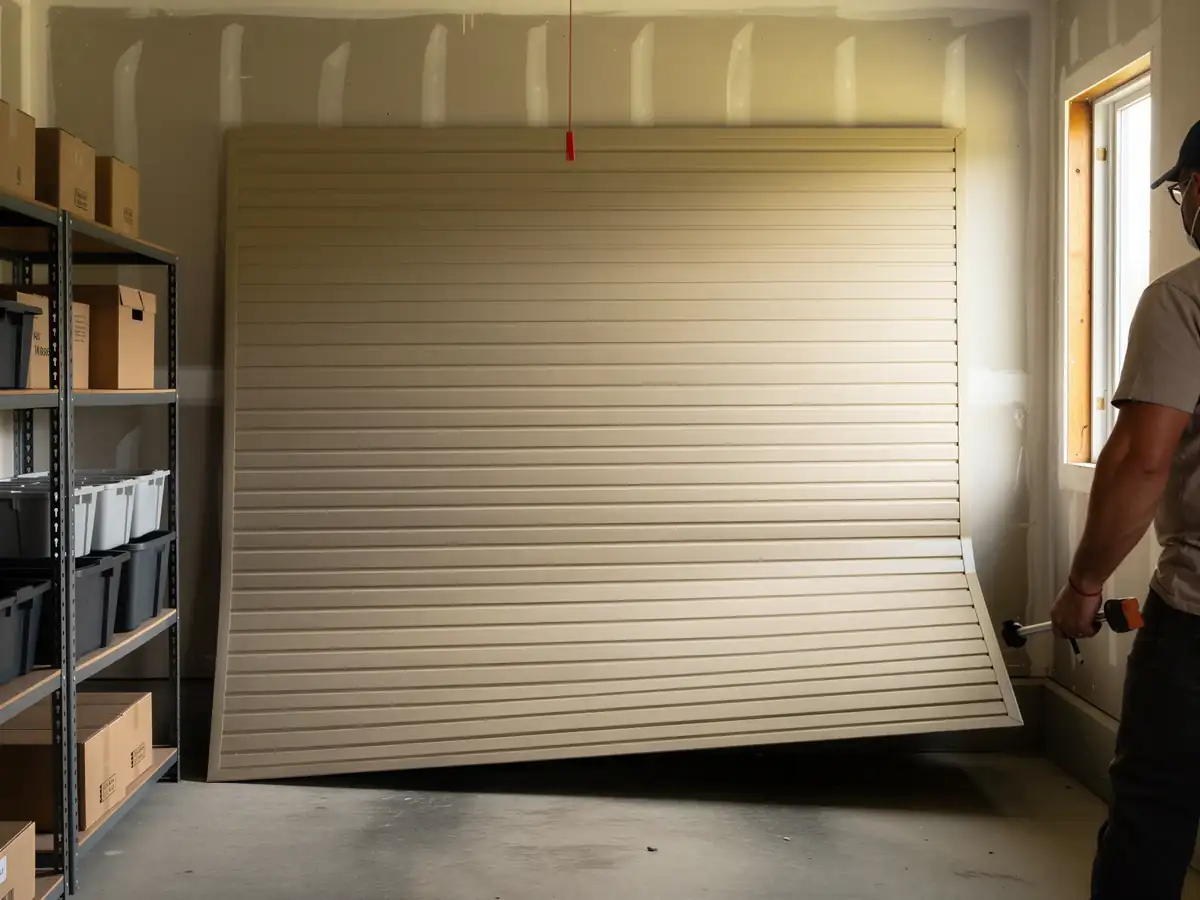
You'll hear a scrape or a grind on one side as the door travels, or see the door tilt slightly as it closes instead of sitting flat. On the original-era hardware still common in this area, that early scraping sound is often a roller riding a track edge that's started to separate from the wall bracket - not yet derailed, but close.
Full derailment tends to happen suddenly
The door stops mid-travel, hangs at an angle, or won't move at all because the opener senses resistance and cuts power. If that happens, don't force the opener or try to push the door back by hand - with roughly 2,988 households in this stretch of South Patrick Shores and a housing stock this consistent in age, we see the same failure pattern often enough to know forcing it usually bends the track further or pulls the bracket out of the wall.
- 2,988 households
Doing It Yourself
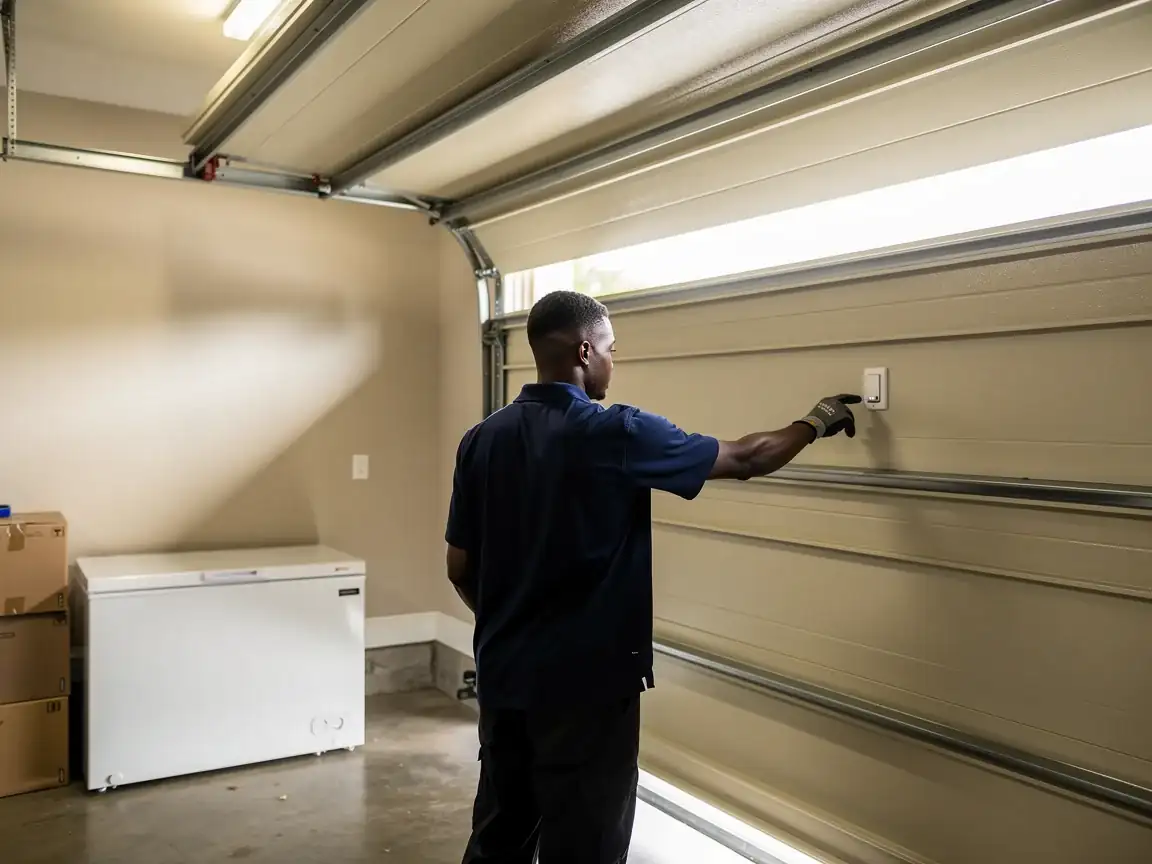
If the door is only scraping and hasn't come off the rail, you can sometimes buy time by disconnecting the opener and manually checking whether the rollers sit square in the track - but don't attempt to pull a derailed door back into place yourself. A door under spring tension that's already off-track can shift unpredictably, and on the heavier wood and steel doors common to houses from this period, that's a real injury risk, not a minor inconvenience.
What you can reasonably do: clear the track of debris, check that nothing's wedged against the door from outside, and look at the bracket screws for obvious looseness without removing anything. Given the income level in this area averages $86,048, most owners here are weighing a $150 bracket repair against letting a worn track go until it fails outright - and on a door this old, that math usually favors fixing the bracket now rather than waiting for a full derailment.