What Causes It Around Here
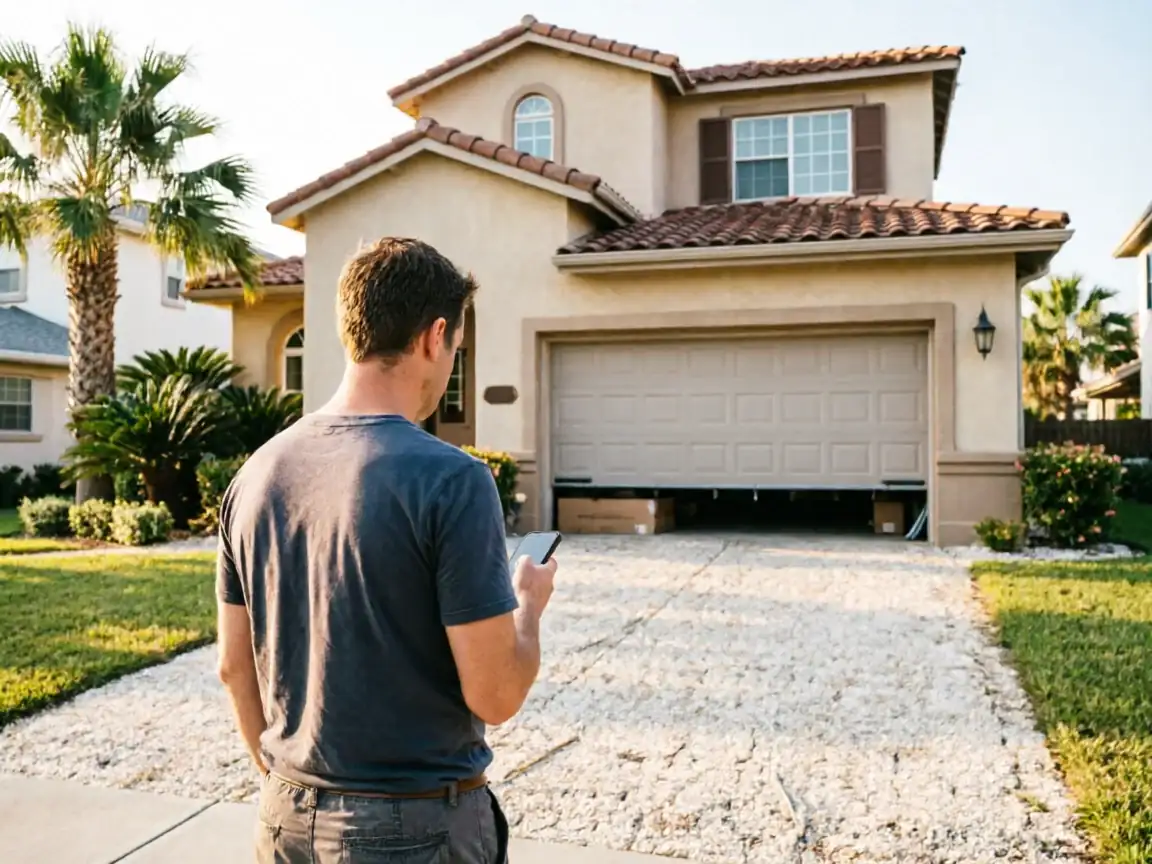
Start with the number that actually decides most repair calls: median household income here runs $90,521, above the $86,305 median across the rest of Melbourne Garage Door Pros' coverage area. That matters because it sets where the repair-or-replace line falls - a household at this income level can usually absorb a full opener or panel swap rather than nursing a ten-year-old board along, and that changes what we recommend on the phone before a truck even rolls.
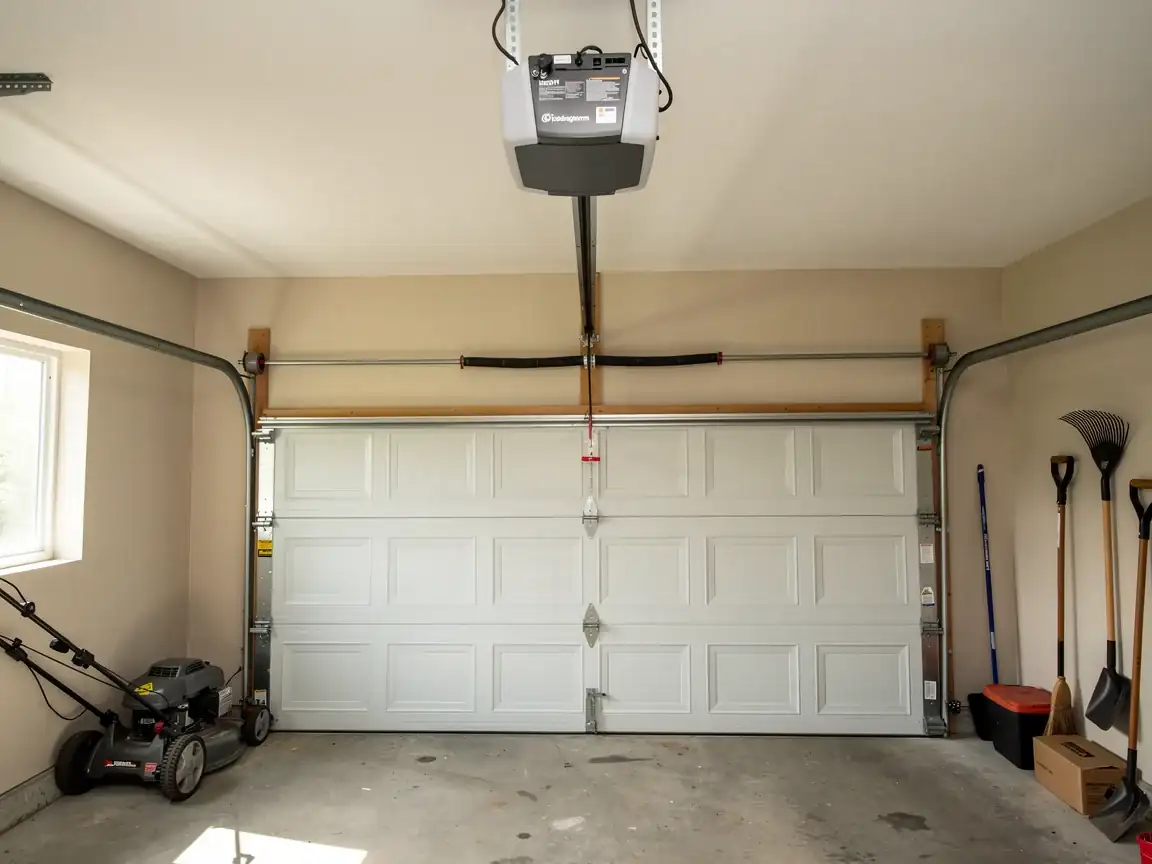
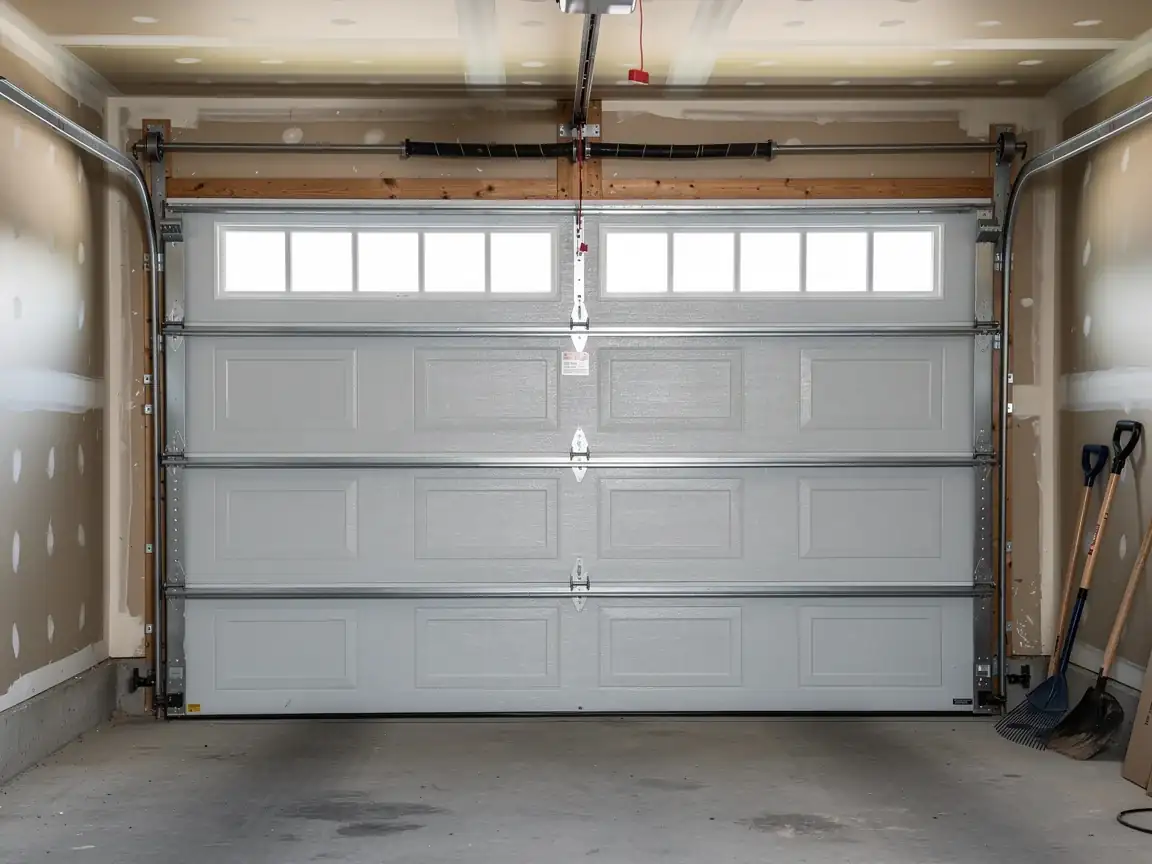
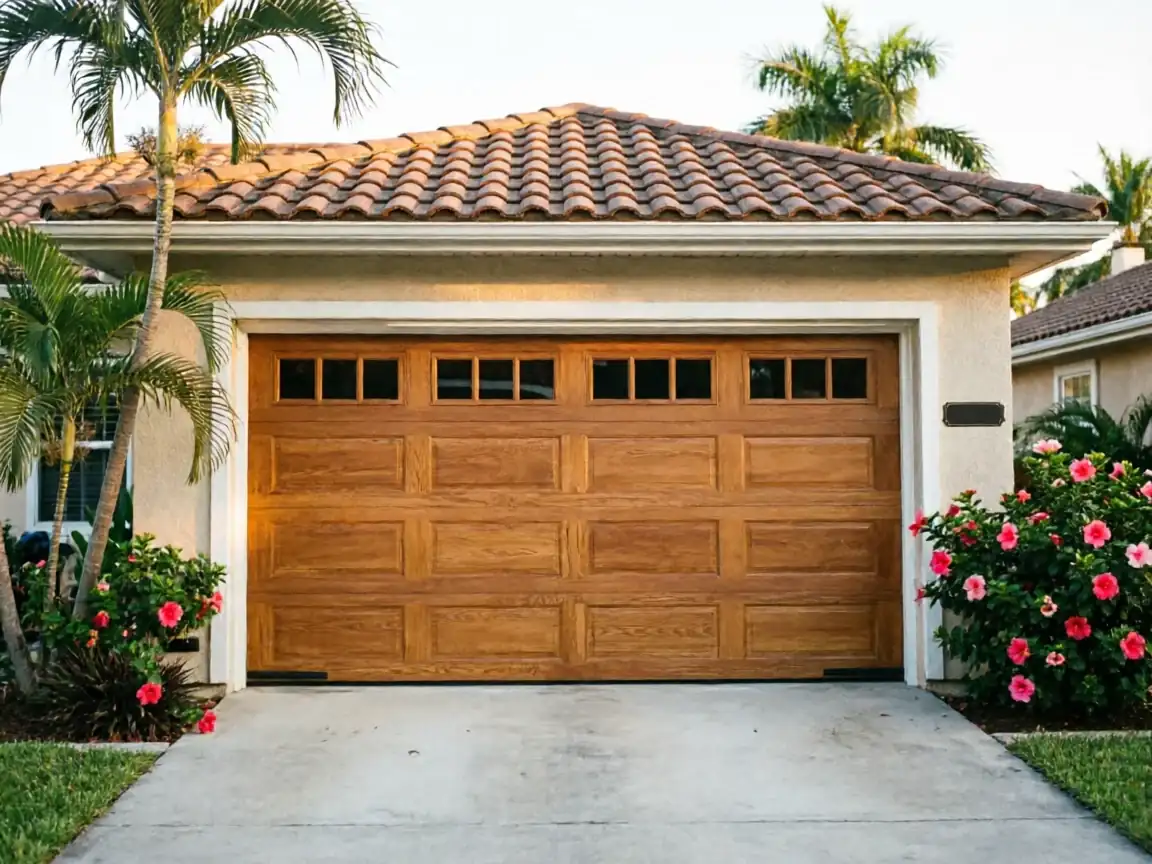
The housing stock backs that up. West Melbourne's median build year sits around 2003, well past the 1966 start of the wider service area's stock, where the median lands closer to 1977. That's a different door generation entirely - steel sectional doors with factory openers, photo-eye safety sensors, and circuit-board logic rather than the older chain-drive units and bare torsion springs you'd find on a 1970s build elsewhere in the county.
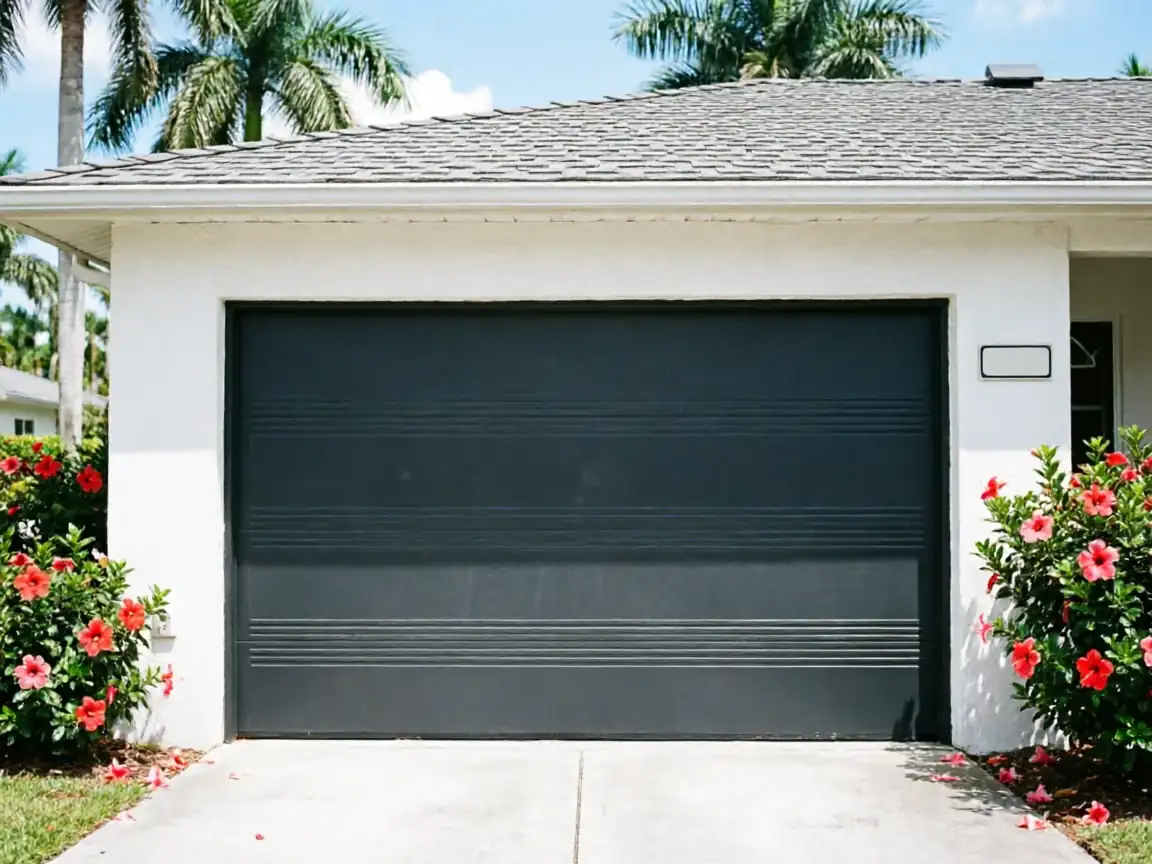
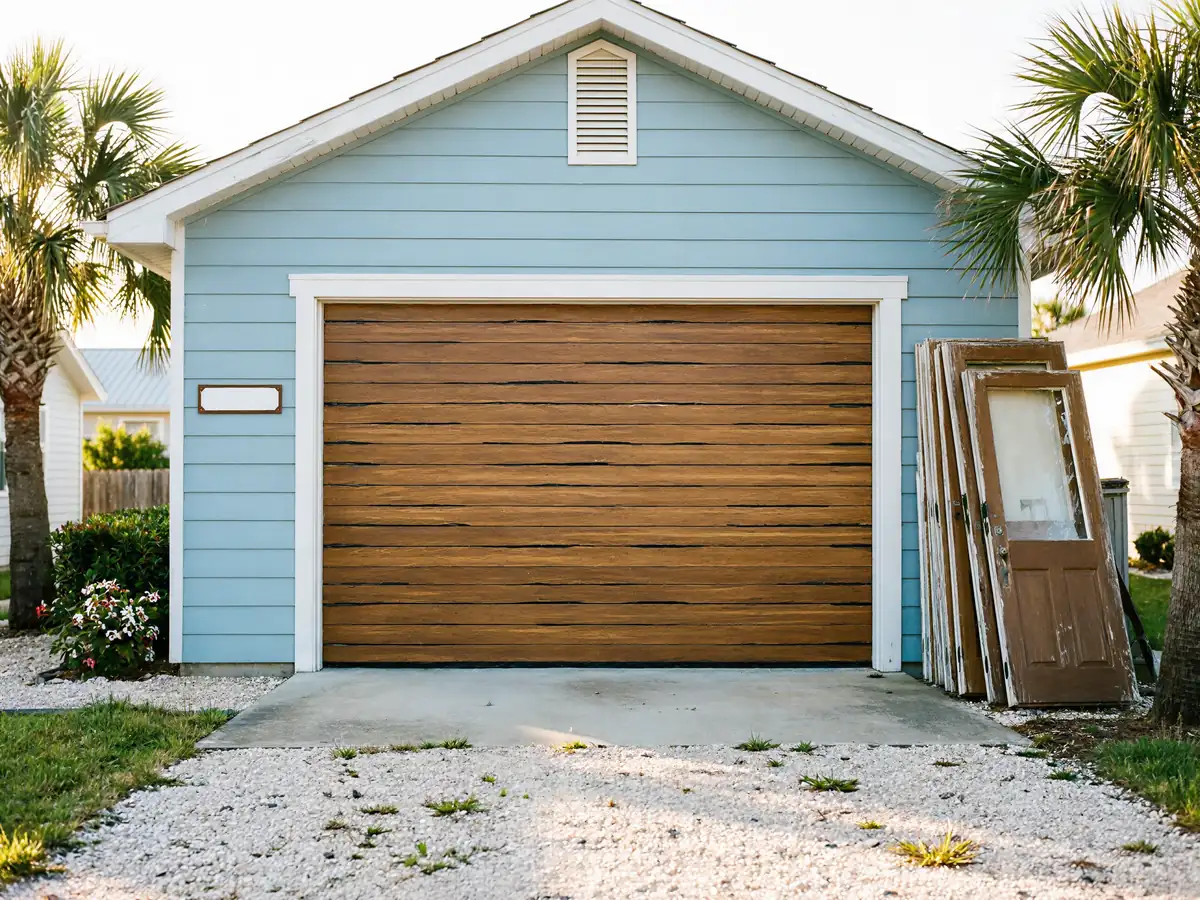
The area's mild year-round climate means the usual culprits here aren't freeze-cracked seals or rust from hard winters. It's UV-dried weatherstripping, humidity swelling wood trim around the opening, and sensor eyes that drift out of alignment over years of lawn equipment bumping the track. West Melbourne sits about 4 miles from Melbourne, so a call here isn't a long haul, but the fault itself looks nothing like what we see on the older stock closer to downtown.
What the Fix Involves
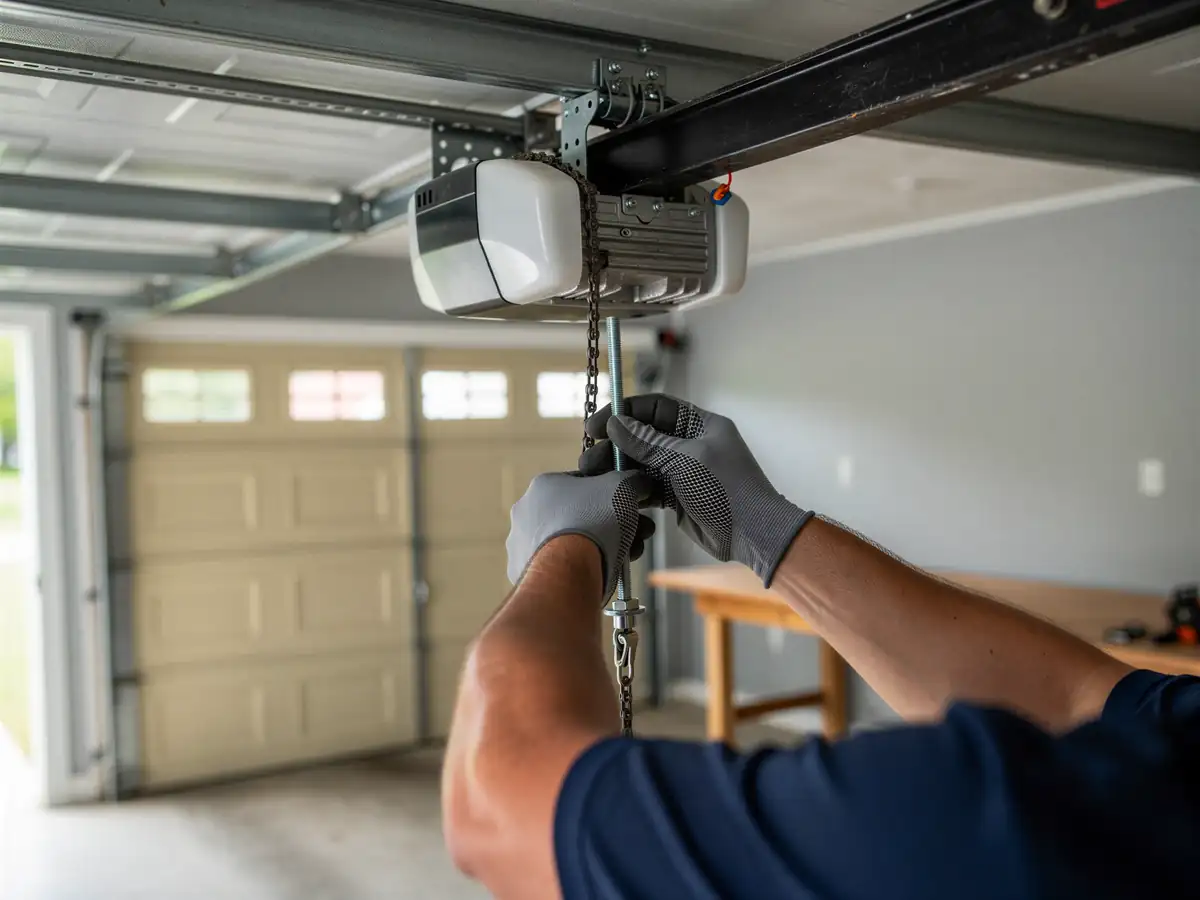
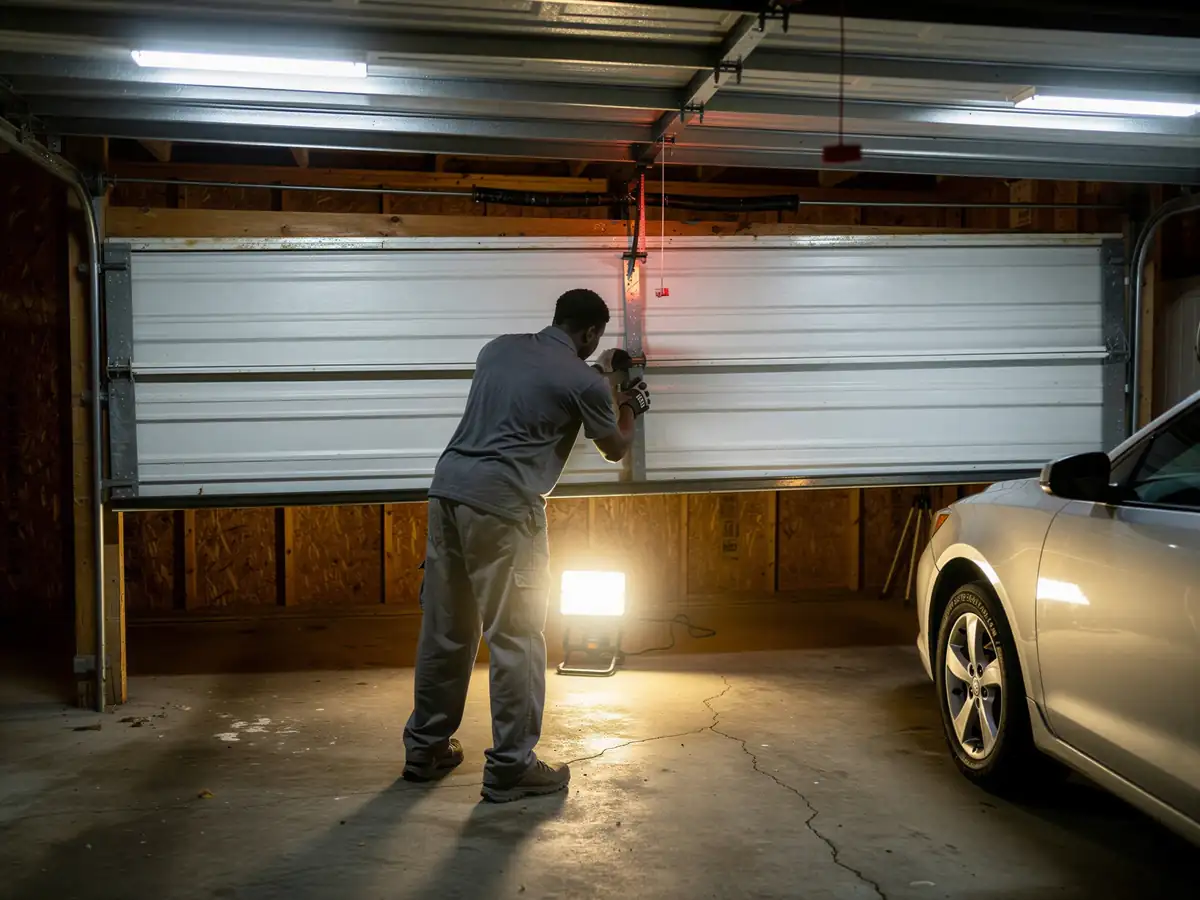
On a house built in the early 2000s, the first thing we check isn't the spring - it's the opener logic board and the photo-eye sensors at the bottom of the track. Boards from that build era are past their rated service life, and a board that's failing intermittently looks a lot like a spring problem until you test it properly: door reverses mid-close, light blinks a pattern, or the motor hums without moving the door.
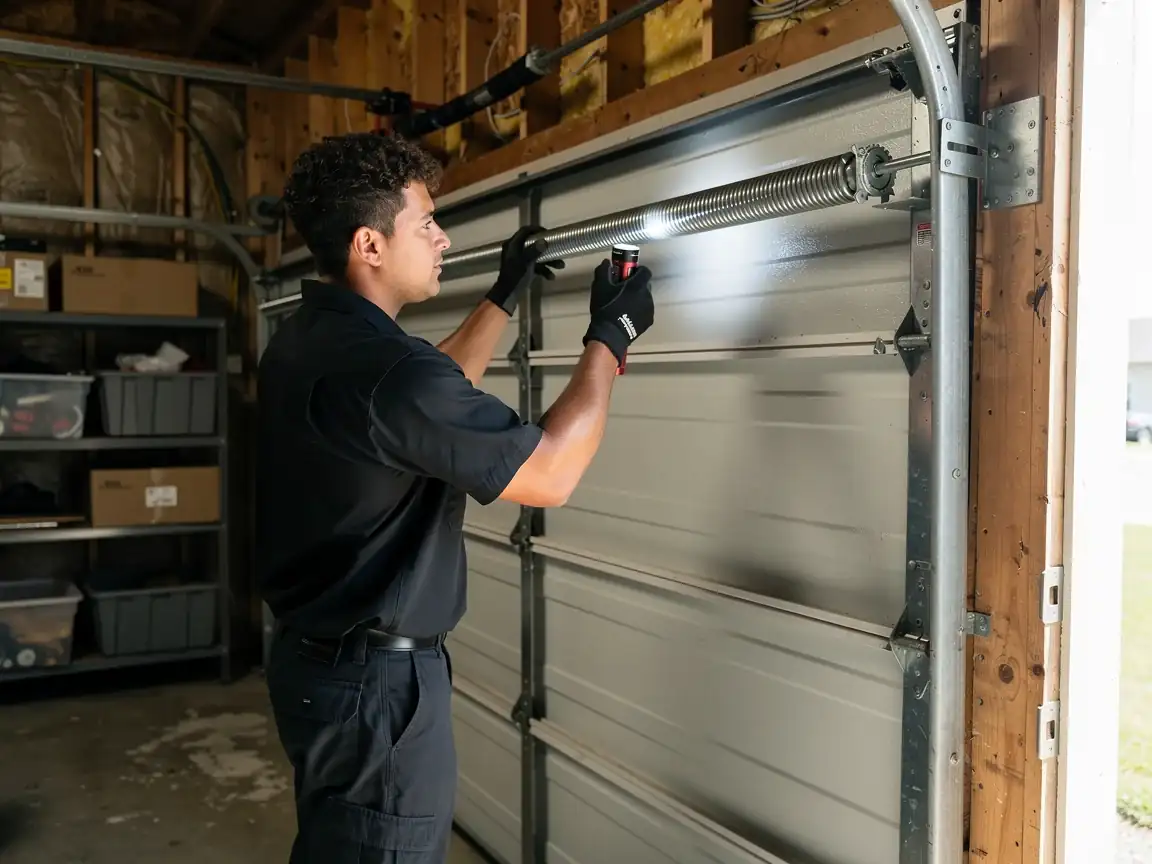
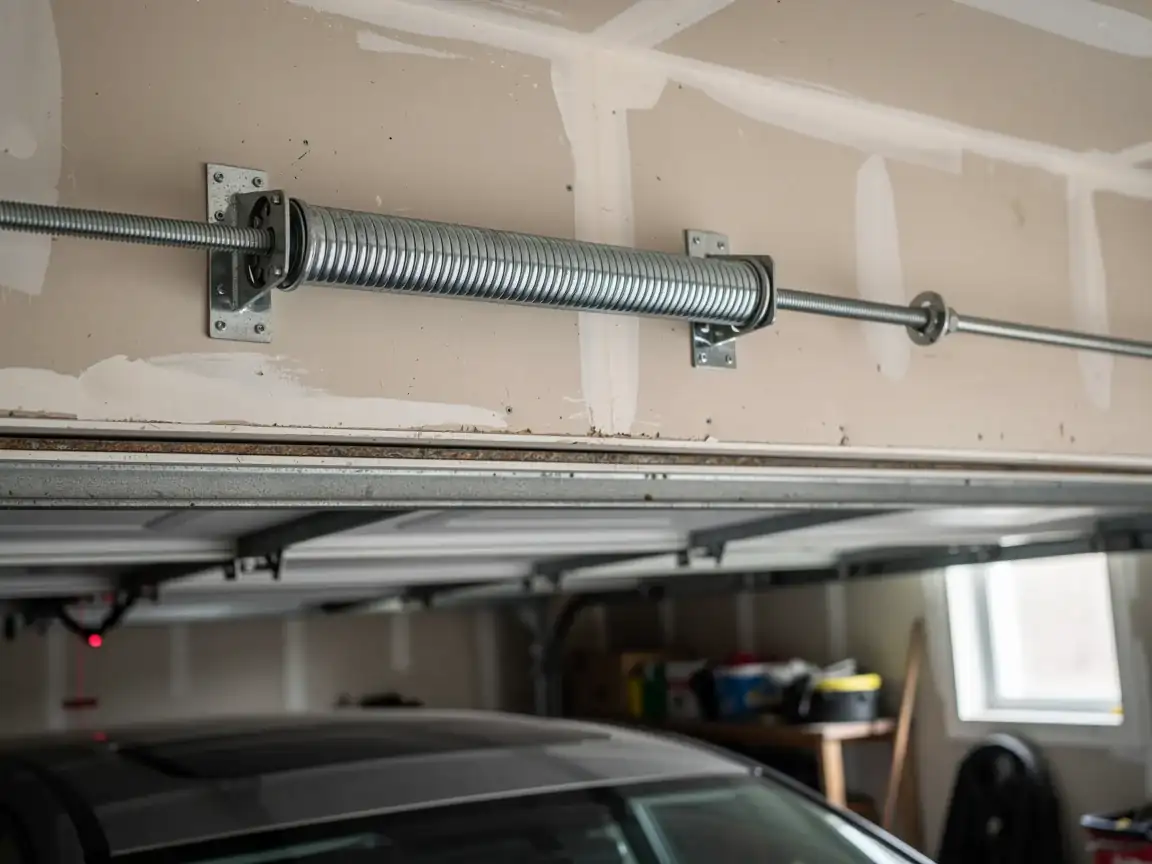
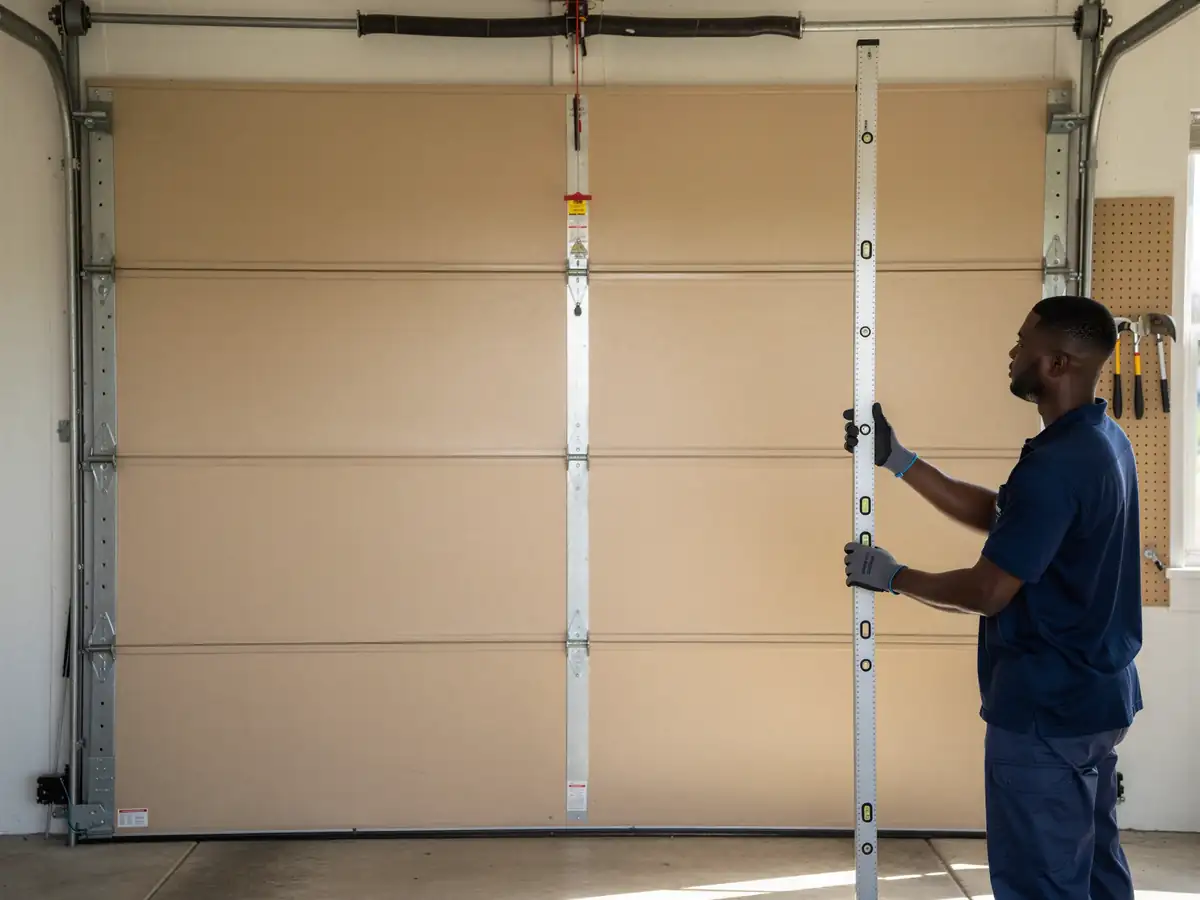
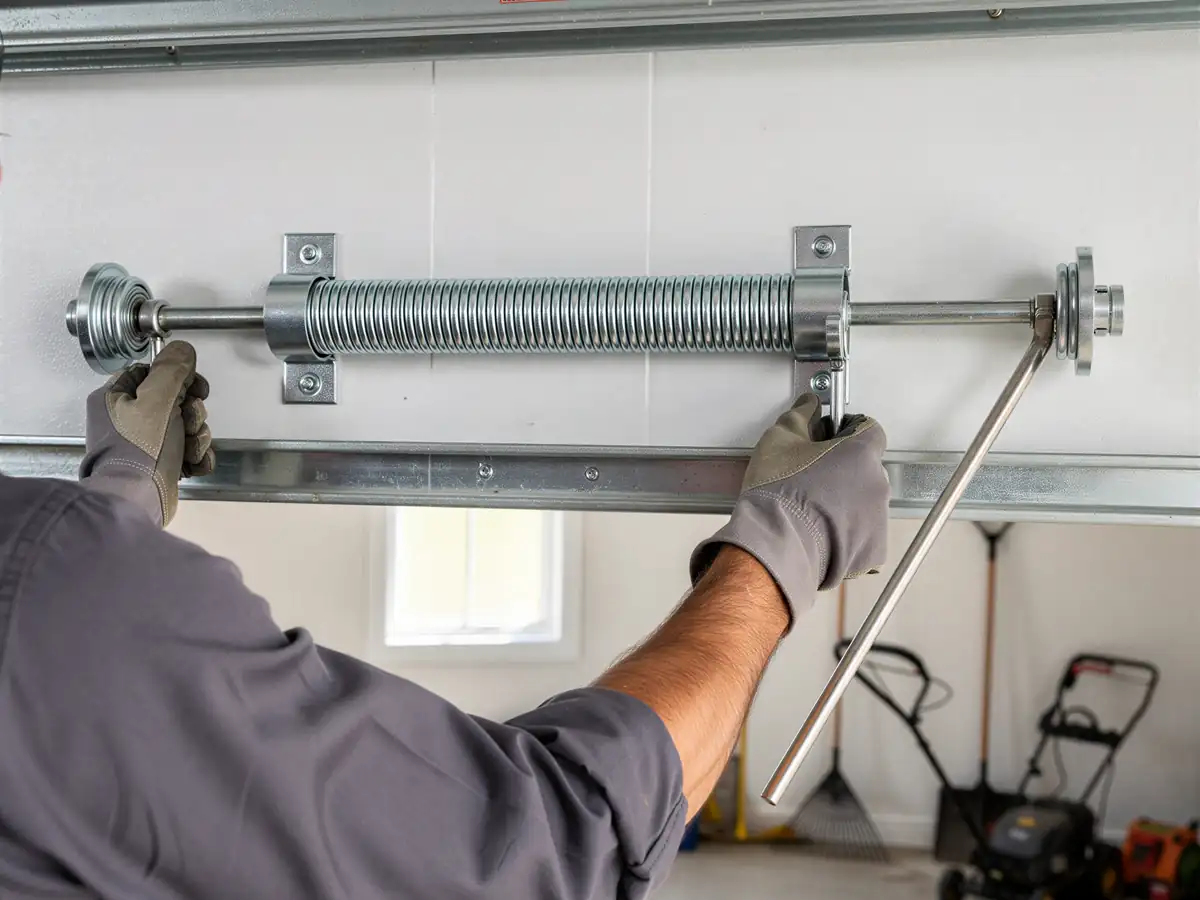
If it is the spring, these homes mostly run factory-installed torsion springs sized to a lighter steel door than the older wood or fiberglass panels found on 1970s-era houses. Swapping in the wrong spring weight on a newer door throws off the balance and strains the opener trying to compensate, so we match the spring to the door that's actually on the house, not a generic size.
Wiring is the other common job - harness connectors at the header unit corrode or loosen over fifteen-plus years, and that shows up as the same symptoms as a dead board. We test before we replace, because a board runs $150-300 and we'd rather not sell you one you don't need. Honest limit here: some of the older proprietary boards for specific opener models aren't stocked on the truck and take a few days to source, which we'll tell you up front rather than after the fact.
Doing It Yourself
A few things are worth checking before you call anyone
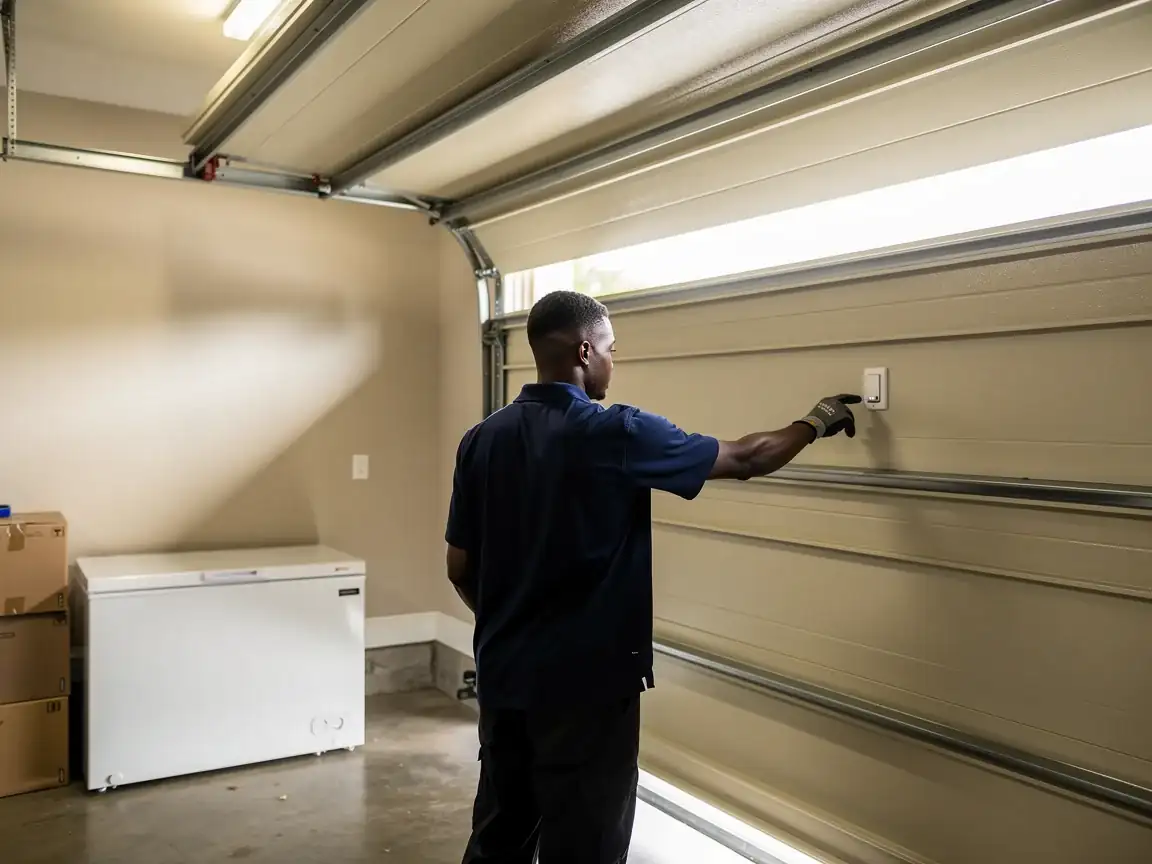
Make sure the wall console has power and the breaker hasn't tripped - a surge can knock out a board without any other sign. Clean the photo-eye lenses at the bottom of the track; pollen and lawn debris build up fast in this climate and a dirty sensor reads as an obstruction, which is the most common reason a door won't close at all.
Check that the sensors are actually aligned
A small LED on each eye should glow steady, not blinking. If one got bumped by a mower or a bike, you can often nudge it back by eye and get the door working again in five minutes.
What you shouldn't touch
The torsion spring itself, or anything on the header assembly if the door is heavy and off its track. These springs hold enough tension to break a wrist, and on a newer steel door the balance tolerances are tighter than people expect. If the board is the issue, swapping it without knowing the exact model number for your opener usually means ordering the wrong part and waiting again. Past the sensor and breaker check, this is a call-a-tech job.
How Long You Are Without the Door
Most jobs here are a single visit - diagnose, replace the part, test the cycle. Where it stretches out is parts. If the fault is a board specific to an opener model from the early 2000s, and that board isn't one we carry on the truck, you're waiting on it to come in before the door closes reliably again. We don't have a fixed turnaround to promise you, because it depends on which board and which supplier has it.
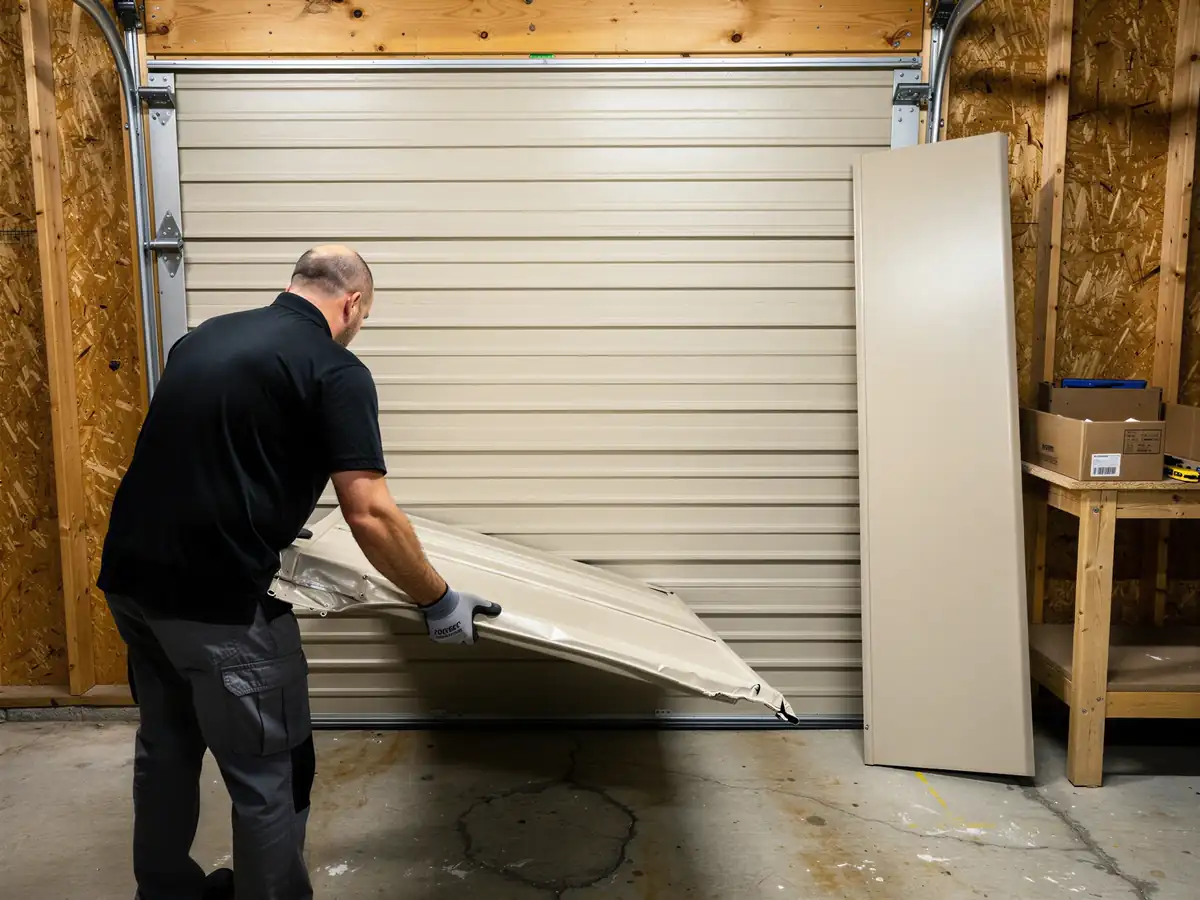
If it's a sensor realignment or a weatherstrip swap, that's typically done the same visit with no wait at all. Spring replacement on these lighter steel doors is also usually a same-visit fix once we've confirmed the correct spring size for your door and opener combination.
The honest answer: expect the diagnosis and most common repairs - sensors, weatherstripping, standard springs - to be done in one trip. Expect a board-specific repair to sometimes need a follow-up visit once the part arrives. We'll tell you which category your job falls into before we leave the first time, not after.
How It Shows Up
The door closes partway, then reverses back up - that's almost always a sensor seeing something it shouldn't, or a board misreading the sensor signal. On a 2000s-era opener, that second possibility is common enough that we check both before assuming it's a simple obstruction.
A blinking light on the wall console or the opener motor itself, counted in a pattern, is usually the unit trying to tell you an error code. Different manufacturers use different blink counts for different faults, so that pattern is worth noting before you call - it saves diagnostic time on site.
A door that hesitates before it starts moving, or moves slower than it used to, points toward a board losing its grip on motor timing rather than a mechanical bind. Compare that to a door that's simply heavy to lift by hand with the opener disconnected - that's a spring losing tension, a straightforward mechanical fault rather than an electronic one. Knowing which bucket your symptom falls into before we arrive helps us bring the right part on the first trip rather than the second.
What Can Go Wrong
Leave a failing sensor alone long enough and the opener's safety logic starts overriding normal operation unpredictably
The door won't close at dusk, works fine at noon, and you can't pin down why. That inconsistency is the board compensating for bad sensor data, and it gets worse, not better, on its own.
Ignore a board that's intermittently cutting power to the motor and you risk the motor straining against a partial stop-start cycle
Which shortens the life of the motor itself - now you're replacing the opener, not just the board, a bigger bill for the same root cause caught too late.
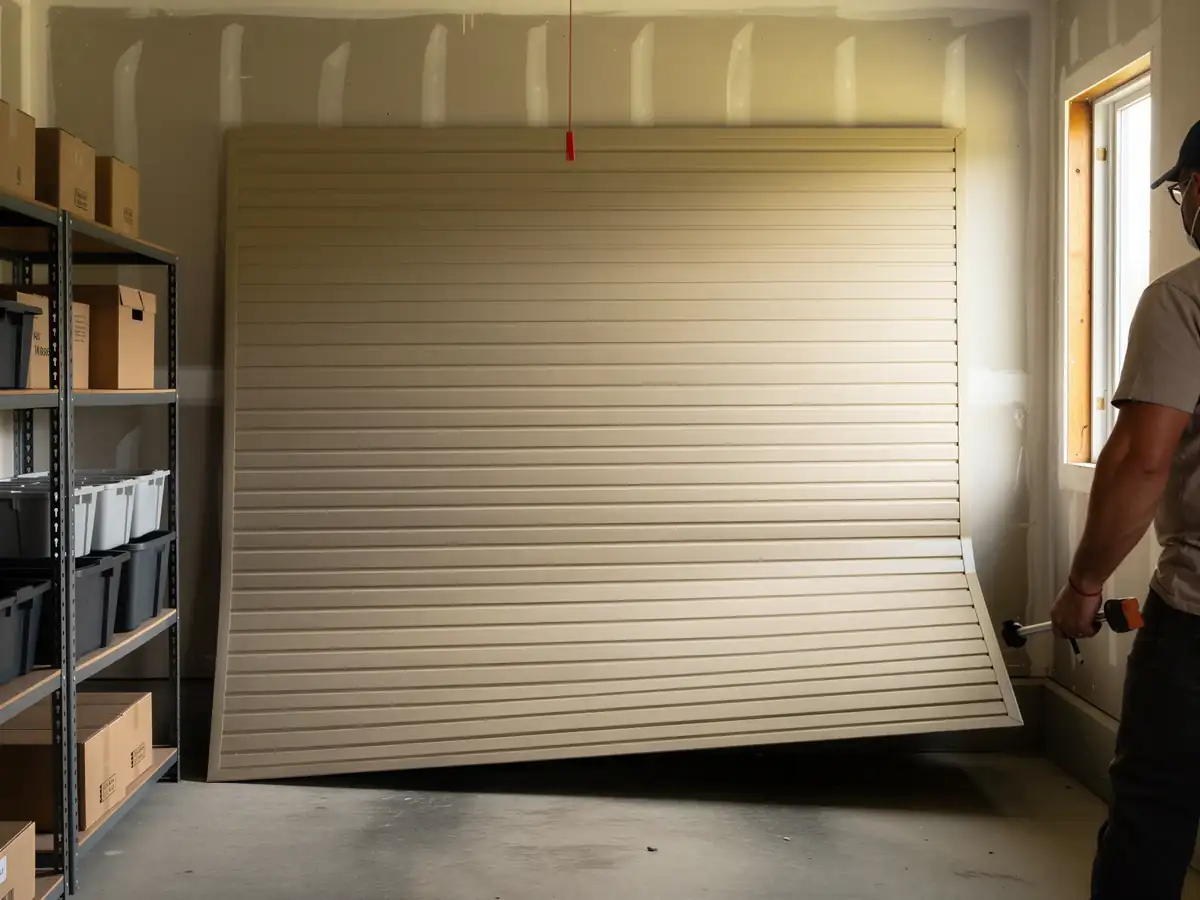
On these newer, lighter steel doors, running an undersized or mismatched spring (sometimes installed by a previous repair that didn't match the door) puts ongoing strain on the opener's drive gear
The opener works harder every cycle to compensate for a door that isn't balanced, and that gear wears out well before it should. None of this is dramatic on day one. It shows up eighteen months later as a bigger repair that started as a $40 sensor problem.