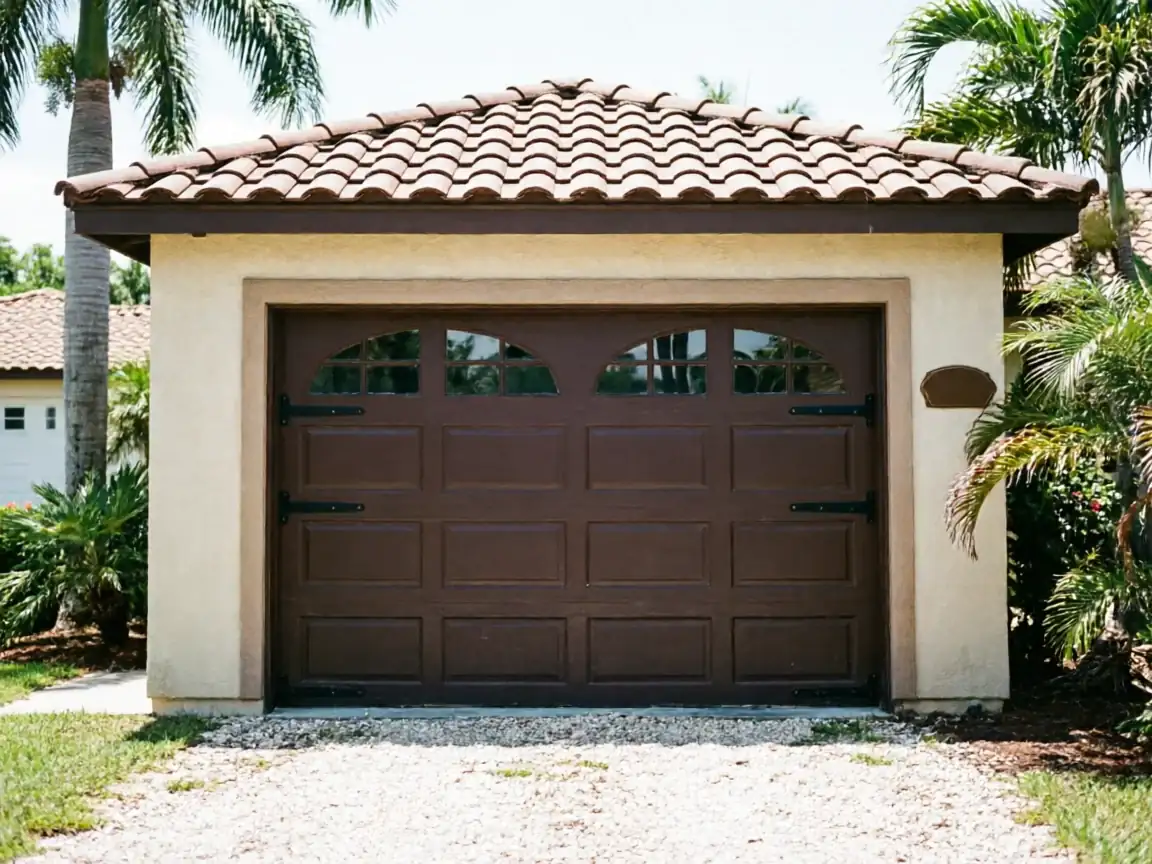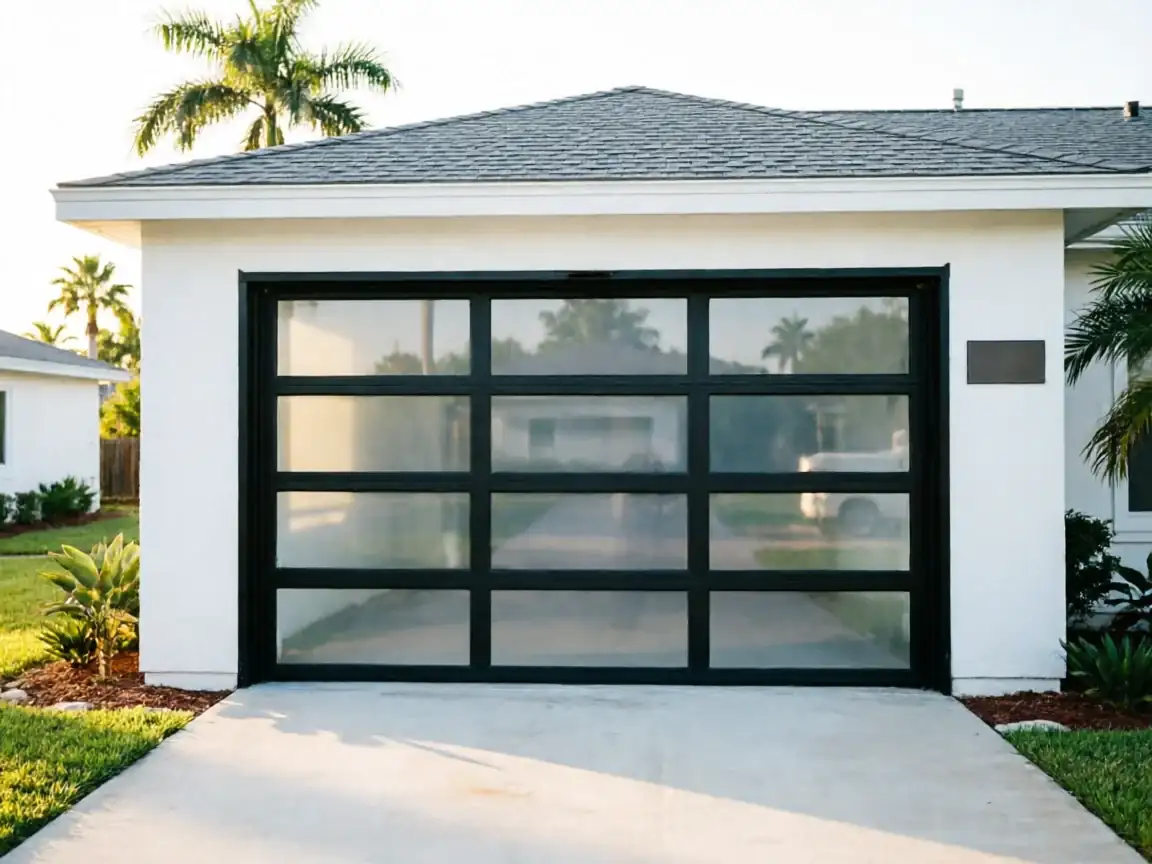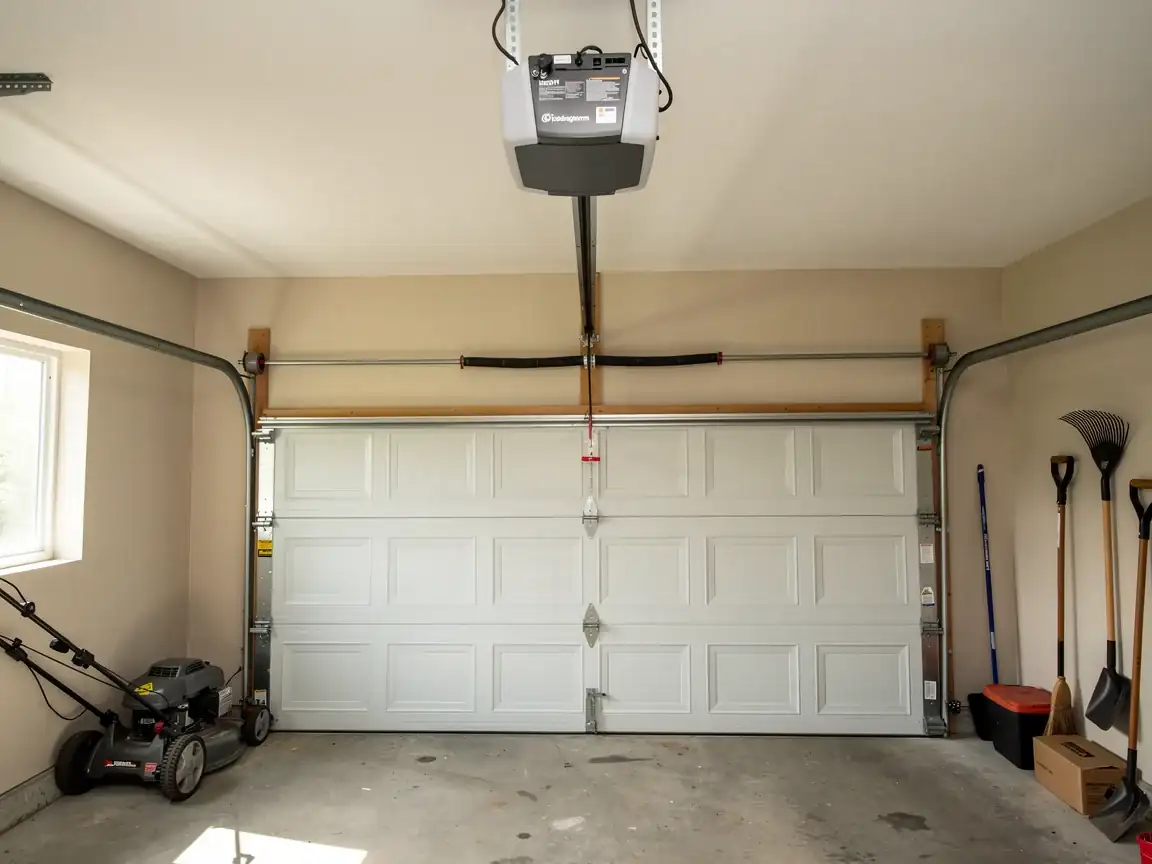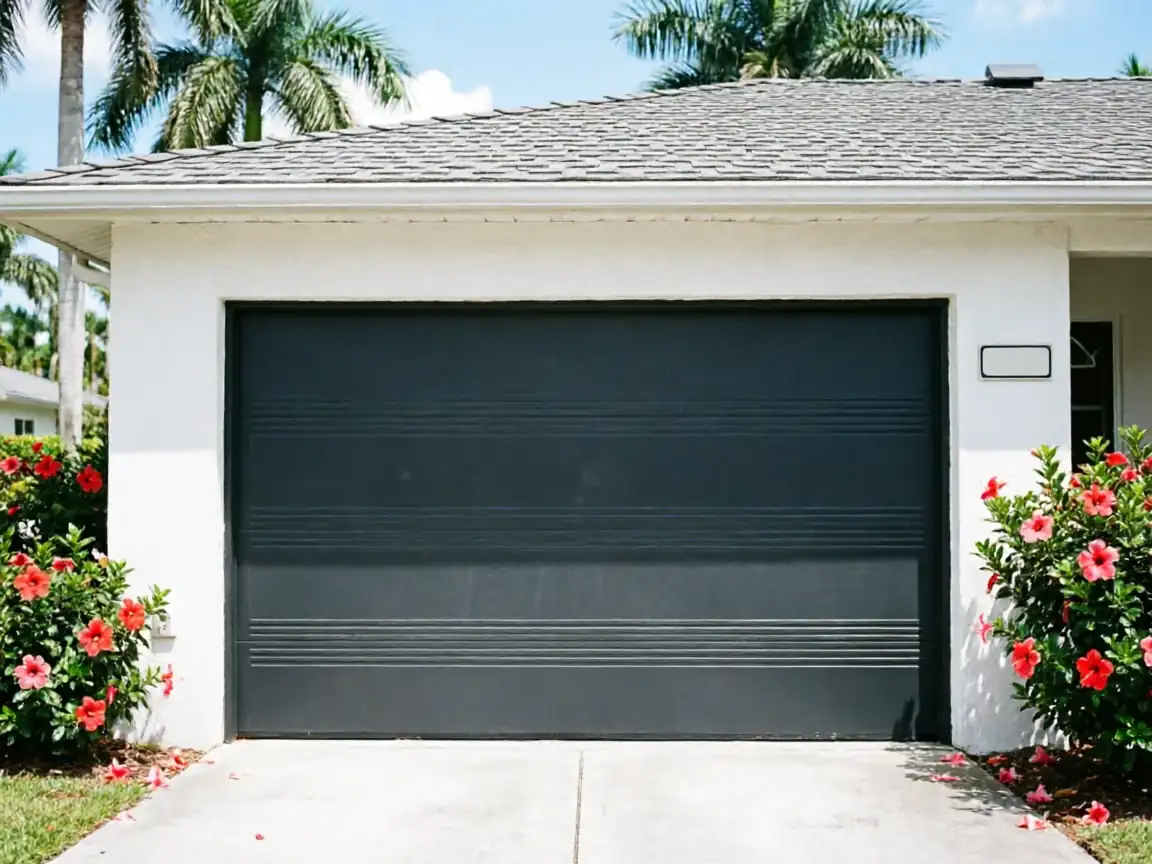
What Causes It Around Here
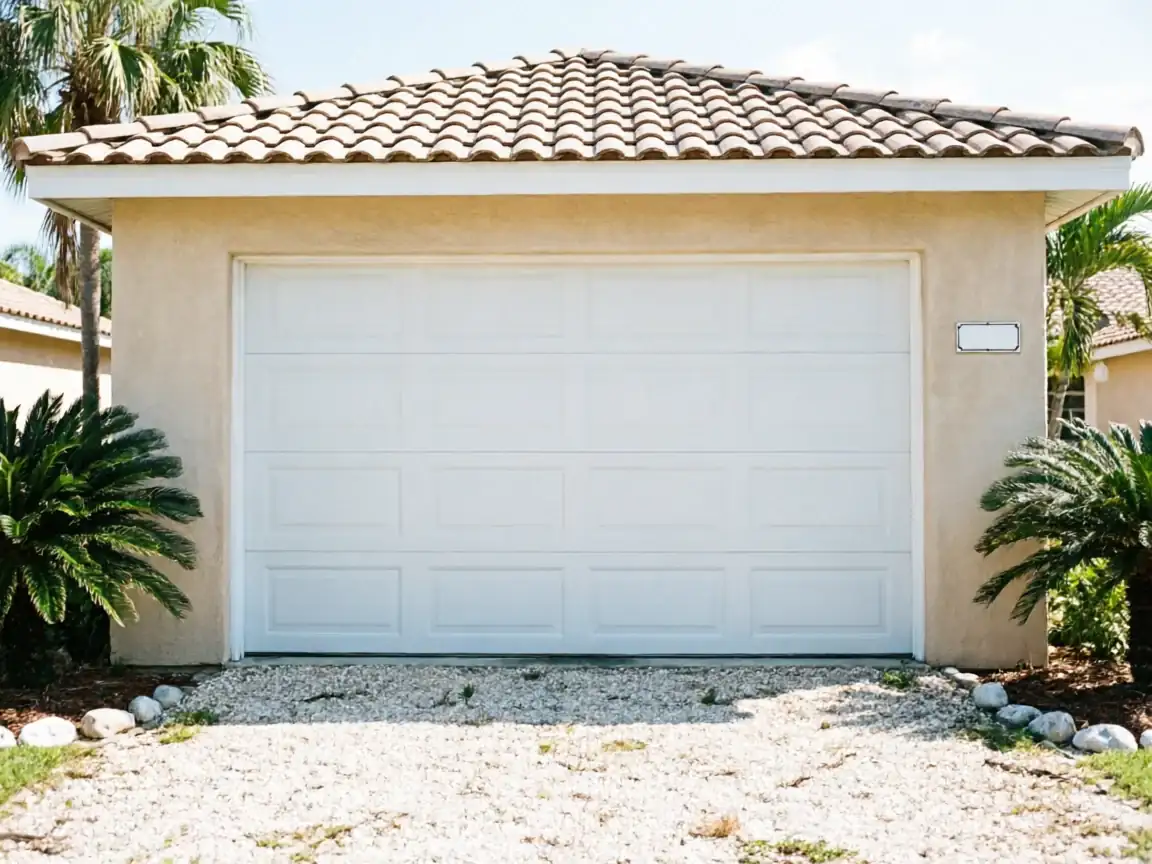
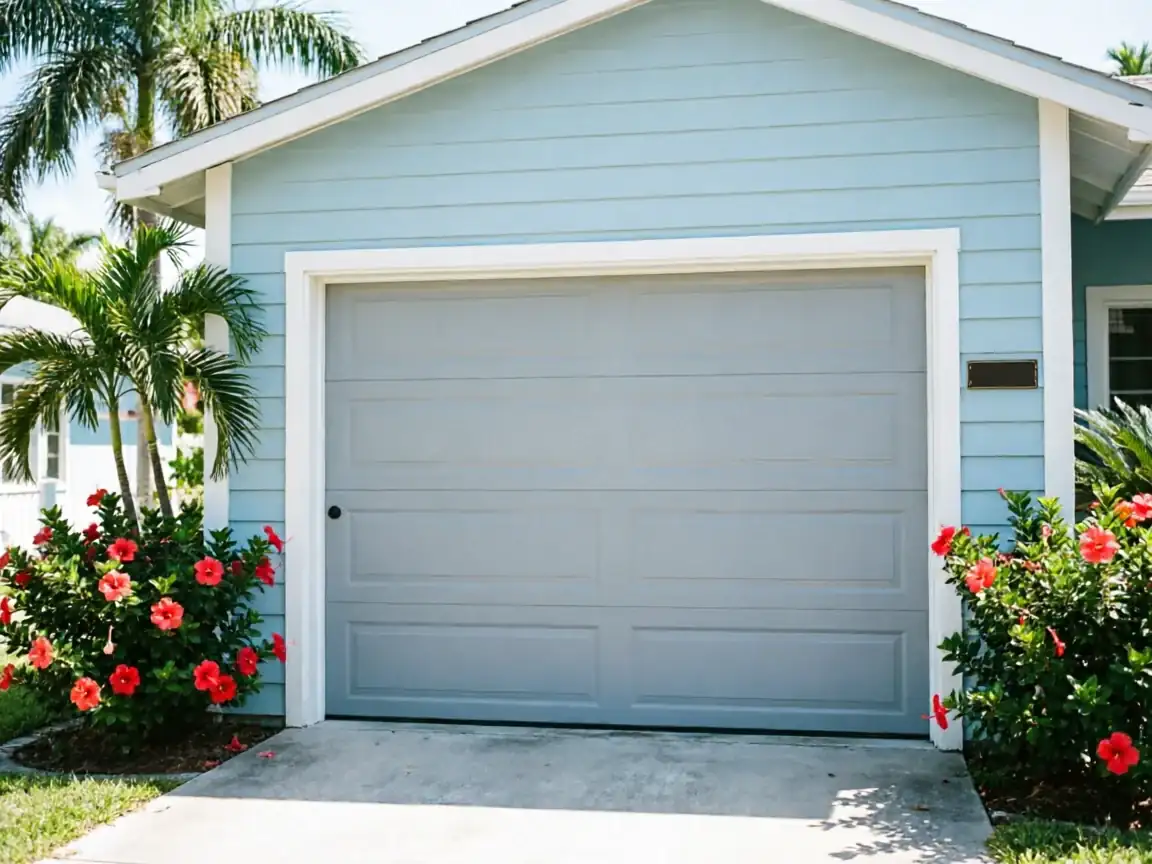
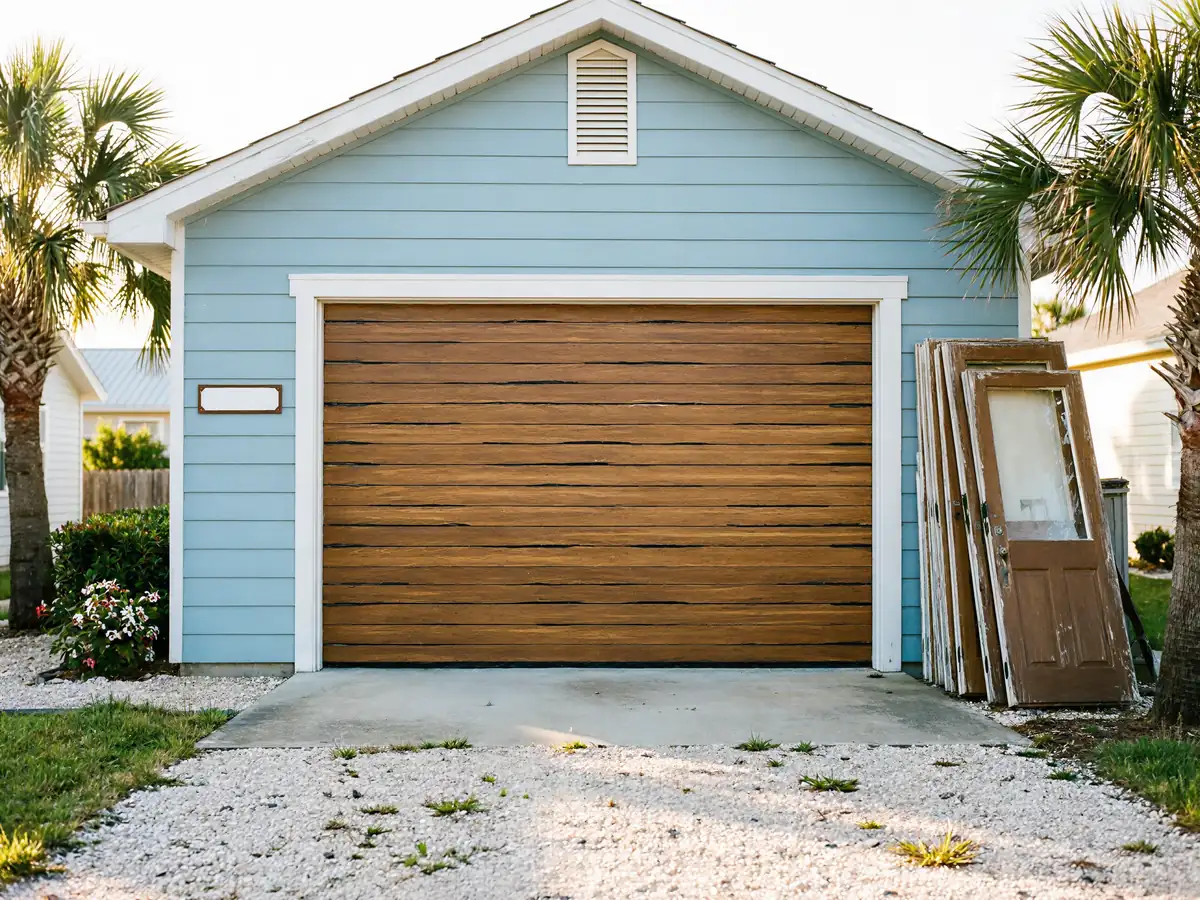
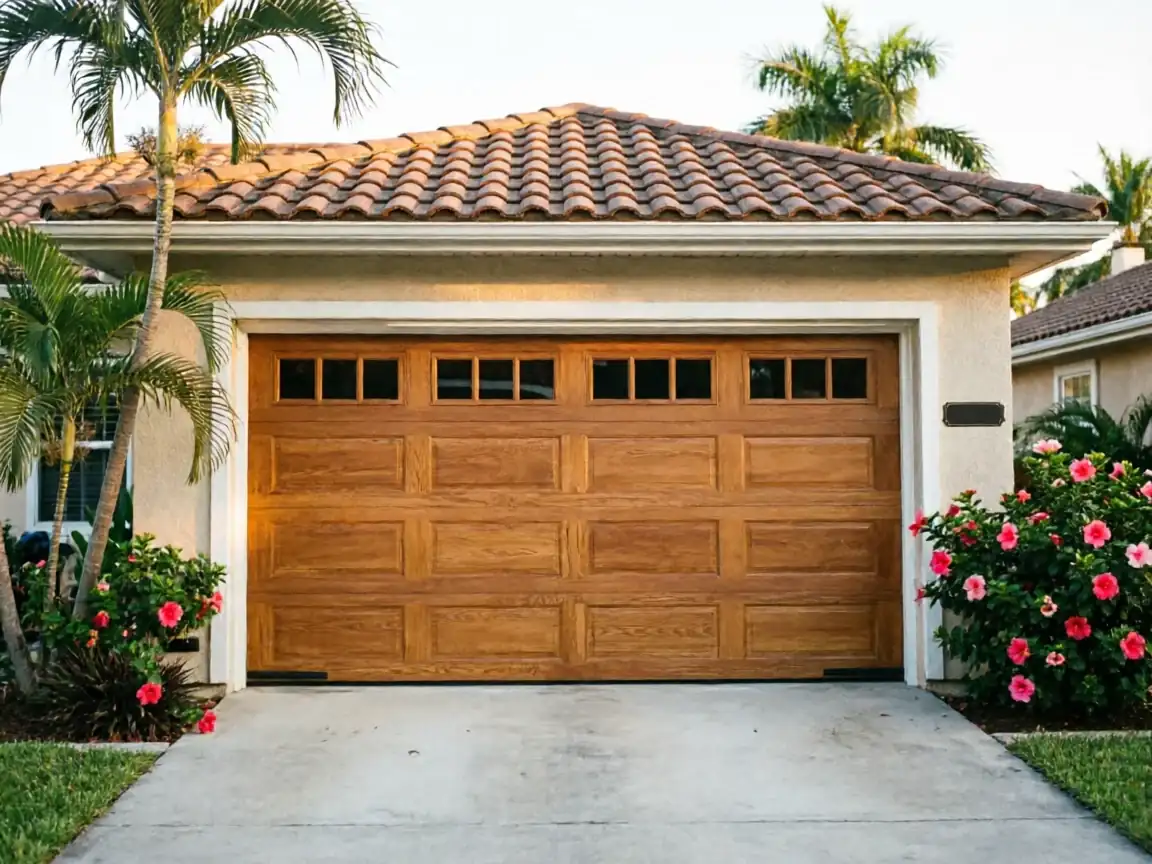
West Melbourne's housing stock runs newer than most of the Melbourne service area - the median year built here is 2003, versus 1977 across the wider area covered from Melbourne, four miles east. That gap matters more than it sounds. A door installed in a house built in 2003 is old enough to have taken twenty-plus years of sun and salt air, but young enough that most owners have never had a reason to touch it. The original steel panel is still hanging in a lot of these garages, right down to the factory hinges.
The mild temperate climate here doesn't put the stress on doors that freeze-thaw regions see, so panels in West Melbourne tend to fail from a dented bottom section or a cracked seam rather than warping. The usual cause is contact damage - a trailer hitch, a bike rack, a mower backed in too fast - not age-related sag. Because the door is still within its original service life, a lot of these jobs come down to one damaged section on an otherwise sound door, which changes what the fix looks like compared to a 1970s-era door that's failing all over at once.
What the Fix Involves
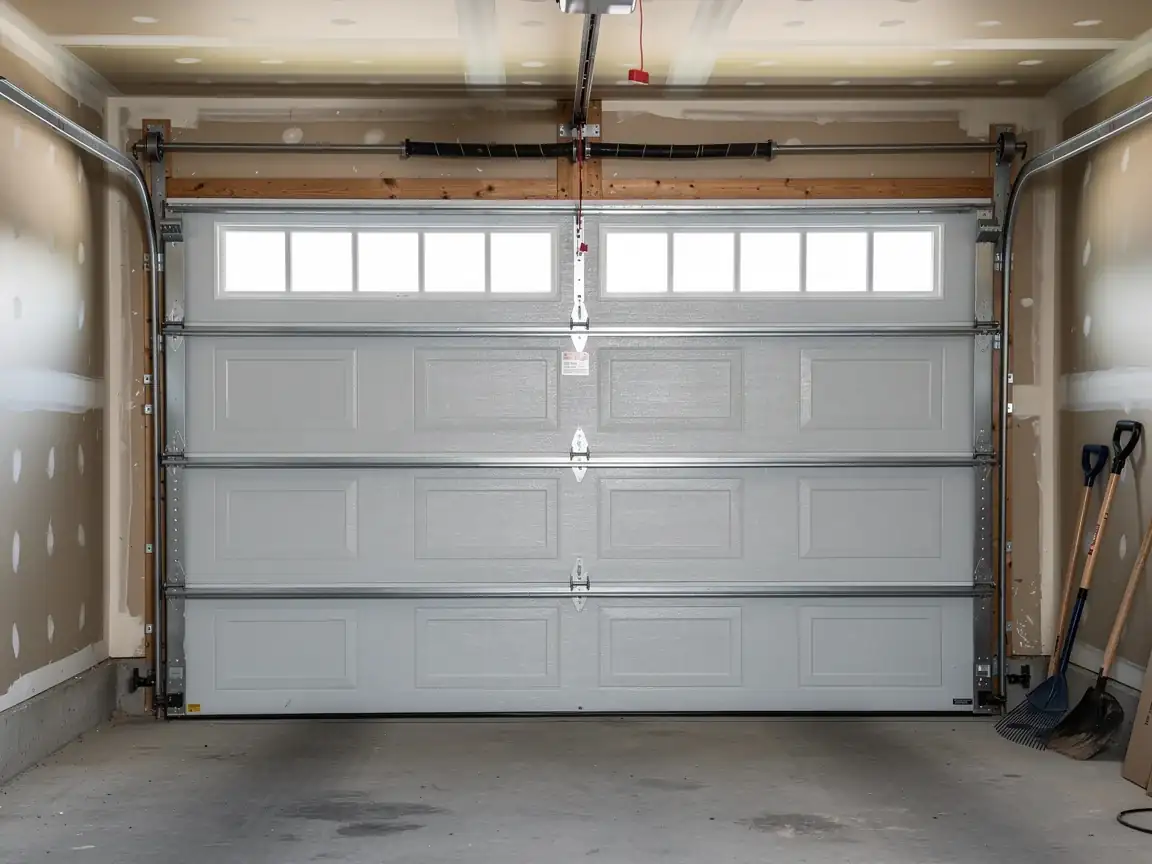
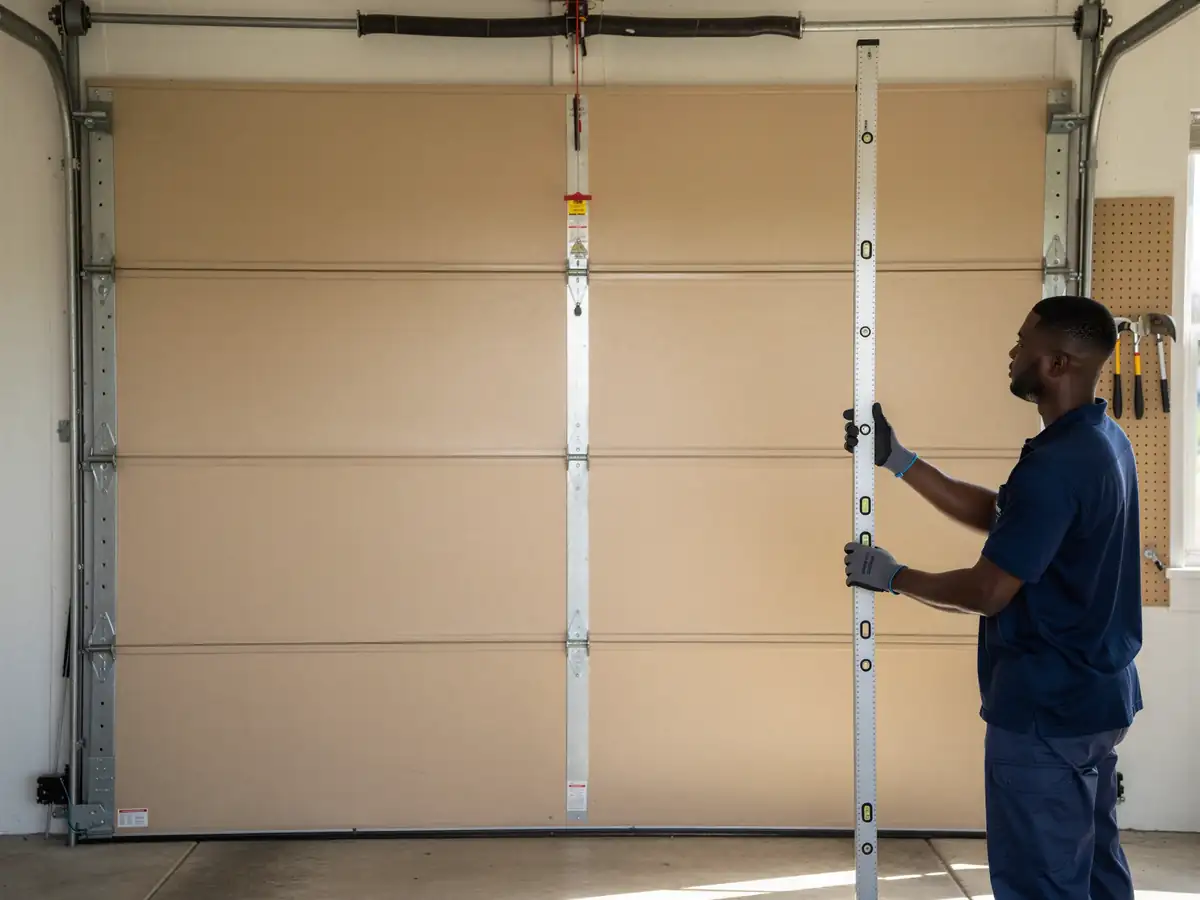
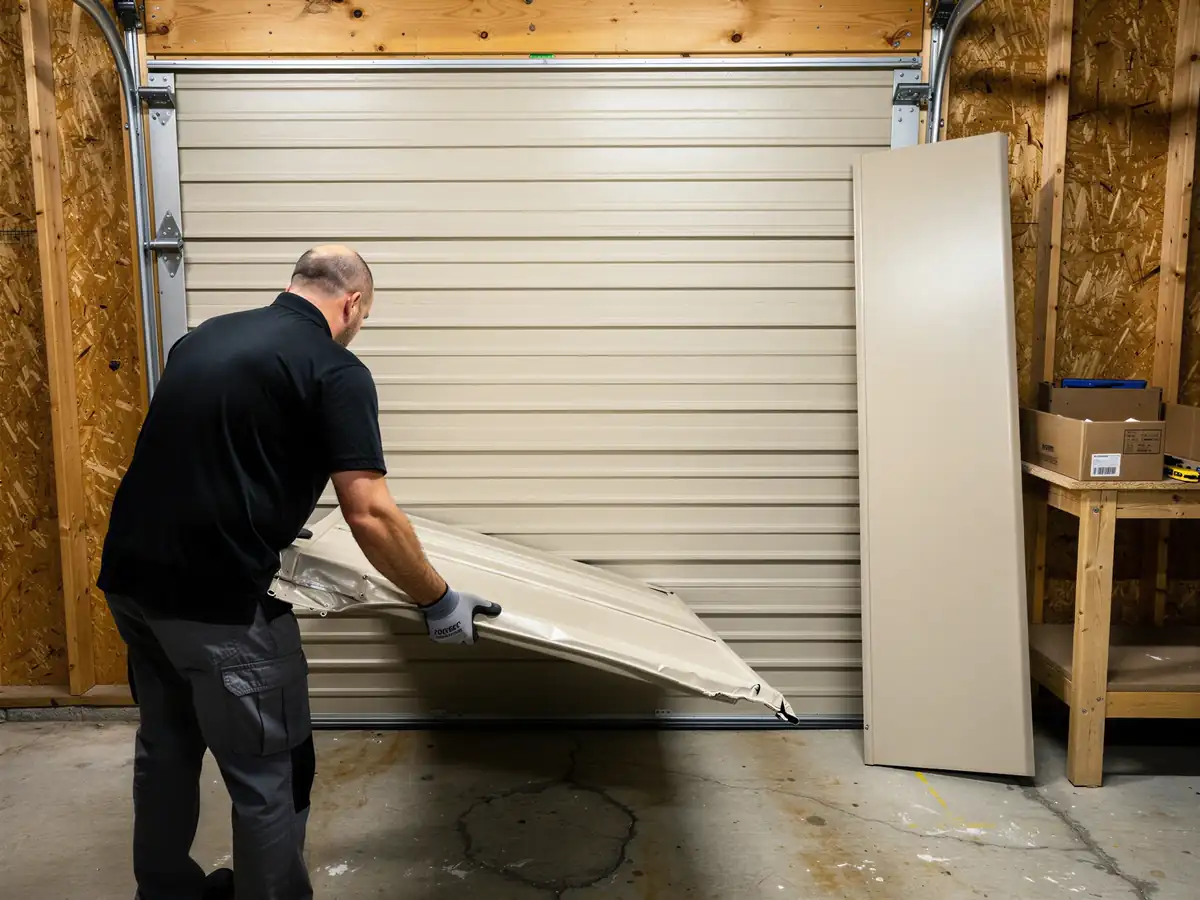
On a door this age, panel replacement usually means matching one section to an otherwise intact door rather than rebuilding the whole thing. We pull the measurements off the existing panel - height, width, and the track profile - and source a matching section rather than swapping the whole door, assuming the rest of the hardware is still sound.
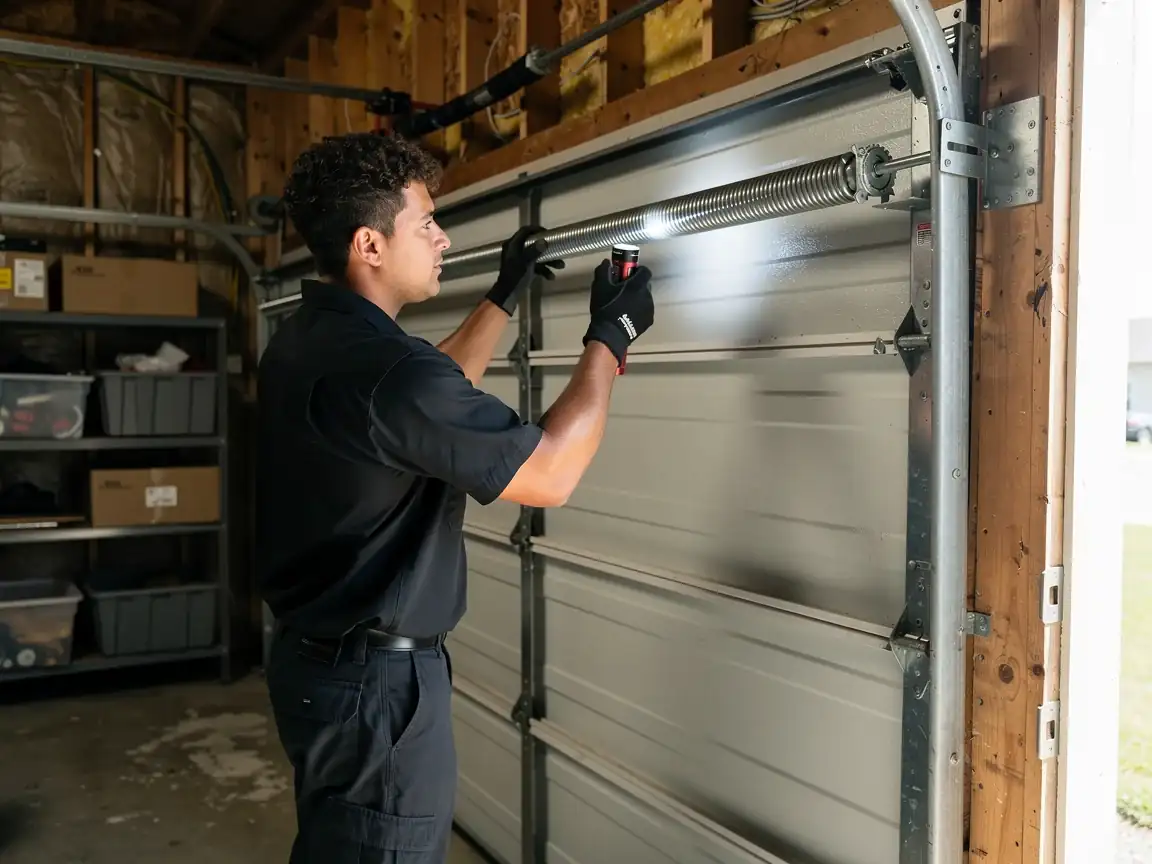
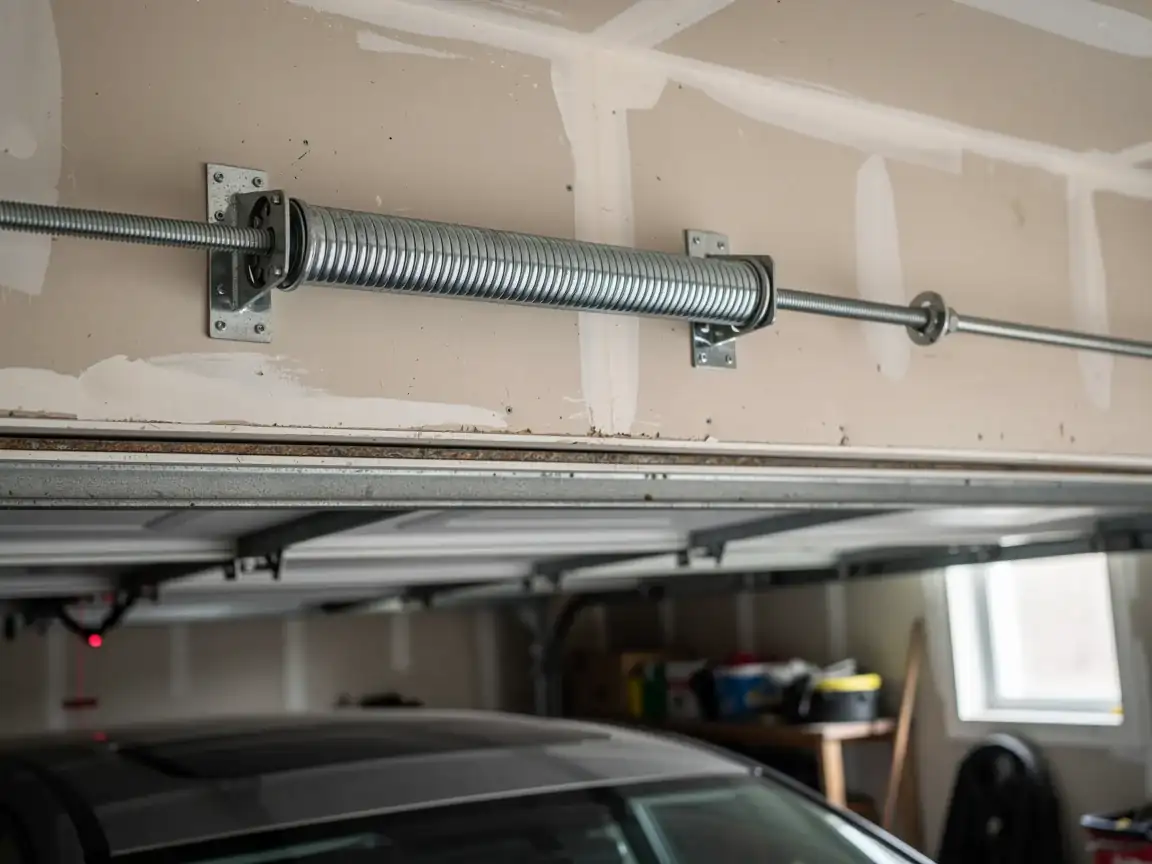
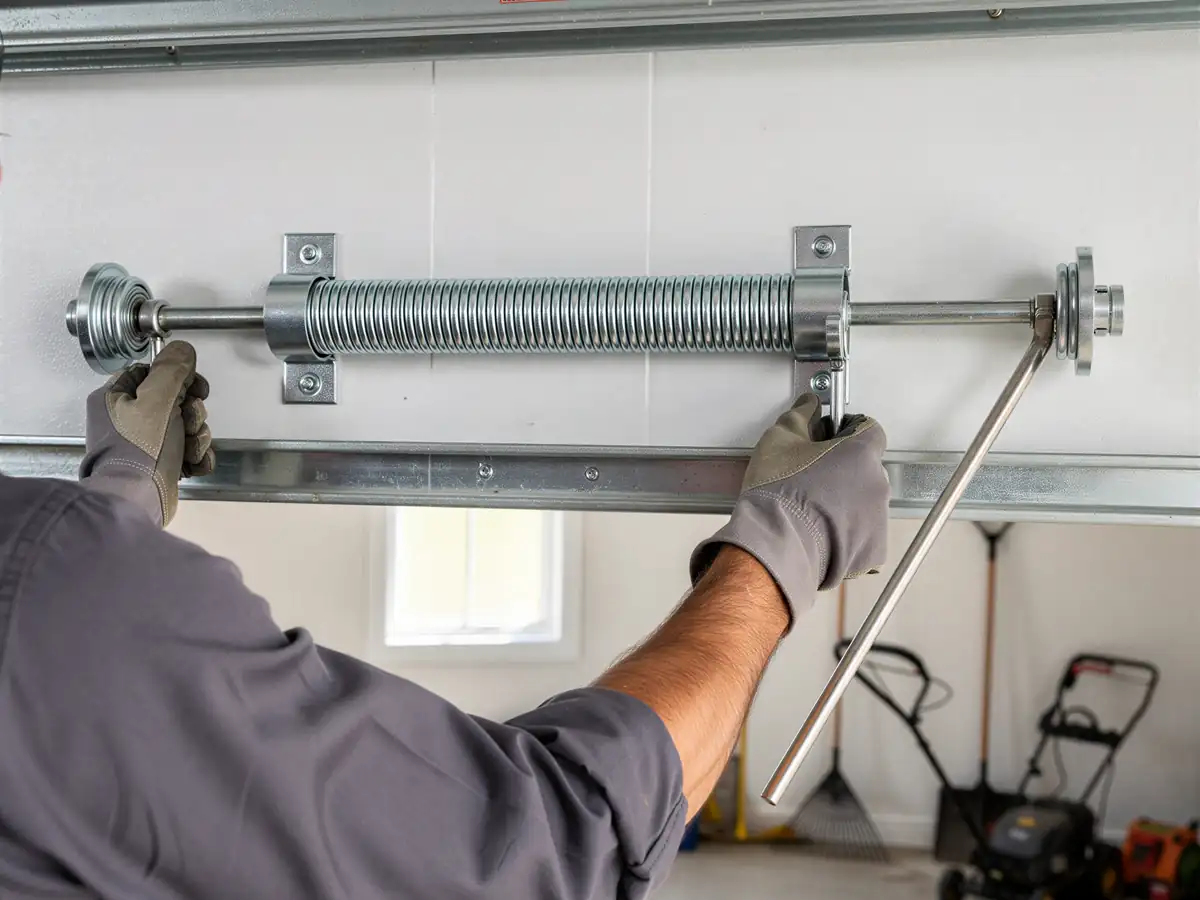
The real work is in the hinges and rollers around the damaged section. On a door built in 2003, the galvanized hardware is usually still functional but worn at the pivot points, so we check those while the section is off rather than bolting a new panel to tired hinges. If the door uses a torsion spring sized for the original panel weight, we confirm the replacement section matches that weight - a slightly heavier or lighter panel throws the spring tension off and shortens its life. We don't repaint to match the existing color; if the panel's faded unevenly after twenty years in Florida sun, the new section may show a visible difference until it weathers in.
Doing It Yourself
A single dented panel looks like a bolt-off, bolt-on job, and on a newer door like the ones common in West Melbourne
The hardware is usually in good enough shape that it's tempting. The honest limitation: matching the panel profile and color coat correctly from a retail listing is harder than it looks, and getting it wrong means a visible seam or a gap that lets in weather.
The part we'd actually caution against doing yourself is anything touching the torsion spring or cables while the panel's off
That's where injuries happen, and it's not where the savings are. If you're comfortable removing hinge bolts and know the exact panel dimensions and the door's brand, swapping a single section is within reach for someone handy. If you don't have the model number or the door's more than one section out of alignment, that's the point where a mismatched panel costs more to fix a second time than it would have to call in the first place.
How Long You Are Without the Door
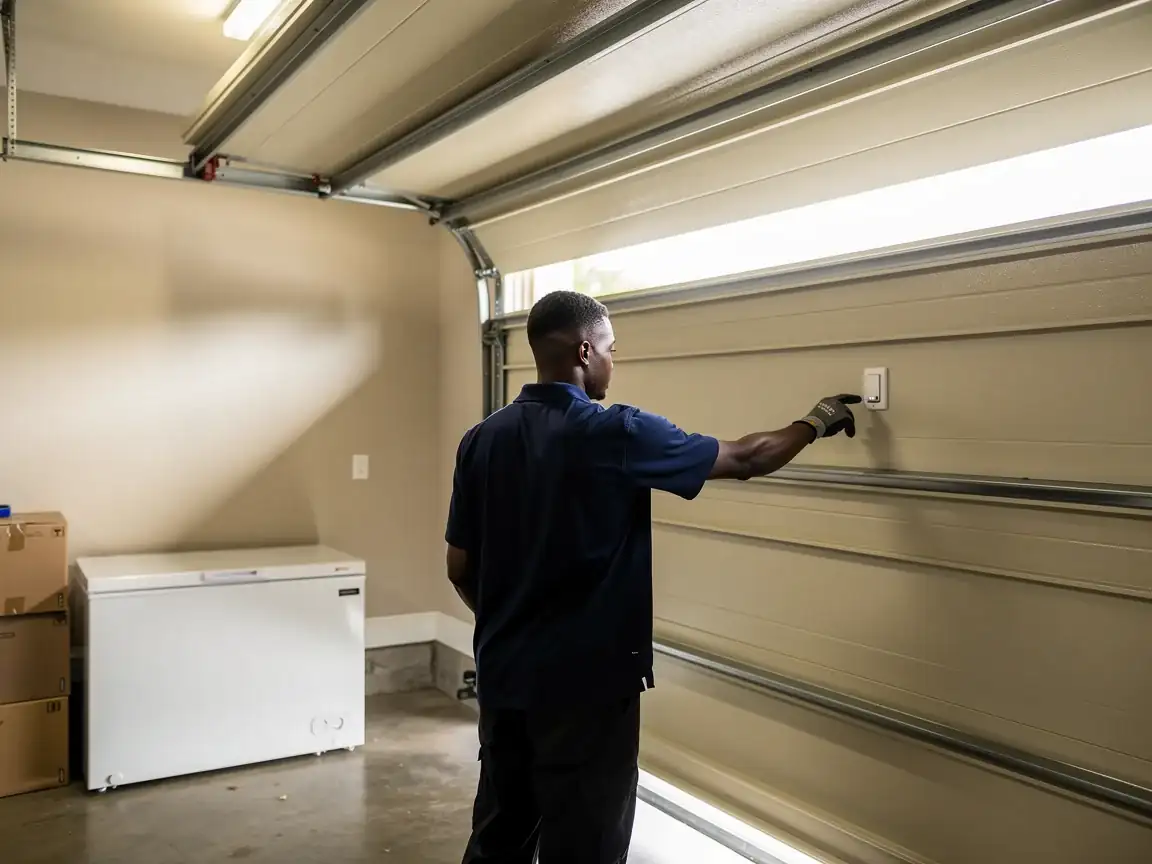
A single-section swap on a door that's otherwise sound is a shorter job than a full door replacement - most of the time goes into matching the panel and resetting the hinges, not into rebuilding the opener or track. The garage is open to the section being worked on during that window, so it's not a day without any door at all, just without full closure until the last hinge is reset and the opener's travel limits are rechecked.
If the matching panel isn't a stock size - which happens more often than you'd think on doors built in the early 2000s, since manufacturers changed profiles more than once in that era - the job can stretch while we source the right section. That's the one honest variable we can't promise away: a common panel size goes fast, an obsolete one doesn't.
How It Shows Up
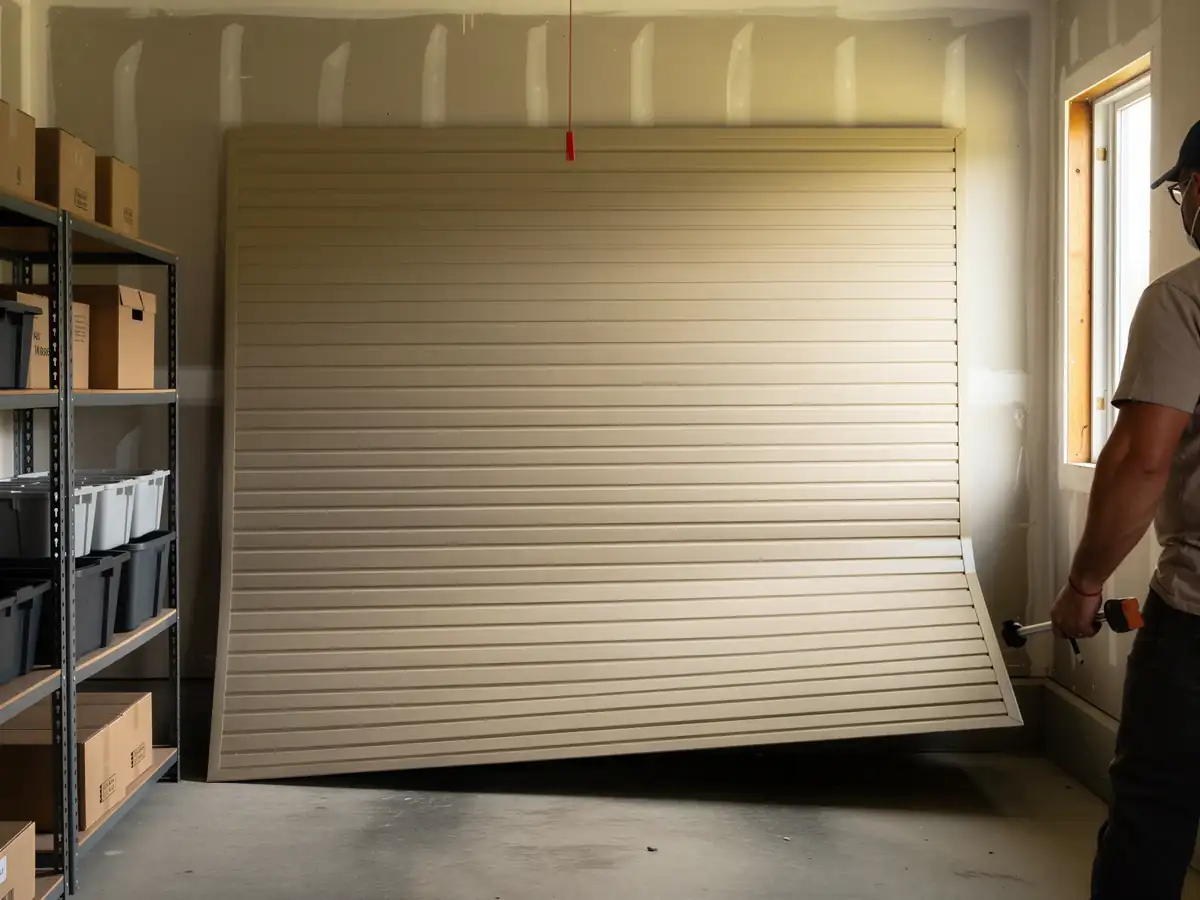
The first sign is usually cosmetic before it's functional - a dent or crease in one section that doesn't line up with the panel next to it when the door's down. On a 2003-era door, that gap is more noticeable than it would be on an older door because the rest of the panel surface is still flat and the new wrinkle stands out.
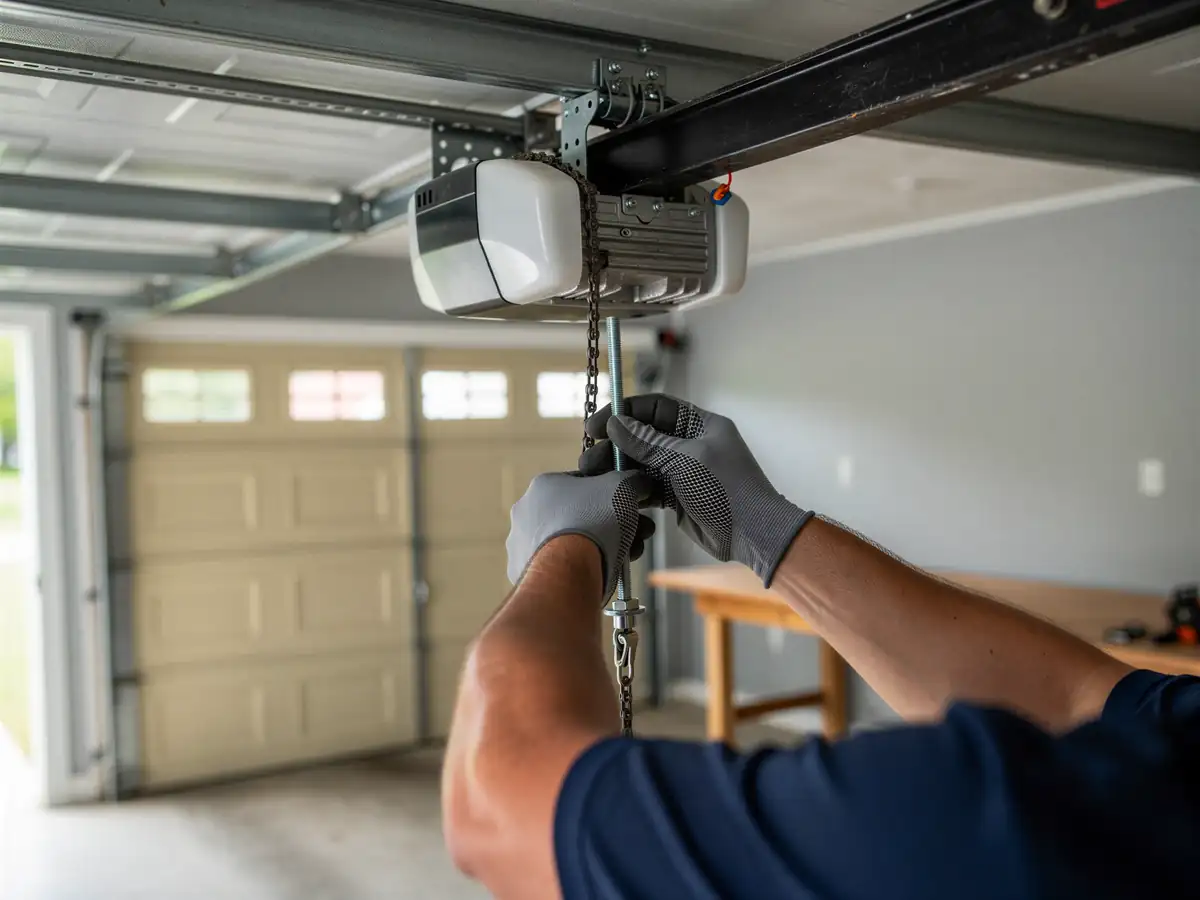
Functionally, it shows up as the door catching or binding partway through its travel, because a bent panel can pull the roller out of its track groove even if the track itself is straight. You might hear a new scrape or grind at the same point in the cycle every time. Left alone, that binding puts extra load on the opener motor, which is how a one-panel problem turns into an opener problem on a door that otherwise had years of service left in it.
What Can Go Wrong
The main risk with this repair is paying for a single panel and finding out the opener's been straining against the bent section long enough to need its own attention
The symptoms overlap, and a panel swap won't fix a motor that's already worn from fighting a misaligned door. We check both before we commit to parts.
The other risk is cosmetic rather than mechanical
A replacement panel on a door that's faded over twenty years of Florida sun often doesn't match until it weathers in, and there's no way to force that process. If the door's insulated and the replacement section isn't the same foam-core spec, you can also end up with one section that insulates differently than the rest - worth checking before ordering, not after.